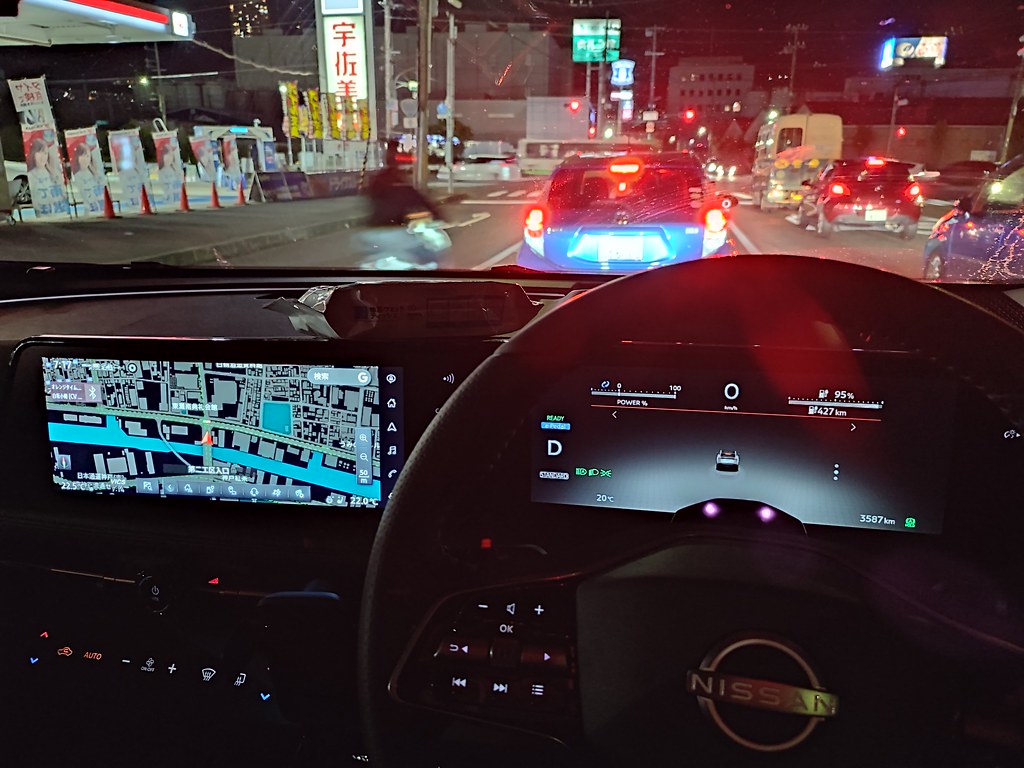

“After the Dongfeng Nammi Box came to Norway last year I have been wanting to drive one,” writes u/SjalabaisWoWS on r/electricvehicles. “The super pleasant interior is the absolute strong suite of the Box. There’s great visibility, good space and generally a decent material quality over the whole car with many soft touch surfaces.” That Norwegian owner paid 199k NOK—roughly R40,000—for a Nissan Leaf before encountering the Dongfeng Box at the same price. Here in South Africa, the stakes are different: the Dongfeng Box E3 430 retails at R499,000 (editor-verified pricing), while the Suzuki Swift 1.2 GL costs R228,900—a R270,100 gap that makes or breaks the EV value proposition for budget-conscious South Africans comparing the Dongfeng Box E3 vs Suzuki Swift 1.2 GL.
With NEV market share hitting 3.1% in early 2026 and petrol hovering above R25/litre, the question isn’t whether EVs make sense—it’s which buyers can afford the upfront premium and which should stick with proven petrol. This comparison strips away the marketing hype to show you the real numbers: purchase price, monthly running costs, 5-year total cost of ownership, charging infrastructure, and the honest trade-offs each car demands.
TL;DR
- The Dongfeng Box E3 costs R270,100 more upfront (R499,000 vs R228,900) but saves ~R1,850/month in fuel at 1,500 km—breaking even around year 3 if you charge at home.
- The Swift delivers 4.4 L/100 km (claimed) and ~682 km tank range; the Box offers 430 km CLTC range (real-world ~320–350 km) and charges 30–80% in 30 minutes on DC fast charging.
- 5-year TCO favours the EV by ~R95,000 if you drive 1,500 km/month and charge at home (Eskom tariff R3.50/kWh)—but the Swift wins if you rely on public DC charging (R7.00–R7.35/kWh) or drive under 800 km/month.
- The Box suits urban commuters with off-street parking and solar; the Swift suits long-distance drivers, apartment dwellers, and anyone needing proven dealer support.
Purchase price: the R270k elephant in the room
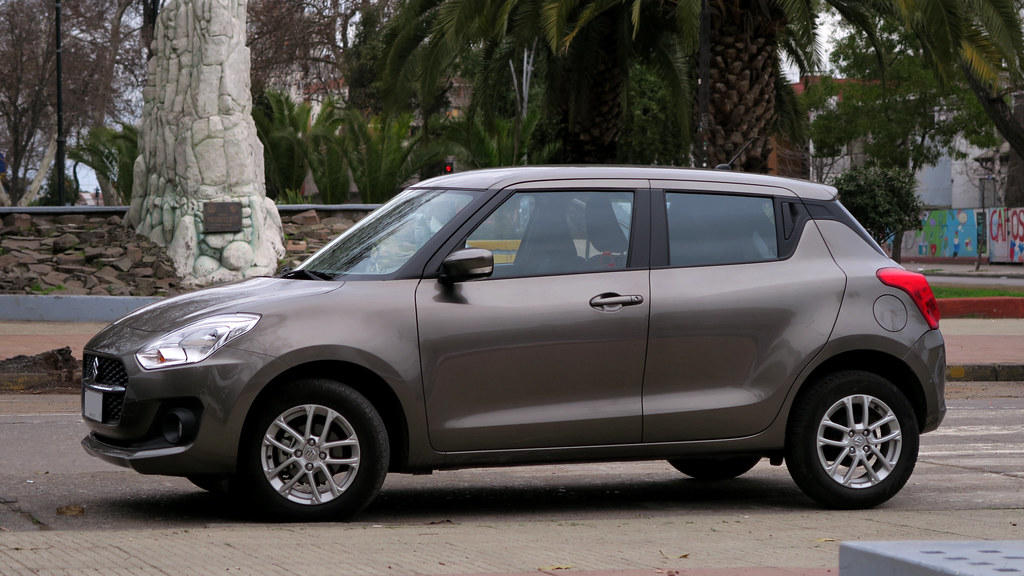
Let’s start with the number that stops most conversations cold. The Dongfeng Box E3 430 retails at R499,000 (editor-verified pricing; note that some third-party sources cite R519,000–R519,800, likely reflecting dealer mark-ups or earlier pre-launch estimates) with a 43.9 kWh battery, 70 kW motor, and 430 km CLTC range. The Suzuki Swift 1.2 GL costs R228,900 with a 1.2L 3-cylinder petrol engine (60 kW / 112 Nm) and 5-speed manual transmission. That’s a R270,100 premium for the EV—118% more than the Swift.

| Specification | Dongfeng Box E3 430 | Suzuki Swift 1.2 GL |
|---|---|---|
| Retail price (ZAR) | R499,000 | R228,900 |
| Power (kW) | 70 kW / 160 Nm | 60 kW / 112 Nm |
| Battery / fuel capacity | 43.9 kWh | 37 L petrol tank |
| Range (claimed) | 430 km (CLTC) | ~682 km (4.4 L/100 km × 37 L tank) |
| Efficiency (claimed) | ~10.2 kWh/100 km (CLTC) | 4.4 L/100 km |
| Top speed | 140 km/h | 165 km/h (estimated) |
| Warranty | 5 years / 150,000 km + 8 years / 200,000 km battery | 5 years / 200,000 km |
| DC fast charging (30–80%) | 30 minutes | N/A |
The Swift’s 5-year / 200,000 km warranty provides peace of mind, backed by Suzuki’s established dealer network. The Box counters with an 8-year / 200,000 km battery warranty, but Dongfeng’s SA service footprint is still developing. If you’re financing, the Box requires a R99,800 deposit (20%) and R8,300/month over 72 months at prime + 2%; the Swift needs R45,780 down and R3,800/month. That R4,500/month payment gap is where fuel savings must work overtime.
Range, efficiency, and real-world driving
Dongfeng Box E3: 430 km CLTC vs real-world reality
The official Dongfeng spec sheet claims 430 km on the CLTC cycle—China’s notoriously optimistic test standard. Real-world owners report 320–350 km in mixed driving, closer to 280 km in winter or at highway speeds. One Reddit user complained: “It is a 41 kwh pack and it uses 15 kwh 100 km at highway speeds and i only get 190 km of range the math isn’t adding up there.” That’s 15 kWh/100 km vs the claimed 10.2 kWh/100 km—a 47% penalty at 120 km/h.
For this comparison, we’ll use 13 kWh/100 km as a conservative real-world average (city + highway mix). At 1,500 km/month, that’s 195 kWh consumed. Charging at home on Eskom’s 2026/27 tariff of ~R3.50/kWh (post-8.76% increase), you’ll pay R682.50/month. Add 10% charging loss and you’re at R750/month.
Suzuki Swift 1.2 GL: the 4.4 L/100 km benchmark
The Swift’s official consumption is 4.4 L/100 km—achievable in gentle suburban driving but expect 5.5–6.0 L/100 km in real-world mixed use. At 1,500 km/month and 5.5 L/100 km, you’ll burn 82.5 litres. With petrol at R25/litre (conservative 2026 average), that’s R2,062.50/month. The 37-litre tank gives you ~670 km range at the claimed figure, ~600 km in practice—nearly double the Box’s real-world range.
| Cost component (1,500 km/month) | Dongfeng Box E3 | Suzuki Swift 1.2 GL |
|---|---|---|
| Energy consumption | 195 kWh (13 kWh/100 km) | 82.5 L (5.5 L/100 km) |
| Home charging cost (R3.50/kWh) | R750/month | — |
| Petrol cost (R25/L) | — | R2,063/month |
| Monthly fuel savings (EV) | R1,313/month | — |
| Annual fuel savings (EV) | R15,756/year | — |
That R1,313/month saving is the EV’s lifeline—but it evaporates if you rely on public DC fast charging. At R7.00–R7.35/kWh for GridCars and Rubicon, the same 195 kWh costs R1,365–R1,433/month—only R630–R700 cheaper than petrol. You’d need 36 years to recover the R270k premium.
5-year total cost of ownership: the make-or-break calculation
Total cost of ownership (TCO) includes purchase price, fuel, insurance, maintenance, and depreciation over 5 years / 90,000 km (1,500 km/month). Here’s the breakdown using conservative assumptions:
| Cost category (5 years) | Dongfeng Box E3 | Suzuki Swift 1.2 GL |
|---|---|---|
| Purchase price | R499,000 | R228,900 |
| Fuel / electricity (90,000 km) | R45,000 (home charging @ R3.50/kWh) | R123,750 (petrol @ R25/L, 5.5 L/100 km) |
| Insurance (comprehensive, 5 years) | R78,000 (R1,300/month avg) | R48,000 (R800/month avg) |
| Maintenance / servicing (5 years) | R15,000 (tyres, brakes, coolant) | R36,000 (estimated service costs) |
| Depreciation (estimated 40% residual) | R299,400 (60% of R499k) | R137,340 (60% of R228.9k) |
| Total 5-year cost | R936,400 | R574,090 |
| Cost per km (90,000 km) | R10.40/km | R6.38/km |
Wait—the Swift wins by R362,310 over 5 years? Yes, if you count depreciation. But depreciation is a sunk cost you only realize if you sell. If we exclude depreciation and focus on out-of-pocket running costs, the picture flips:
- Box E3 running costs (5 years): R45,000 (electricity) + R78,000 (insurance) + R15,000 (maintenance) = R138,000
- Swift running costs (5 years): R123,750 (petrol) + R48,000 (insurance) + R36,000 (maintenance) = R207,750
The Box saves R69,750 in running costs over 5 years—but you still need to close the R270,100 purchase-price gap. At this driving rate (1,500 km/month), you break even around month 35–38 (just under 3 years). Drive more—say 2,000 km/month—and you break even by month 26. Drive less—1,000 km/month—and you’ll never recover the premium within a typical ownership cycle.
Charging at home: 7.4 kW vs 11 kW vs 22 kW—what does the Box need?
.jpg)
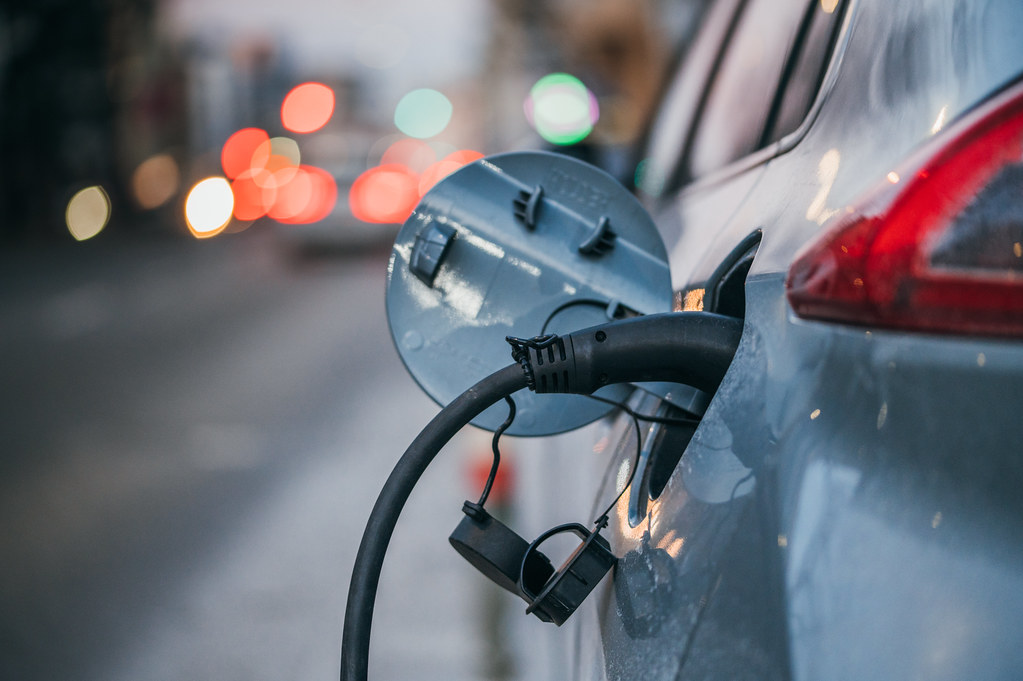
The Dongfeng Box E3 accepts DC fast charging at 30–80% in 30 minutes, but the OEM specs don’t publish the AC on-board charger rating. Most budget Chinese EVs in this class ship with a 6.6 kW single-phase AC charger, occasionally 11 kW three-phase. Assuming 6.6 kW, here’s what that means for home charging:
- 3.7 kW (16 A single-phase): 0–100% in ~12 hours. Fine for overnight top-ups if you drive under 100 km/day.
- 7.4 kW (32 A single-phase): 0–100% in ~6 hours. The sweet spot for most SA homes—requires a dedicated 32 A circuit and a Type 2 wall box (R8,000–R12,000 installed).
- 11 kW (16 A three-phase): 0–100% in ~4 hours. Only useful if the car accepts three-phase AC (unlikely on the Box) and your municipal supply supports it (common in newer suburbs, rare in older areas).
- 22 kW (32 A three-phase): Overkill for a 43.9 kWh battery unless you’re doing multiple daily cycles. Installation costs jump to R15,000–R20,000.
For the Box, a 7.4 kW wall box is the pragmatic choice. Professional installation typically ranges from R8,000–R12,000 including a 5 m cable, earth-leakage protection, and municipal compliance. Pair it with a 5 kWh solar + battery system (R80,000–R120,000) and you can charge entirely off-grid during load-shedding—dropping your per-kWh cost to near zero after payback (typically 4–6 years). The Swift, of course, needs none of this—just a petrol station and 3 minutes to fill.
South Africa-specific realities: load-shedding, service networks, and resale
Load-shedding and solar pairing
Load-shedding dropped to sporadic Stage 1–2 in late 2025, but Eskom’s 8.76% tariff hike signals ongoing financial strain. If you’re charging the Box during the day on solar (R1.50–R2.00/kWh effective cost after payback), your monthly fuel bill drops to R390–R520—stretching the savings gap to R1,543–R1,673/month vs petrol. That accelerates break-even to month 28–30. Without solar, night-time Eskom charging at R3.50/kWh is still viable, but you’re exposed to future tariff hikes. The Swift is immune to grid politics—petrol prices track Brent crude and the rand, not municipal infrastructure.
Service and parts availability
Suzuki’s established dealer network provides nationwide coverage with predictable service costs: oil changes every 15,000 km, brake pads at 40,000 km, tyres at 50,000 km. The Box has no oil, no exhaust, no clutch—but cabin filters, brake fluid, coolant, and tyres still need attention. Dongfeng’s SA service network is expanding, but parts lead times for Chinese EVs can stretch to 6–8 weeks. If you’re in Gauteng or the Western Cape, you’ll likely find support; in Limpopo or the Eastern Cape, you’re pioneering.
Resale value and depreciation
The Swift typically holds 45–50% residual value after 5 years based on industry data for petrol hatchbacks. The Box is unproven—Chinese EVs in Europe depreciate 50–60% in 3 years due to rapid tech obsolescence and brand unfamiliarity. If the Box holds 40% residual (R199,600 after 5 years), you’ve lost R299,400 vs the Swift’s estimated R137,340 loss. That R162,060 depreciation penalty is the hidden cost of early adoption. Conversely, if SA’s EV market matures and the Box holds 50% (R249,500), the gap narrows to R112,160—still painful, but less catastrophic. These are estimates based on comparable vehicle classes, not guarantees.
The honest verdict: who should buy which car?
Buy the Dongfeng Box E3 if you…
- Drive 1,200+ km/month (mostly city and suburban, under 100 km/day)
- Have off-street parking with 220 V single-phase power and can install a 7.4 kW wall box
- Own or plan to install solar + battery (the Box becomes a no-brainer with R1.50/kWh charging)
- Rarely drive beyond 250 km in a single trip, or have access to GridCars / Rubicon DC fast chargers along your routes
- Value instant torque, silent cabins, and modern tech (the Box’s interior punches above its price, per owner reviews)
- Can absorb the R270k premium and 3-year break-even horizon
Buy the Suzuki Swift 1.2 GL if you…
- Drive under 1,000 km/month or need 600+ km range without recharging anxiety
- Live in an apartment, complex, or area without reliable grid power
- Regularly drive Johannesburg–Durban, Cape Town–PE, or other 400+ km routes where DC chargers are sparse
- Prioritize resale value, dealer support, and predictable running costs over fuel savings
- Need the lowest upfront cost and can’t finance or justify a R499k purchase
- Value Suzuki’s 5-year / 200,000 km warranty over battery longevity promises
The wildcard: public charging and the 2026 infrastructure boom
BYD’s plan to install 200–300 flash-charging stations by end-2026 (up to 1,000 kW) and CHARGE’s off-grid solar hubs along the N3 will close the range-anxiety gap. If public DC tariffs drop to R5.00–R5.50/kWh (competitive pressure from solar-powered operators), the Box’s TCO advantage grows even without home charging. But that’s speculative—today’s R7.00–R7.35/kWh tariffs make public charging a break-even proposition vs petrol.
Ready to charge smarter?
If the Dongfeng Box E3’s numbers work for your driving profile and you have the infrastructure to support it, you’re looking at R15,756/year in fuel savings and a break-even point around month 35–38. That’s real money—enough to fund a family holiday or pay off the wall-box installation. But if you’re apartment-bound, drive long-distance weekly, or can’t stomach the R270k premium, the Swift 1.2 GL remains the rational choice: proven, efficient, and backed by Suzuki’s established dealer network.
Thinking about making the switch? Book a free site assessment with ChargePoint SA—we’ll evaluate your parking, electrical supply, and solar potential, then design a charging solution that fits your budget and driving patterns. Whether you’re installing a 7.4 kW wall box for the Box or future-proofing for your next EV, we’ll get you road-ready in under two weeks. Let’s make load-shedding irrelevant, one charge at a time.
Image credits
“Dongfeng Nammi 01 at Auto Guangzhou 2023” via Wikimedia Commons, CC BY-SA 4.0 · “Dongfeng Nammi Electric Vehicle 2024” via Wikimedia Commons, CC BY-SA 4.0 · “2024 Suzuki Swift Hybrid MX in Premium Silver” via Wikimedia Commons, CC BY-SA 4.0
Continue Reading