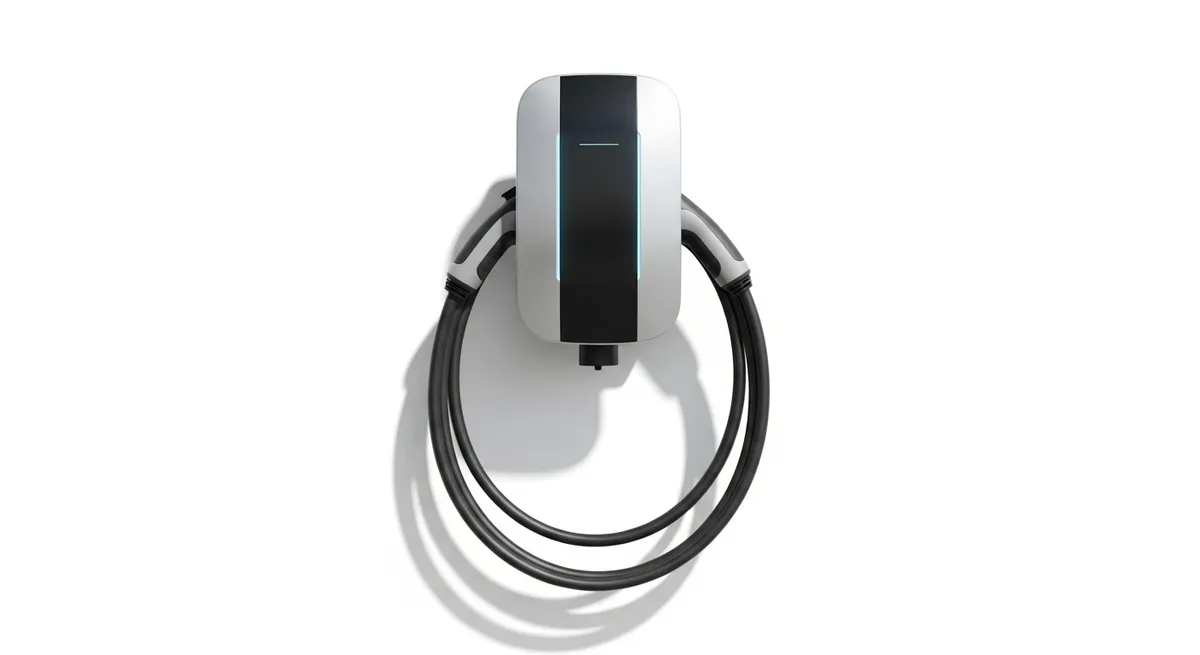

On 19–20 May 2026, Zero Carbon CHARGE switched on two fully off-grid solar EV charging stations on the N3 corridor between Johannesburg and Durban—one at Reitz Interchange (Exit 107, Free State), the other at Tugela near Colenso-Winterton (Exit 207, KwaZulu-Natal). Each site can charge up to eight EVs simultaneously—three DC fast chargers with six dispensers, plus two AC units—and every kilowatt-hour comes from solar panels and battery storage. No Eskom. No load-shedding. No excuses.

The R100 million rollout, backed by the Development Bank of Southern Africa (DBSA), marks the first time a major South African highway has gained charging infrastructure that doesn’t depend on municipal electricity. For EV owners who’ve watched range anxiety morph into grid anxiety, it’s a watershed moment.
What happened: the N3 rollout in detail
Zero Carbon CHARGE’s two new stations aren’t pilot projects—they’re production infrastructure. According to Bizcommunity’s coverage, each site uses a solar-powered microgrid with battery storage to run three DC fast chargers (six dispensers total) and two AC chargers. That’s enough to serve eight vehicles at once, with no grid connection whatsoever.
The Reitz station sits at Exit 107 on the Free State stretch; Tugela is further east at Exit 207 near Colenso-Winterton in KwaZulu-Natal. Both sites include farm stalls and free Wi-Fi, turning the 30-minute charge window into something closer to a proper roadside break than a refuelling chore. As u/lokey_convo put it on r/electricvehicles: “EV charging is a huge benefit because it’s an ‘and’ activity. You go to the movies or the mall… AND plug in to an L2 while you shop or watch.” On the N3, you grab a pie and a coffee and add 200 km of range.

In their first two days of operation, the stations charged more than 25 EVs and light commercial vehicles, delivering over 1 MWh of solar energy, electrive.com reported. A typical EV reaches 20–80% state of charge in 30 minutes at these sites—faster than the Wolmaransstad pilot that CHARGE launched in November 2024, which has maintained 99% uptime with no grid connection since day one.
Why it matters: context for first-time readers
South Africa’s EV market is growing—but infrastructure lags
March 2026 set a new monthly record: 389 EV sales, according to Briefly’s reporting. AutoTrader searches for electric vehicles jumped 45% year-on-year between February and March 2026, per CNBC Africa. Yet annual BEV sales in 2025 fell 17% to just 1,018 units—0.17% of the total vehicle market. The mismatch between interest and sales points to a classic chicken-and-egg problem: buyers won’t commit until they trust the charging network, and investors won’t build chargers until there’s volume.
As of early 2026, South Africa had roughly 650 public chargers spread across 445 sites, with GridCars operating the largest network. But ChargePoint SA’s own analysis identified critical gaps: the N1 stretch from Beaufort West to Three Sisters (300 km) and the N2 corridor between East London and Durban remain problematic for long-distance EV travel. Public DC fast-charging costs R7.00–R7.35 per kWh, versus R3–R4 at home—a premium that reflects both infrastructure scarcity and the cost of grid power.
Load-shedding and grid unreliability drive off-grid solutions
Eskom’s rolling blackouts have made “grid independence” more than a buzzword. As u/catdaad noted on r/electricvehicles: “All I need is a simple solar setup to charge my EV. It might take a long time depending on the size of the solar setup but I’m less likely to be completely SOL… the argument against EVs for this reason makes no sense!” That sentiment resonates in a country where municipal electricity can disappear for hours at a stretch. Off-grid solar charging stations don’t just avoid load-shedding—they eliminate the dependency entirely.
CHARGE’s Wolmaransstad pilot proved the concept: 99% uptime since November 2024, with no Eskom connection. The N3 stations deliver 50% more capacity than that pilot, according to IOL Motoring, suggesting the technology has matured from proof-of-concept to production-grade infrastructure.
The numbers: key stats and comparisons
| Metric | Value | Source |
|---|---|---|
| N3 stations launched | 2 (Reitz, Tugela) | Bizcommunity |
| EVs charged simultaneously per site | 8 (3 DC + 2 AC chargers) | Bizcommunity |
| Investment (DBSA) | R100 million | Bizcommunity |
| Energy delivered (first 2 days) | >1 MWh | electrive.com |
| Vehicles charged (first 2 days) | >25 | electrive.com |
| Typical charge time (20–80%) | 30 minutes | IOL Motoring |
| Wolmaransstad pilot uptime | 99% (since Nov 2024) | Briefly |
| Planned stations by end-2027 | 60 nationwide | electrive.com |
| Long-term network target | 120 stations | Briefly |
| Public DC charging cost (SA avg) | R7.00–R7.35/kWh | ChargePoint SA |
| Home charging cost (SA avg) | R3–R4/kWh | ChargePoint SA |
| March 2026 EV sales (monthly record) | 389 units | Briefly |
| AutoTrader EV search growth (YoY) | +45% | CNBC Africa |
| 2025 annual BEV sales | 1,018 units (−17% YoY) | CleanTechnica |
How the N3 stations stack up against home and public charging
For context, here’s what a 30-minute charge at one of the N3 stations might add to popular SA EVs, based on their peak DC charging rates:
| Model | Battery (kWh) | Peak DC (kW) | ~30-min range gain (km) | Price (ZAR) |
|---|---|---|---|---|
| BYD Dolphin Surf | 30 | 30 | ~120 | R339,900 |
| BYD Atto 3 Extended | 60.48 | 80 | ~200 | R783,900 |
| GWM Ora 03 | 63 | ~60 | ~180 | R686,950 |
| BYD Seal Premium | 82.56 | 150 | ~280 | R999,900 |
| Volvo EX30 | N/A | 175 | ~300 | R835,500 |
These are rough estimates—actual range gain depends on battery temperature, state of charge, and charger availability—but they illustrate why a 30-minute stop is viable for most highway journeys. The Johannesburg–Durban run is roughly 570 km; with the two new stations spaced along the route, even a BYD Dolphin Surf (232 km WLTP range) could make the trip with one or two charging stops.

Stakeholder reactions: government, automakers, consumers, installers
Government and finance
The R100 million DBSA investment signals state-backed confidence in off-grid charging as a hedge against Eskom’s unreliability. Yet policy hasn’t kept pace: in February 2026, CHARGE called on the Finance Minister to equalise EV import duties (currently 25% versus 18% for ICE vehicles), scrap the ad valorem tax, and fund off-grid charging infrastructure in the 2026 Budget. None of those asks made it into the final budget, leaving the regulatory environment tilted against EVs even as infrastructure improves.
Automakers and network operators
BYD announced in October 2025 that it would install 200–300 Flash (1 MW) charging stations across South Africa by end-2026, starting in April/May at dealerships before expanding to highways. TechCentral reported that BYD sees SA as its “biggest market in Africa” and a launchpad for regional EV expansion. That timeline puts BYD’s rollout roughly parallel to CHARGE’s—two major networks racing to fill the same gaps.
GridCars, which operates over 450 public AC and DC charging stations as of early 2026, remains the incumbent. Rubicon added 11 new stations in the Eastern Cape between January and February 2026, nine of them DC-capable. The competitive dynamic is healthy: multiple operators reduce single-network dependency, a point u/OkCell424 made on r/electricvehicles: “Every electric vehicle locks you into someone else’s infrastructure. Buy a Tesla? Supercharger network. Buy a cheap EV? Hope you have a garage… You’re not tied to Tesla’s network. You’re not hunting for Level 2 stations. You’re not screwed if your landlord shuts off your exterior outlet. You have options.”
Consumers and installers
The Reddit voices capture the tension. u/More-Sock-67 on r/electricvehicles put it bluntly: “I can’t emphasize enough how much home charging can make or break the EV experience. I had to use superchargers for the first 2 weeks and it was miserable. My city doesn’t have a great network so that didn’t help. Either way, you’re charging more often than you’d get gas and you’re sitting there way longer.” That’s the friction point highway infrastructure like the N3 stations address: making public charging reliable enough that home charging isn’t a hard requirement.
For installers like ChargePoint SA, the N3 rollout is a proof point. Clients who’ve hesitated over range anxiety now have a concrete answer: “You can drive Johannesburg to Durban in an EV, charge twice along the way, and never worry about load-shedding.” That’s a sales conversation that wasn’t possible 12 months ago.
What this means for SA EV buyers
The N3 corridor is now EV-viable
Before May 2026, the Johannesburg–Durban run required either a long-range EV (400+ km) or careful planning around GridCars and Rubicon stations—and a prayer that Eskom wouldn’t shed load during your charge window. The two CHARGE stations change the calculus: even a shorter-range EV like the BYD Dolphin Surf (232 km WLTP, R339,900) can now make the trip with two 30-minute stops. That opens the N3 to a broader slice of the EV market, including budget-conscious buyers who’ve been priced out by the R700k+ long-range models.
Off-grid charging costs are competitive
Public DC fast-charging in South Africa typically costs R7.00–R7.35 per kWh. CHARGE hasn’t published tariffs for the N3 stations yet, but if they land in that range, a 30-minute session adding 40 kWh (roughly 200 km for a mid-size EV) would cost R280–R294. That’s more expensive than home charging (R120–R160 for the same 40 kWh at R3–R4/kWh), but cheaper than petrol for an equivalent ICE vehicle covering 200 km at 8 L/100 km and R24/L (R384 in fuel). The off-grid model doesn’t penalise drivers relative to grid-tied fast chargers—it just removes the Eskom dependency.
More corridors are coming
CHARGE plans 60 stations nationwide by end-2027, with the N1 corridor next on the list after the N3. The long-term target is 120 stations. If that rollout stays on schedule, the Western Cape–Gauteng and Gauteng–Limpopo routes will gain off-grid coverage within 18 months. That’s the tipping point where “range anxiety” stops being a rational objection and becomes a legacy talking point from the early 2020s.
What’s next: what to watch in the coming months
N1 rollout timing
CHARGE has publicly committed to the N1 as its next target. Watch for announcements in Q3 or Q4 2026—if the N3 stations maintain the 99% uptime the Wolmaransstad pilot achieved, the N1 rollout will likely accelerate.
BYD’s Flash network vs. CHARGE’s solar hubs
BYD’s 200–300 Flash chargers (1 MW peak) are grid-tied, not off-grid. That makes them faster but more vulnerable to load-shedding. The question is whether speed or reliability wins: a 1 MW charger can theoretically add 80% charge in 10–15 minutes, but only if Eskom cooperates. CHARGE’s solar hubs are slower (80 kW DC) but immune to grid failures. The market will decide which trade-off it prefers.
Policy changes (or lack thereof)
CHARGE’s February 2026 budget submission went nowhere. If the 2027 Budget similarly ignores EV import duties and infrastructure funding, expect private capital to keep driving the rollout—but at a slower pace than a coordinated state-backed push could achieve. Conversely, if Treasury equalises duties or introduces a renewable-charging subsidy, the 60-station target could expand to 100+.
Consumer adoption metrics
March 2026’s record 389 monthly sales is a data point, not a trend. If Q2 and Q3 2026 sustain or exceed that pace, the N3 infrastructure will have proven its catalytic effect. If sales plateau, the chicken-and-egg problem persists: infrastructure alone won’t move the needle without pricing parity and policy support.
Ready to charge smarter?
The N3 solar stations prove that off-grid EV charging isn’t a future concept—it’s production infrastructure delivering electrons today. If you’re an EV owner planning a Johannesburg–Durban road trip, you now have two guaranteed charge points that won’t go dark during load-shedding. If you’re considering an EV purchase and range anxiety has been the sticking point, the N3 rollout just removed one of the last rational objections.
For home and workplace charging, ChargePoint SA installs grid-tied and solar-backed systems across South Africa. Whether you’re a private buyer, a fleet operator, or a property developer looking to future-proof a car park, get a free site assessment and find out what a reliable charging setup looks like for your use case. The infrastructure gap is closing—make sure you’re on the right side of it.
Image credits
“Dark Days Ahead: Eskom Rolling Blackouts and Loadshedding” by Axel Bührmann (CC BY 2.0, via flickr) · “Eskom – they’re rolling blackouts, dammit” by Axel Bührmann (CC BY 2.0, via flickr) · “Green Machine” by jurvetson (CC BY 2.0, via flickr)