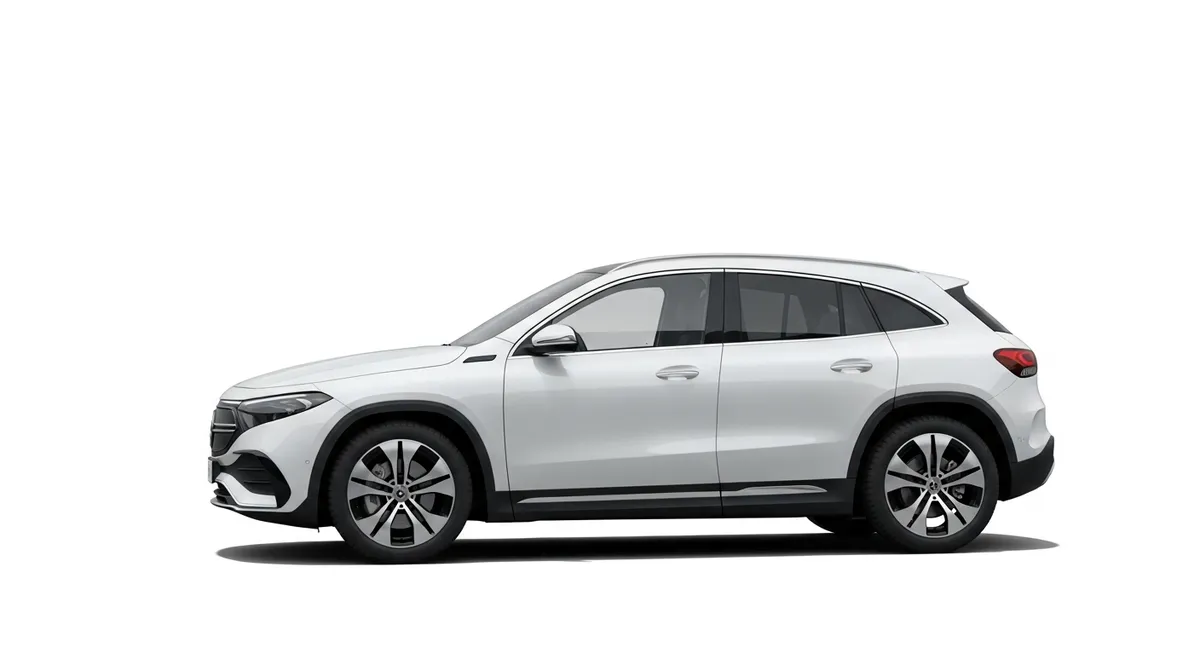


Transport Minister Barbara Creecy confirmed on 26 May 2026 that government is researching a vehicle owner contributory scheme that would require EV owners to pay a separate Road Accident Fund (RAF) fee when renewing their licence discs. The announcement, reported by Moneyweb, signals the first concrete step toward closing the funding gap created by electric vehicles avoiding the fuel-levy-based RAF contribution that petrol and diesel drivers pay at the pump.
For SA’s small but rapidly growing EV community—and anyone considering the switch—this is the moment to understand how the economics of electric motoring may shift. The move isn’t punitive; it’s structural. As EVs gain traction, the RAF’s reliance on fuel levies becomes unsustainable. The question is whether the new fee will be fair, transparent, and proportionate to actual road use.
Why the RAF needs a new funding model
The Road Accident Fund exists to compensate victims of road accidents. It’s funded almost entirely by a levy on every litre of petrol and diesel sold in South Africa—currently R2.18 per litre. When you fill up your Toyota Hilux or VW Polo, a slice of that transaction goes straight to the RAF. But when you charge your BYD Atto 3 at home or at a public charger, you pay Eskom or a charge-point operator—not a cent flows to the RAF.
This wasn’t a problem when EVs were a rounding error. But the market is accelerating. NEV sales jumped 83% in Q1 2024, and plug-in hybrid sales surged 280% in 2025, according to CleanTechnica. While the IEA reports that SA electric car sales remained below 1% in 2025, the trajectory is clear: every EV on the road is a vehicle that will never contribute to the RAF under the current model.

What we know—and don’t know—about the proposed fee
Minister Creecy’s statement was light on detail. Here’s what’s confirmed and what remains uncertain:
| Detail | Status |
|---|---|
| Implementation timeline | Not disclosed—still in research phase |
| Fee amount | Not disclosed |
| Collection method | Likely via licence-disc renewal |
| Applies to BEVs only or PHEVs too? | Not specified |
| Will fee scale by vehicle weight or range? | Not specified |
| Public consultation process | Not announced |
The lack of detail is both frustrating and expected. This is a research announcement, not a policy rollout. But it does raise the stakes for anyone shopping for an EV in 2026: the total cost of ownership is about to include a new line item, and we don’t yet know how large it will be.
How other countries handle EV road fees
South Africa isn’t pioneering this model—it’s catching up. In the United States, dozens of states charge EV owners an annual “alternative fuel fee” ranging from $50 to $200 (roughly R900 to R3,600) to compensate for lost fuel-tax revenue. As u/Haunting_Surround354 put it on r/electriccars: “The purpose of the EV alternative fuel fee is to ensure EV owners pay their fair share of taxes for road construction and maintenance, then why don’t Electricity Companies transfer the taxes we pay for charging our vehicles to the government, similar to how gas stations pass collected taxes to the government? Currently, we are paying double taxation.”
That frustration is real, and it’s a warning for SA policymakers. If the new RAF fee is simply tacked on without adjusting other levies—or if it exceeds what an equivalent petrol vehicle would contribute—it risks being perceived as punitive rather than equitable. The challenge is designing a fee that’s fair, administratively simple, and doesn’t undermine the government’s own EV adoption goals.
What a fair fee might look like
A back-of-the-envelope calculation: the average SA driver covers roughly 15,000 km per year. A petrol car averaging 7 litres per 100 km burns 1,050 litres annually. At R2.18 per litre, that’s R2,289 in RAF levies per year. An EV doing the same distance contributes zero. A fair annual fee for an EV owner would land somewhere in that ballpark—adjusted, perhaps, for the fact that EVs are typically heavier (more road wear) but also newer and safer (fewer accidents).
Whether National Treasury will adopt this logic—or a blunter flat fee—remains to be seen.
What this means for SA EV buyers
If you’re shopping for an EV in mid-2026, here’s the practical takeaway: budget for an additional annual cost that doesn’t yet exist. The BYD Atto 3 starts at R699,900, the Volvo EX30 at R835,500, and the GWM ORA 03 hatchback offers a more affordable entry point with a 48 kWh or 63 kWh battery. All of these vehicles currently enjoy zero fuel costs and zero RAF contributions. That second zero is about to disappear.
The good news: even with a hypothetical R2,500 annual RAF fee, EVs remain cheaper to run than petrol equivalents when you factor in fuel savings. Public DC fast charging currently costs R7.00/kWh at Rubicon and R7.35/kWh at GridCars, while home charging on municipal tariffs can be as low as R2.50/kWh off-peak. A BYD Atto 3 with a 60.48 kWh battery and 420 km WLTP range costs roughly R1.03 per kilometre on public DC charging—still well below the R1.80+ per km that petrol drivers pay at R24/litre.
The bigger picture: infrastructure is booming
The RAF fee announcement arrives at a moment of genuine momentum for SA’s EV ecosystem. Zero Carbon Charge launched two solar-powered, off-grid charging stations on the N3 Johannesburg-Durban corridor on 19–20 May 2026, backed by R100 million from the DBSA, with plans for 60 more sites nationally by 2027. GridCars operates 445 charging sites with more than 1,200 connectors as of January 2026, and Rubicon handled 21,606 transactions in 2025—up 159% from the prior year.
Meanwhile, the 150% EV production tax incentive signed by President Ramaphosa in December 2024 is now active, allowing manufacturers to deduct R1.5 million for every R1 million invested in battery-electric or hydrogen vehicle production. The incentive runs from March 2026 through March 2036 and has already attracted interest from BMW, which chose SA as the exclusive production hub for its hybrid X3.
In short: the policy environment is tilting toward EVs, even as the funding model for road infrastructure catches up.
Stakeholder reactions: who’s saying what
Government perspective
Minister Creecy’s statement was measured: the research phase is underway, no decisions have been made, and the goal is fiscal sustainability rather than discouraging EV adoption. The Department of Transport has not yet announced a public consultation process, but precedent suggests one will follow once a draft proposal emerges.
EV owners and advocates
Reactions on social media and forums have been mixed. Some owners accept the logic—roads need funding, and EVs use roads—while others worry about stacking costs. As one Reddit user noted in a different context, “I’ve been eyeing the EV market for a while… I was completely floored. The base model is surprisingly quick, dead silent even at 70mph, and the sound system is actually punchy.” The enthusiasm is real, but so is the price sensitivity. A poorly calibrated RAF fee could dampen that momentum.
Automakers and dealers
OEMs have been silent so far, likely waiting for concrete details before commenting publicly. But behind the scenes, the concern is real: South Africa’s EV market is fragile, and any policy misstep—especially one that increases upfront or recurring costs—could slow the adoption curve just as local production ramps up.
Charge-point operators
Companies like GridCars, Rubicon, and Zero Carbon Charge have invested heavily in infrastructure on the assumption that EV adoption will accelerate. A well-designed RAF fee shouldn’t affect that calculus—but a poorly designed one (say, a fee so high it discourages new buyers) could undermine demand growth and strand capital.
What’s next: timeline and key milestones
Here’s what to watch for in the coming months:
- Q3 2026: Expect the Department of Transport to release a discussion paper or draft policy framework. This is when the fee structure, implementation timeline, and consultation process will become clear.
- Q4 2026 / Q1 2027: Public consultation period. EV owners, industry bodies, and civil society will have an opportunity to submit comments.
- Mid-2027: Earliest realistic implementation date, assuming the policy moves through Parliament without major delays.
- Ongoing: Keep an eye on the National Treasury’s budget statements. The RAF is chronically underfunded, and this fee is one piece of a larger fiscal puzzle.
In parallel, the second phase of the National Electric Vehicle White Paper—which could include consumer purchase incentives—is still years away. The 2024 policy documents suggested a seven-year horizon for demand-side subsidies, meaning SA EV buyers won’t see rebates or tax credits until the early 2030s at the earliest.
Ready to charge smarter?
Whether the RAF fee lands at R2,000 or R5,000 per year, the fundamentals of EV ownership in South Africa remain compelling: lower running costs, zero tailpipe emissions, and a rapidly improving charging network. But the equation is shifting, and the time to act is now—before the policy details solidify and the market adjusts.
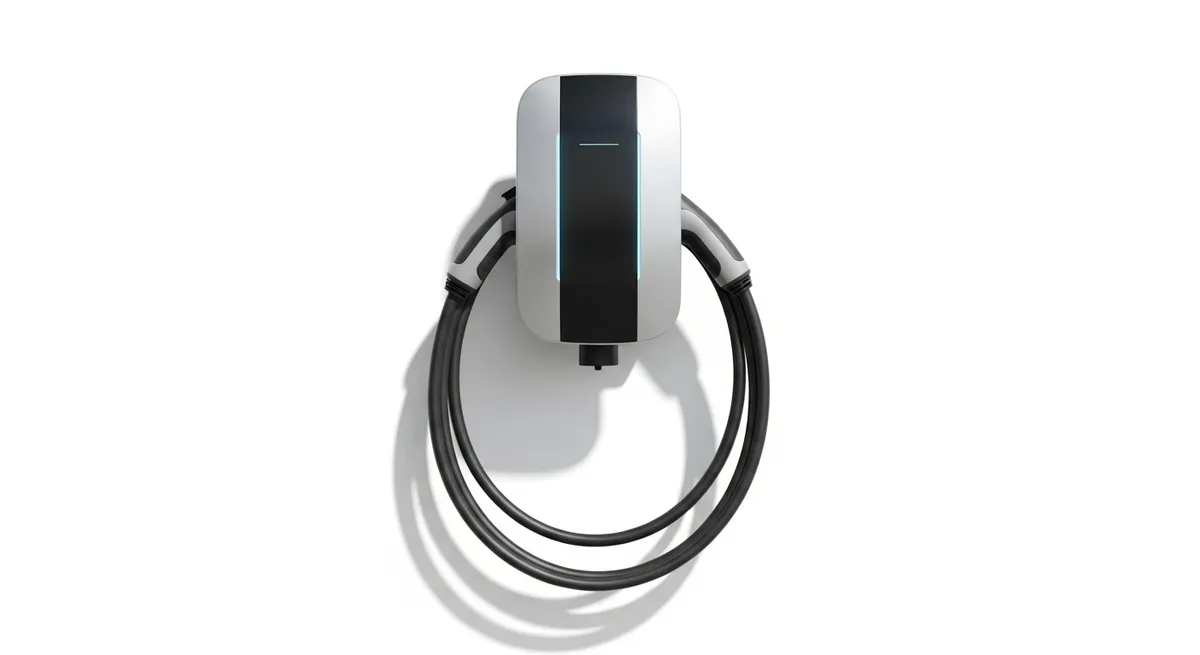
If you’re serious about making the switch, start with the infrastructure. A home charger is the single best investment you can make as an EV owner, slashing your cost per kilometre and giving you the freedom to charge overnight on off-peak municipal tariffs. ChargePoint SA specialises in residential and commercial installations across South Africa, from 7.4 kW AC units for overnight charging to 22 kW three-phase setups for faster top-ups.
Get a free site assessment and quote from ChargePoint SA—because the best time to future-proof your driveway was yesterday. The second-best time is today.
Image credits
“BYD Atto 3” by Alexander Migl, CC BY-SA 4.0 · “Golden Arrow BYD electric bus in Cape Town” by Husskeyy, CC BY-SA 4.0