Key points
- The GWM Ora 5 BEV starts at R530,000 (Super Luxury) and runs to R600,000 (Ultra Luxury), with a 150 kW / 260 Nm motor, 58.3 kWh LFP battery and a claimed range of up to 520 km per GWM South Africa’s official announcement via Cars.co.za.
- The GWM Ora 5 HEV starts at R424,900, Cars.co.za confirms it as South Africa’s most affordable traditional hybrid.
- The BYD Dolphin Surf starts at R339,900, South Africa’s cheapest BEV since its September 2025 launch, and has become the country’s best-selling BEV, SA’s EV market has surged sharply in early 2026 with monthly BEV records broken in both March and April 2026.
- At R28.06 per litre (inland, effective 3 June 2026, per BusinessTech SA), the Ora 5 BEV costs approximately R1,051/month in home electricity at 1,500 km/month versus approximately R3,009/month in petrol for the ICE variant, a saving of roughly R1,958/month on fuel alone.
Why this comparison matters right now
South Africa’s entry-level EV market changed shape twice in quick succession. The GWM Ora 03, the country’s previous cheapest BEV at R686,950, had slow sales since its November 2023 launch. Then BYD arrived with the Dolphin Surf at R339,900 in September 2025, halving the asking price and immediately shifting what buyers expect at the bottom of the EV market.
Now GWM has responded with the Ora 5, launched in South Africa in July 2026. The Ora 5 BEV enters at R530,000, already R156,950 cheaper than the Ora 03 it effectively replaces, and arrives alongside a conventional hybrid sibling at R424,900. Together they force a genuinely useful question: which of these three drivetrains, BEV, hybrid, or traditional petrol, makes the most financial sense for a South African household in 2026?
SA’s BEV sales surged in early 2026, with 544 BEVs sold in Q1 2026 alone, more than double Q1 2025, and April 2026 set a new monthly record of 403 units. The timing of the Ora 5 launch could not be more deliberate. Petrol inland hit R28.06 per litre on 3 June 2026, a record high, and every rand saved at the pump now translates directly into faster payback on a higher purchase price.
GWM Ora 5: three powertrains, one platform
AutoTrader confirms the Ora 5 is built on GWM’s versatile ONE platform, which supports ICE, HEV and BEV drivetrains within the same body. This is a significant departure from the Ora 03’s electric-only identity, and it directly addresses the two biggest objections SA buyers raise against EVs: charging infrastructure and load-shedding.
BEV variant
The BEV uses a 150 kW / 260 Nm permanent magnet synchronous motor driving the front wheels, paired with a 58.3 kWh lithium iron phosphate (LFP) battery made by SVOLT, GWM’s own battery division. GWM South Africa’s official announcement quotes a claimed range of up to 520 km. CAR Magazine SA cites a 430 km WLTC figure, the more conservative WLTC cycle is generally the more realistic benchmark for real-world SA driving. LFP chemistry is thermally more stable than NMC at high temperatures, making it better suited to hot SA summers, and it is less susceptible to degradation from repeated DC fast charging.
The Ora 5 BEV can DC fast-charge at up to 120 kW, achieving a 30-80% charge in approximately 20 minutes under optimal conditions. It also offers Vehicle-to-Load (V2L) capability of up to 6 kW, meaning you can run home appliances directly from the car during load-shedding. Boot space is 362 litres seats up, expanding to 1,060 litres with seats folded.
Four BEV trims are available in South Africa: two Super Luxury grades at R530,000 and R550,000, and two Ultra Luxury grades at R580,000 and R600,000. All four share the identical 150 kW powertrain.
HEV variant
The HEV pairs a 1.5-litre turbopetrol engine with a front-mounted electric motor for a combined system output of 164 kW and 476 Nm, transmitted through a DHT (Dedicated Hybrid Transmission). A small 1.1 kWh battery supports the hybrid system. This is a self-charging hybrid, no plug required, which means zero home charging infrastructure, no DB board upgrade, and no exposure to Eskom outages affecting your morning range. It starts at R424,900 in Super Luxury trim, making it South Africa’s most affordable traditional hybrid according to Cars.co.za.
Petrol (ICE) variant
The petrol version uses a 105 kW / 210 Nm 1.5-litre turbopetrol engine via a 7-speed DCT gearbox. Official WLTC fuel consumption is 7.15 L/100 km. At R28.06/litre, that works out to approximately R3,009/month for a 1,500 km/month commuter, the most expensive of the three powertrains to run over time despite the lower purchase price.
| Spec | Ora 5 BEV (Super Luxury) | Ora 5 HEV (Super Luxury) | Ora 5 Petrol |
|---|---|---|---|
| Entry price (ZAR) | R530,000 | R424,900 | Not yet confirmed |
| Motor / engine output | 150 kW / 260 Nm | 164 kW / 476 Nm (combined) | 105 kW / 210 Nm |
| Battery | 58.3 kWh LFP | 1.1 kWh (self-charging) | None |
| Claimed range / consumption | Up to 520 km (GWM SA) / 430 km WLTC (CAR Magazine) | Self-charging HEV | 7.15 L/100 km (WLTC) |
| DC fast charge | Up to 120 kW | N/A | N/A |
| V2L output | Up to 6 kW | N/A | N/A |
| Boot (seats up) | 362 litres | 272 litres | 362 litres |
BYD Dolphin Surf: the benchmark at R339,900
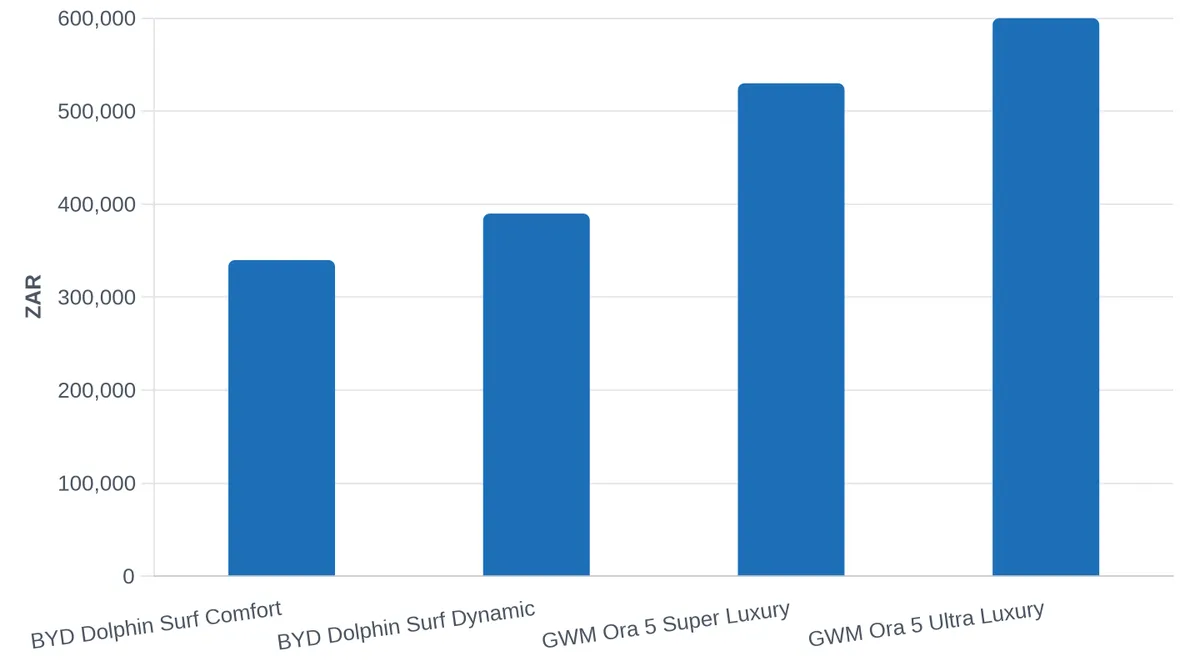
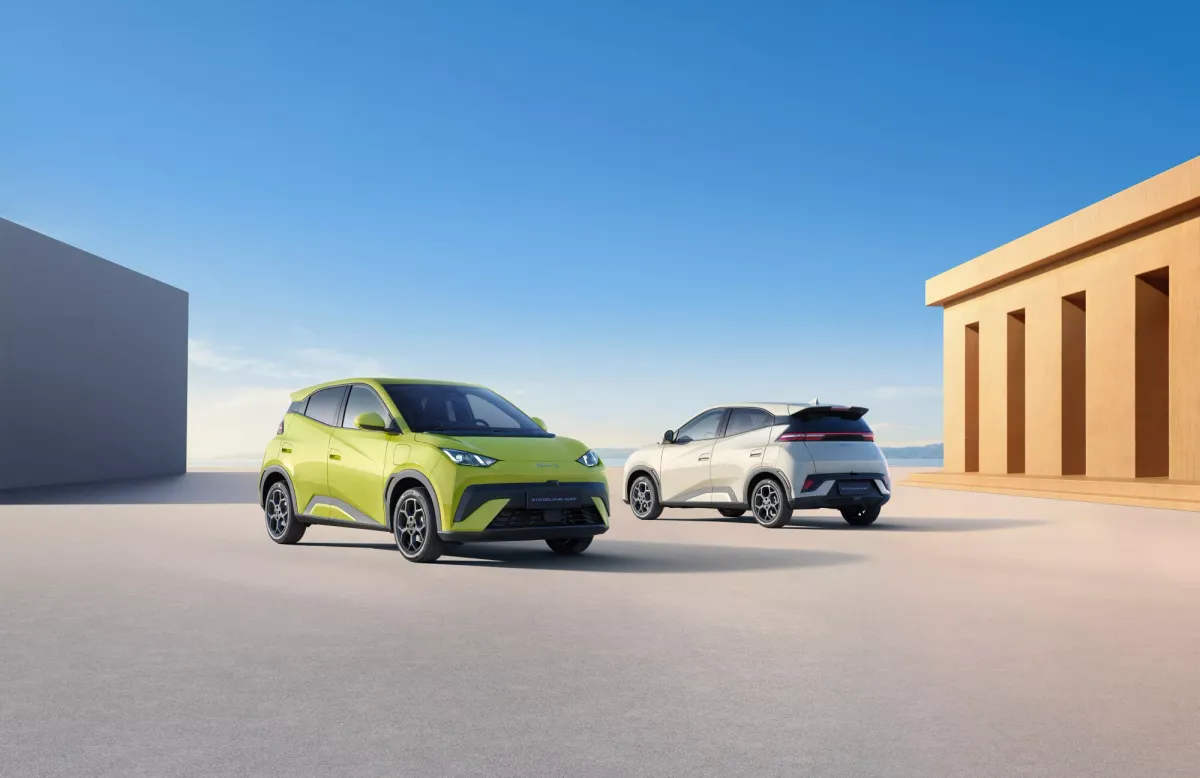
The BYD Dolphin Surf entered South Africa in September 2025 and immediately redrew the affordability map. At R339,900 for the Comfort trim, it undercut the then-cheapest BEV (the Ora 03 at R686,950) by more than half. It comes in two variants: the Comfort with a 30 kWh battery and 232 km WLTP range, and the Dynamic with a 38.8 kWh battery and 295 km WLTP range at R389,900.
The motor produces 55 kW and 135 Nm, modest compared to the Ora 5 BEV’s 150 kW, and 0-100 km/h in the Comfort takes 14.2 seconds. Real-world energy consumption in CAR Magazine testing came in at 14.5 kWh/100 km (6.9 km/kWh), while the Cars.co.za launch review recorded a more efficient 12.5 kWh/100 km (8.0 km/kWh). The Dolphin Surf carries a 5-star Euro NCAP safety rating and an 8-year / 200,000 km battery warranty.
The Dolphin Surf is unambiguously the price leader. But it is also a smaller, lighter city car with a shorter WLTP range ceiling than the Ora 5 BEV. If your daily commute is under 200 km and you have a home charger, the Dolphin Surf does the job at a substantially lower capital outlay. If you need more range, more performance, or a self-charging hybrid option, the Ora 5 family broadens the choice.
| Spec | BYD Dolphin Surf Comfort | BYD Dolphin Surf Dynamic | GWM Ora 5 BEV (Super Luxury) |
|---|---|---|---|
| Price (ZAR) | R339,900 | R389,900 | R530,000 |
| Battery | 30 kWh | 38.8 kWh | 58.3 kWh LFP |
| WLTP / claimed range | 232 km | 295 km | 430 km WLTC (CAR Magazine) |
| Motor output | 55 kW / 135 Nm | 55 kW / 135 Nm | 150 kW / 260 Nm |
| 0-100 km/h | 14.2 s | 15.23 s | Not yet confirmed for SA |
| Battery warranty | 8 yr / 200,000 km | 8 yr / 200,000 km | 8 yr / 150,000 km |
| Euro NCAP rating | 5 stars | 5 stars | Not yet confirmed |
Calculate your real Ora 5 BEV charging costs at home
What does it actually cost to charge at home?
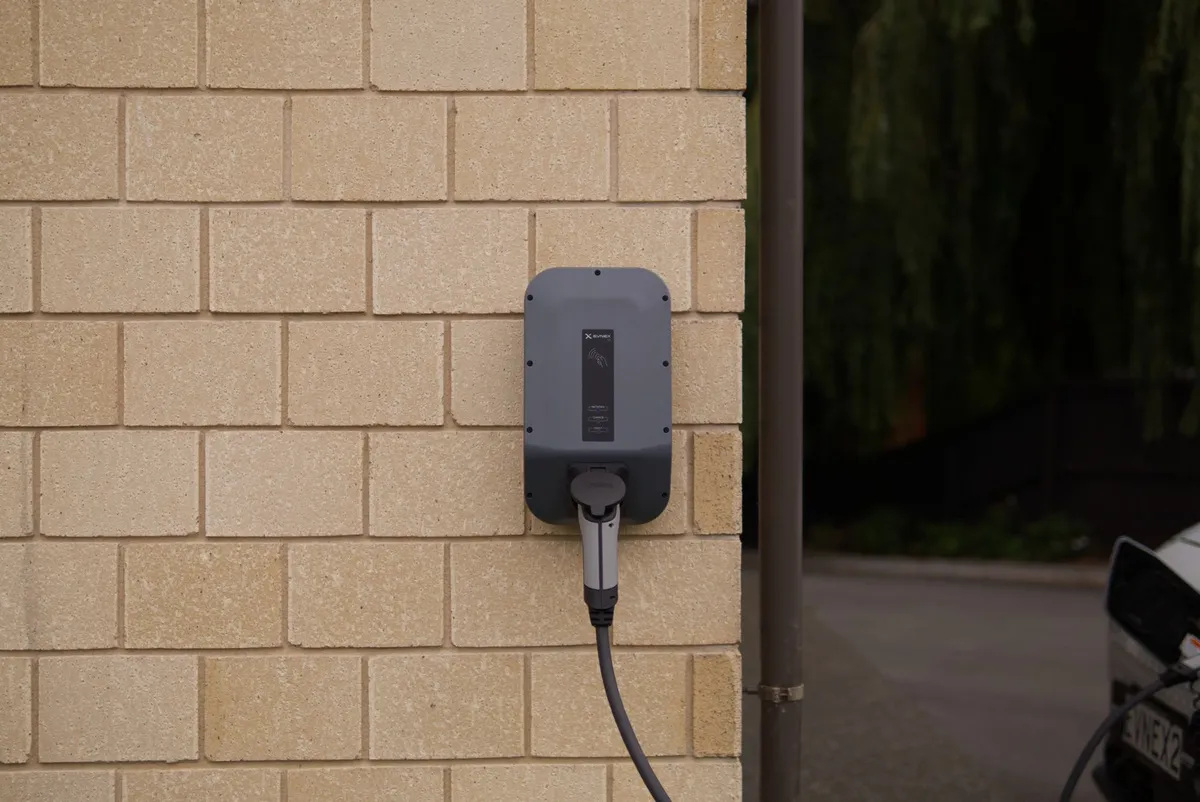
The purchase price is only the beginning. Home charging costs in South Africa depend on your municipality and your usage tier. At Johannesburg’s 2025/26 tariff of R3.4826/kWh, a full charge of the Ora 5’s 58.3 kWh battery costs approximately R203. At the South African residential average of R4.52/kWh (GlobalPetrolPrices.com, September 2025), a full charge costs approximately R263.
Running the Ora 5 BEV at 1,500 km/month from home works out to approximately R1,051/month at the R4.52/kWh residential rate and GWM’s official 15.5 kWh/100 km consumption figure. The equivalent ICE Ora 5 at 7.15 L/100 km and R28.06/litre costs approximately R3,009/month in petrol, a monthly fuel saving of roughly R1,958 in favour of the BEV.
If you can charge off solar or at a favourable off-peak rate approaching R2.00/kWh, the cost drops to approximately R31 per 100 km. Public DC fast charging at R7.00-R7.50/kWh pushes it back up to R109-R116 per 100 km, still well below the petrol equivalent, but a reminder that relying on public DC charging erodes your running-cost advantage significantly.
Load-shedding and the home charger reality
Load-shedding remains the elephant in every SA EV conversation. A 7 kW home wallbox recovers roughly 45 km of range per hour of charging in the Ora 5 BEV (based on 15.5 kWh/100 km consumption). A two-hour Stage 4 overnight window gives you back roughly 90 km, enough for most SA commutes if you are already near full. The 120 kW DC fast-charge capability means a quick top-up at a public charger is also a realistic contingency. The Ora 5’s V2L function adds a practical bonus: during a load-shedding event, you can run appliances directly off the car’s battery at up to 6 kW.
If load-shedding anxiety is your main concern, the HEV at R424,900 sidesteps the issue entirely. It is a self-charging hybrid that behaves like a petrol car at the fuel pump, no home infrastructure, no DB board upgrade, no overnight charging dependency.
To install a 7 kW single-phase wallbox at home, budget R8,000-R15,000 all-in, including the charger unit, labour, and the required SANS 10142-1 electrical Certificate of Compliance (CoC). A 22 kW three-phase unit starts from around R13,900 installed and is the better long-term investment if your DB board supports it.
Get a free home charger installation quote
Warranty, service plan and after-sales support
GWM backs the Ora 5 with a 7-year / 200,000 km comprehensive and transferable vehicle warranty, an 8-year / 150,000 km high-voltage battery warranty, a 7-year / 75,000 km service plan, and 7-year unlimited-km roadside assistance available 24/7. Service intervals are every 12 months or 15,000 km, whichever comes first. Note that the battery warranty requires the State of Health to fall below 70% before it constitutes a warranty defect, degradation above that threshold is not covered. GWM SA’s service history is recorded digitally on its central platform under the ‘connectiveCARE’ after-sales framework.
The BYD Dolphin Surf carries an 8-year / 200,000 km battery warranty, a longer mileage allowance than the Ora 5’s 150,000 km cap, which is a meaningful differentiator for high-mileage SA drivers.
GWM’s Durban warehouse maintains 8,000 different spare parts with a stock value exceeding R150 million. In main centres, 90% of warranty spare parts are delivered to the dealership by the next day. Outlying areas require a minimum of 72 hours. The Ora brand’s relatively small SA installed base means the dealer network’s EV-specific technician experience is still building, a fair consideration when comparing with a brand that has sold in larger volumes.
The bigger picture: SA’s EV market in 2026
South Africa recorded 1,088 BEVs sold in 2025 per Naamsa-reporting brands, down 13.4% from 2024, but the early 2026 trajectory reversed that trend sharply. Q1 2026 delivered 544 BEVs (more than double Q1 2025), and April 2026 broke the monthly record with 403 units. The total NEV market (BEV + HEV + PHEV) reached 16,716 units in 2025, up 7.1% year-on-year, driven largely by a 280.8% surge in PHEV registrations from affordable Chinese brands including GWM and Chery.
On the charging infrastructure side, South Africa now has approximately 445 public EV charging sites with around 650 individual chargers and 1,200+ connectors, up 122% from approximately 200 stations in 2022. Zero Carbon Charge launched South Africa’s first off-grid EV charging network on the N3 Johannesburg to Durban corridor in May 2026, backed by a R100-million DBSA investment, targeting a 20%, 80% charge in under 30 minutes at each solar-powered station. The national rollout plan targets stations every 150 km along all major national roads, directly relevant to Ora 5 BEV buyers planning Gauteng to KZN trips.
GWM itself is in active discussions about local vehicle assembly, exploring both the Mercedes-Benz East London plant and other options. Local production could reduce import costs on GWM EVs and hybrids, improving total cost of ownership for future SA buyers.
Which one should you buy?
The answer depends almost entirely on your charging situation and daily distance. Here is a straightforward framework:
- BYD Dolphin Surf (from R339,900), best for city commuters covering under 250 km per charge who want the lowest entry price and can charge at home overnight. The 5-star Euro NCAP rating and 8-year / 200,000 km battery warranty are standout value at this price point.
- GWM Ora 5 HEV (from R424,900), best for buyers who want to slash fuel costs but are not yet ready for a full BEV. No home charging infrastructure required, 164 kW / 476 Nm combined output, and currently the most affordable traditional hybrid in South Africa. It is the pragmatic middle ground.
- GWM Ora 5 BEV (from R530,000), best for buyers who can install a home charger, commute more than 250 km regularly, or want the full EV experience with V2L load-shedding backup. The R1,958/month fuel saving over the petrol equivalent is a compelling figure at current pump prices.
If you are buying the Ora 5 BEV, a SANS 10142-1 certified home charger installation is not optional, it is the infrastructure that makes the ownership economics work. Getting a quote before you commit to the car purchase is the sensible sequence.
Get a free home charger installation quote and see what a certified install costs for your property
Frequently asked questions
What is the GWM Ora 5 price in South Africa?
The Ora 5 BEV starts at R530,000 (Super Luxury) and tops out at R600,000 (Ultra Luxury). The HEV starts at R424,900. Petrol pricing has not yet been officially confirmed by GWM South Africa.
How far does the GWM Ora 5 BEV go on a full charge?
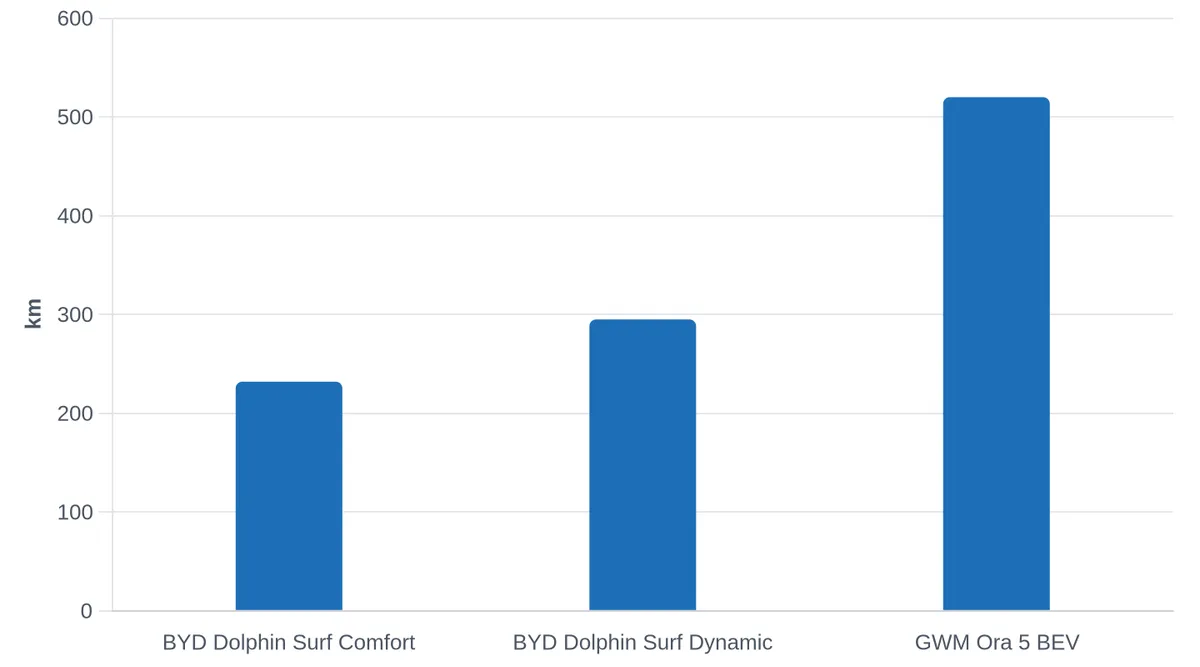
GWM South Africa’s official announcement claims up to 520 km. CAR Magazine SA cites a 430 km WLTC figure, which is the more conservative and more reliable cycle for real-world SA conditions. Real-world range will depend on driving style, load, and whether the SA-spec car includes a heat pump (not yet confirmed).
Can the GWM Ora 5 BEV be used during load-shedding?
Yes, in two ways. The 120 kW DC fast-charge capability means you can top up quickly at a public charger when home charging is interrupted. And the V2L (Vehicle-to-Load) function lets you run home appliances from the car’s battery at up to 6 kW during an outage.
How much does it cost to charge the Ora 5 BEV at home?
At Johannesburg’s 2025/26 tariff of R3.4826/kWh, a full 58.3 kWh charge costs approximately R203. At the SA residential average of R4.52/kWh, it costs approximately R263. Monthly electricity spend at 1,500 km/month works out to roughly R1,051.
What is the difference between the Ora 5 BEV and the BYD Dolphin Surf?
The Dolphin Surf is cheaper (from R339,900 vs R530,000), smaller, and has a shorter WLTP range (232-295 km vs 430 km WLTC). The Ora 5 BEV has a larger battery (58.3 kWh vs 38.8 kWh), significantly more power (150 kW vs 55 kW), faster DC charging (up to 120 kW), and V2L capability. The Dolphin Surf holds a confirmed 5-star Euro NCAP rating; the Ora 5 does not yet have a confirmed NCAP result for the SA market.
Do I need to upgrade my DB board to install a home EV charger?
It depends on your existing installation. A SANS 10142-1 certified installer will assess your DB board capacity as part of the site assessment. Budget R8,000-R15,000 for a 7 kW single-phase wallbox including installation and CoC; a 22 kW three-phase unit starts from around R13,900 installed.
Compare the GWM Ora 5 against other EVs & hybrids
See specs, range, and pricing for all powertrains side-by-side.
Compare EV options →WhatsApp us
CoC-certified installers, nationwide