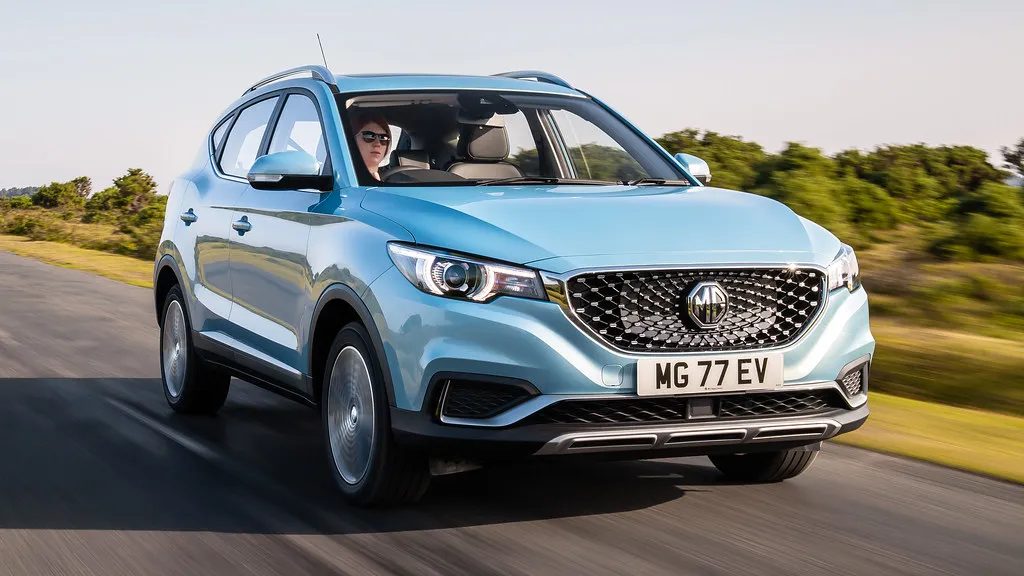


As u/NothingSubject7691 put it on r/electricvehicles: “I recently purchased second hand MG ZS EV car… I have driven 3k km in the last 1 month with mix of city and highway driving… MG ZS EV with 50 kw battery gives me 250 km range as I drive between 110 to 120 most of the time. If driven economically within 100 it will give 300 km range.” That real-world experience frames the question thousands of South African families are asking in 2026: does the R100,000 premium for an electric crossover pay off when you factor in petrol at over R25 per litre, load-shedding, and the total cost of ownership?
With the MG ZS EV now priced at R699,900 and the Nissan X-Trail starting at R599,900 (after Nissan’s September 2025 price cuts), the crossover segment has a clear electric vs petrol showdown. We’ve crunched the numbers using real Eskom tariffs, current fuel prices, and five years of ownership data to show you exactly where your money goes—and which option makes sense for your driveway.
Quick summary
- The MG ZS EV costs R100,000 more upfront (R699,900 vs R599,900) but saves approximately R2,000–R2,400 per month in fuel at 1,500 km/month driving.
- Five-year total cost of ownership favours the EV by R80,000–R120,000 when factoring in electricity vs petrol, reduced maintenance, and depreciation—but only if you can charge at home.
- Real-world range is 250–300 km (not the claimed 320 km), and the MG accepts up to 7 kW AC charging, making a 7.4 kW home charger the practical match.
- Load-shedding and limited public DC fast-charging outside major metros remain the biggest ownership friction points; solar pairing is ideal but adds R80,000–R150,000 to the equation.

Price and specifications: the R100k question
The sticker shock is real. The MG ZS EV Long Range retails at R699,900, while the Nissan X-Trail Visia CVT (the entry automatic) now sits at R587,900 after temporary reductions—though the mid-spec Acenta you’d actually want is R599,900. That R100,000 gap is the price of admission to electric motoring, and it’s the number every buyer has to justify over five years of ownership.
| Specification | MG ZS EV Long Range | Nissan X-Trail Visia CVT |
|---|---|---|
| Price (2026) | R699,900 | R599,900 |
| Battery / Engine | 51 kWh lithium-ion | 2.0L petrol CVT |
| Power output | 130 kW / 280 Nm | 106 kW / 197 Nm |
| Claimed range / tank | 320 km (WLTP) | ~650 km (55L tank) |
| Real-world range | 250–300 km | 550–600 km |
| Efficiency | 17 kWh/100 km | 8.5 L/100 km (combined) |
| Warranty | 5yr/unlimited km + 8yr battery | 6yr/150,000 km |
| Service plan | 5yr/80,000 km | 3yr/90,000 km |
The MG delivers more torque and a longer service plan; the X-Trail offers twice the real-world range and a bigger boot (565 litres vs 448 litres). Both are five-seaters with similar interior space, though the Nissan’s CVT gearbox is smoother in stop-start traffic than the MG’s single-speed transmission feels at parking speeds.
Running costs: where the EV claws back the premium
Monthly fuel vs electricity at 1,500 km
This is where the spreadsheet starts to smile. At 1,500 km per month—a typical Johannesburg-to-Pretoria commuter or Cape Town northern-suburbs family—the numbers diverge fast.
Nissan X-Trail (petrol):
8.5 L/100 km × 1,500 km = 127.5 litres
127.5 L × R25.50/L (April 2026 inland 95 octane) = R3,251 per month
MG ZS EV (home charging):
17 kWh/100 km × 1,500 km = 255 kWh
255 kWh × R3.20/kWh (Eskom Homeflex off-peak average, post-April 2026 tariff hike) = R816 per month
Monthly saving: R2,435. Over a year, that’s R29,220—nearly 30% of the upfront premium recovered in fuel alone. If you charge during Eskom’s off-peak window (21:00–06:00) on a time-of-use tariff, the per-kWh cost drops further to R2.80–R3.00, pushing annual savings past R30,000.
But there’s a catch: NERSA approved an 8.76% tariff hike for Eskom customers in April 2026, and municipal increases of 9.01% follow in July. Electricity isn’t standing still—though it’s still climbing slower than petrol, which spiked above R30/L for diesel in early 2026 due to Middle East supply shocks.

Maintenance and servicing
EVs have no oil changes, no timing belts, no exhaust systems, and regenerative braking means brake pads last 100,000+ km. The MG’s 5-year/80,000 km service plan covers everything; you’ll visit the dealer for software updates, cabin filters, and tyre rotations. Budget R800–R1,200 per service.
The X-Trail’s 3-year/90,000 km plan runs out sooner, and post-plan services (oil, filters, plugs) cost R2,500–R4,000 depending on the dealer. Over five years, expect to spend R8,000–R12,000 more on the Nissan’s maintenance—not a deal-breaker, but it adds up.
Five-year total cost of ownership
Let’s model 90,000 km over five years (1,500 km/month) and include depreciation, fuel, maintenance, and insurance. We’re assuming 50% residual value for both (conservative for EVs in 2026, optimistic for petrol crossovers as the market shifts).
| Cost category | MG ZS EV | Nissan X-Trail |
|---|---|---|
| Purchase price | R699,900 | R599,900 |
| Fuel / electricity (5 years) | R49,000 | R195,000 |
| Maintenance (5 years) | R6,000 | R18,000 |
| Insurance (5 years, 1.2% p.a.) | R42,000 | R36,000 |
| Depreciation (50% residual) | R349,950 | R299,950 |
| Total 5-year cost | R446,950 | R548,950 |
The EV comes out R102,000 ahead over five years—enough to pay for a 5 kW solar system or a second-hand BYD Dolphin for the teenager. But this model assumes you charge at home. If you’re relying on public DC fast-charging at R7.00/kWh (Rubicon’s 2025 tariff), your electricity cost balloons to R120,000 over five years, erasing most of the advantage.
Home charging: 7.4 kW vs 11 kW vs 22 kW—which fits the MG?
The MG ZS EV’s onboard charger accepts a maximum of 7 kW AC (some sources cite 6.6 kW). That means a 22 kW charger is overkill, and an 11 kW unit won’t charge any faster than a 7.4 kW model. For this car, a 7.4 kW single-phase charger is the sweet spot—it’ll replenish the 51 kWh battery from 20% to 80% (the usable daily window) in about 5–6 hours overnight.
Installation cost for a 7.4 kW wall-box in Gauteng or the Western Cape: R12,000–R18,000 including a dedicated circuit breaker and compliance certificate. If your home has three-phase power and you’re future-proofing for a second EV, an 11 kW or 22 kW charger makes sense—but for the MG alone, it’s wasted capacity.
Public charging: GridCars operates over 450 stations with AC and DC options, and CHARGE launched solar-powered DC fast-charging on the N3 corridor in May 2026. DC fast-charging (50 kW) can add 200 km in 30–40 minutes, but at R7.00/kWh it’s three times the cost of home charging—reserve it for road trips, not daily top-ups.
_interior.jpg)
South Africa-specific considerations
Load-shedding and range anxiety
Load-shedding remains the elephant in the driveway. If Eskom implements Stage 4 during your overnight charging window, you wake up to 60% instead of 100%—and that’s the difference between making your Durban weekend trip or not. A 5 kWh home battery (R60,000–R80,000 installed) or a 5 kW solar system with battery backup (R120,000–R150,000) solves this, but now your “affordable” EV has a R150,000 infrastructure tail.
The X-Trail’s 55-litre tank doesn’t care about Eskom. You fill up in three minutes at any of 4,600 fuel stations nationwide, and range anxiety is a foreign concept. For families in rural areas or those who can’t install home charging (apartment dwellers, office-park tenants), the petrol option remains the pragmatic choice in 2026.
Service network and parts availability
Nissan has 70+ dealers across South Africa; MG has 30+, concentrated in metros. If you’re in Polokwane or George, the nearest MG service centre might be 200 km away—a problem if you need warranty work. That said, EVs need service far less often, and MG is expanding its SA footprint in 2026 with three new models and additional NEV variants.
Parts for the X-Trail are everywhere; parts for the MG’s battery pack come from China, and lead times can stretch to 6–8 weeks for major components (though the 8-year battery warranty covers failures). If you’re risk-averse, the Nissan’s proven supply chain is reassuring.
Resale value and the 2026 market shift
Petrol crossovers are depreciating faster than expected as AutoTrader reports 220% growth in EV searches and sub-R500k models flood the market. The X-Trail might lose 55–60% of its value by 2031, while the MG—if battery health holds—could retain 45–50% as second-hand EV demand grows. But this is speculative; SA’s EV resale market is too young to model confidently.
_China_(10).jpg)
Real-world range: what owners actually see
MG claims 320 km (WLTP) for the ZS EV. Reality check: u/NothingSubject7691 reports 250 km at 110–120 km/h highway speeds, 300 km at 100 km/h, and 350 km at 80 km/h in eco mode. The same owner notes: “Anything above 7 km per kw battery is not achievable by any means and don’t fall for company claiming unrealistic ranges.”
That 250 km real-world figure is critical. If your daily commute is 80 km return (Johannesburg CBD to Midrand), you’ll charge every third day. If it’s 120 km return (Cape Town CBD to Stellenbosch), you’re charging nightly. The X-Trail’s 550–600 km real-world range means weekly fill-ups for most families—less convenient than overnight electrons, but immune to load-shedding.
Speed, climate control, and efficiency
As the Reddit owner observed: “AC makes less difference and the speed and number of ppl traveling makes bigger difference.” Highway speeds above 120 km/h crater the MG’s range by 20–25%; the X-Trail’s CVT gearbox keeps the engine in its efficiency sweet spot regardless. If you’re a N1 fast-lane driver, budget for 220–240 km between charges and plan accordingly.
The honest verdict: who should buy which?
Buy the MG ZS EV if you:
- Own a home with off-street parking and can install a 7.4 kW charger (or already have solar)
- Drive predictable routes under 200 km per day, mostly in metro areas with backup public charging
- Keep cars for 5+ years and want to lock in lower running costs against rising fuel prices
- Value instant torque, silent operation, and the novelty of electric motoring
- Can afford the R100k premium upfront and have a second petrol car for long trips (or don’t mind planning charging stops)
Stick with the Nissan X-Trail if you:
- Rent, live in a complex without charger infrastructure, or park on the street
- Regularly drive 300+ km in a day, or live outside Gauteng/Western Cape where public charging is sparse
- Need maximum flexibility—fuel up anywhere, anytime, in three minutes
- Prefer proven technology with a 70-dealer service network and instant parts availability
- Want the lower sticker price and plan to trade in after 3–4 years
The brutal truth: the MG ZS EV is the better financial choice only if you can charge at home and drive enough to recoup the premium (1,200+ km/month). Below that threshold, or without home charging, the X-Trail’s lower entry price and operational flexibility win. The EV isn’t “better”—it’s better for specific use cases, and South Africa’s infrastructure in 2026 still favours petrol for the majority.
Ready to go electric? Book a free site assessment
If the MG ZS EV’s five-year savings have you convinced, the next step is confirming your home can support it. ChargePoint SA offers free site assessments across Gauteng, the Western Cape, and KZN—we’ll evaluate your electrical panel, recommend the right charger (7.4 kW for the MG), and provide a fixed-price quote including installation and COC.
Whether you’re comparing the MG to the X-Trail, a BYD Atto 3, or a plug-in hybrid, understanding your charging options is half the battle. Get a free quote today and see what home charging will actually cost—no surprises, no hidden fees, just honest advice from South Africa’s EV charging specialists.
Image credits