
Key points
- The Volvo EX90 Ultra Twin Motor Performance costs R2,650,000 in South Africa and went on sale in April 2025 (TimesLive). It is the only variant available locally.
- The car’s V2H hardware is physically present in every unit, but the feature is listed as “Coming Soon” on Volvo’s own global support page as of mid-2026. No South African activation date has been announced.
- V2H was activated in the US only (November 18, 2025), via a partnership with dcbel and requiring a dedicated dcbel Ara Home Energy Station priced at $9,999 USD, not available in South Africa.
- The bundled GridCars 7.4 kW wallbox included in the purchase price is a standard unidirectional charger. It cannot send power back to your home.
- South Africa has no regulatory pathway for residential bidirectional EV chargers: no NRS 097-2-1 type-test certificate exists for any V2H device, and no metro has a V2G tariff or application process.
- A comparable home battery backup system (5 kWh) costs R30,000-R45,000 installed and is available today, legally, with a compliance certificate.
- V2L (Vehicle-to-Load, powering individual appliances from the car’s onboard outlet) is available to SA EX90 owners via OTA update 1.2.15 at launch.
The Promise That Sold Many on the EX90
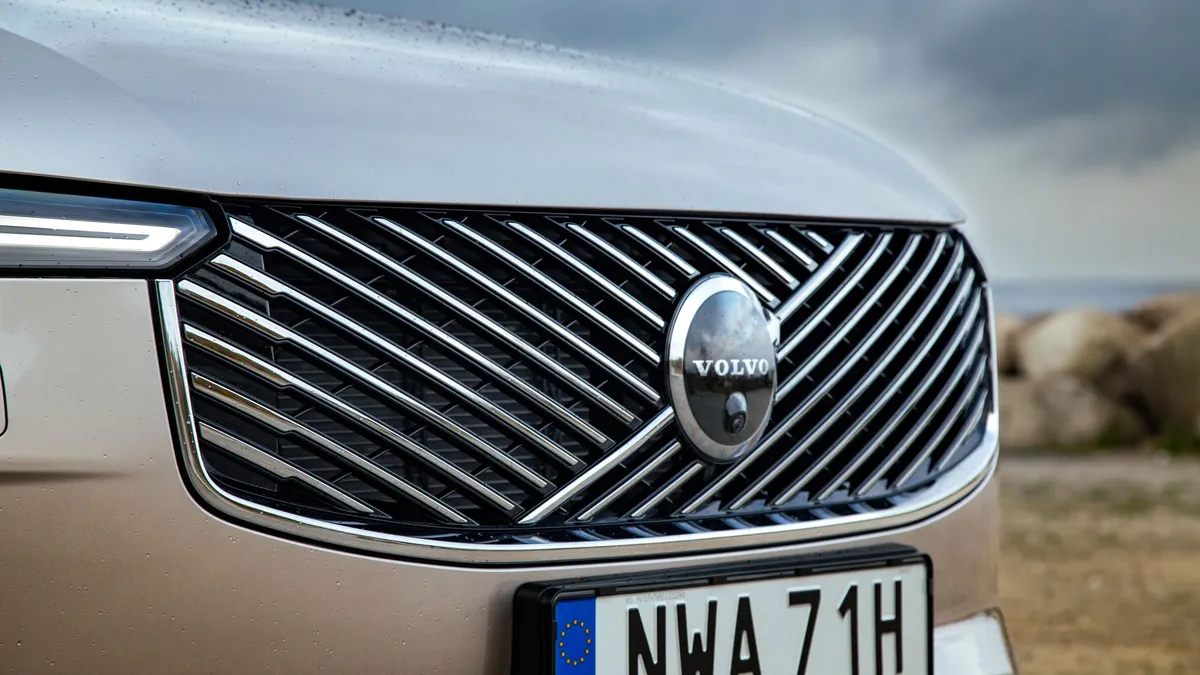
When Volvo revealed its flagship EX90 in November 2022, the load-shedding narrative was immediate. Greg Maruszewski, then MD of Volvo Car South Africa, did not waste the moment.
“This South African challenge means that our customers will be especially receptive to a feature such as this.”
He went further, describing a specific use case in practical terms:
“In practice, during loadshedding, the Volvo EX90 could power a number of appliances in a home, from power tools to a music system.”
And the timing angle was made explicit:
“Paired with smart-charging capabilities coming to the Volvo Cars smartphone app, the Volvo EX90 will allow motorists to charge their cars when demand from the grid is low and save that stored energy to be used later. ‘Later’ could obviously mean the point when loadshedding kicks in.”
That was compelling, well-timed messaging. For South Africans sitting through Stage 6 rolling blackouts, a R2.65-million car that could also power the house felt like it justified a substantial part of its price premium. The problem is that nearly four years later, the feature is still not available to a single South African EX90 owner. This article explains why, what it would cost if it were, and what your realistic alternatives are right now.
What the EX90 Actually Arrived With in South Africa
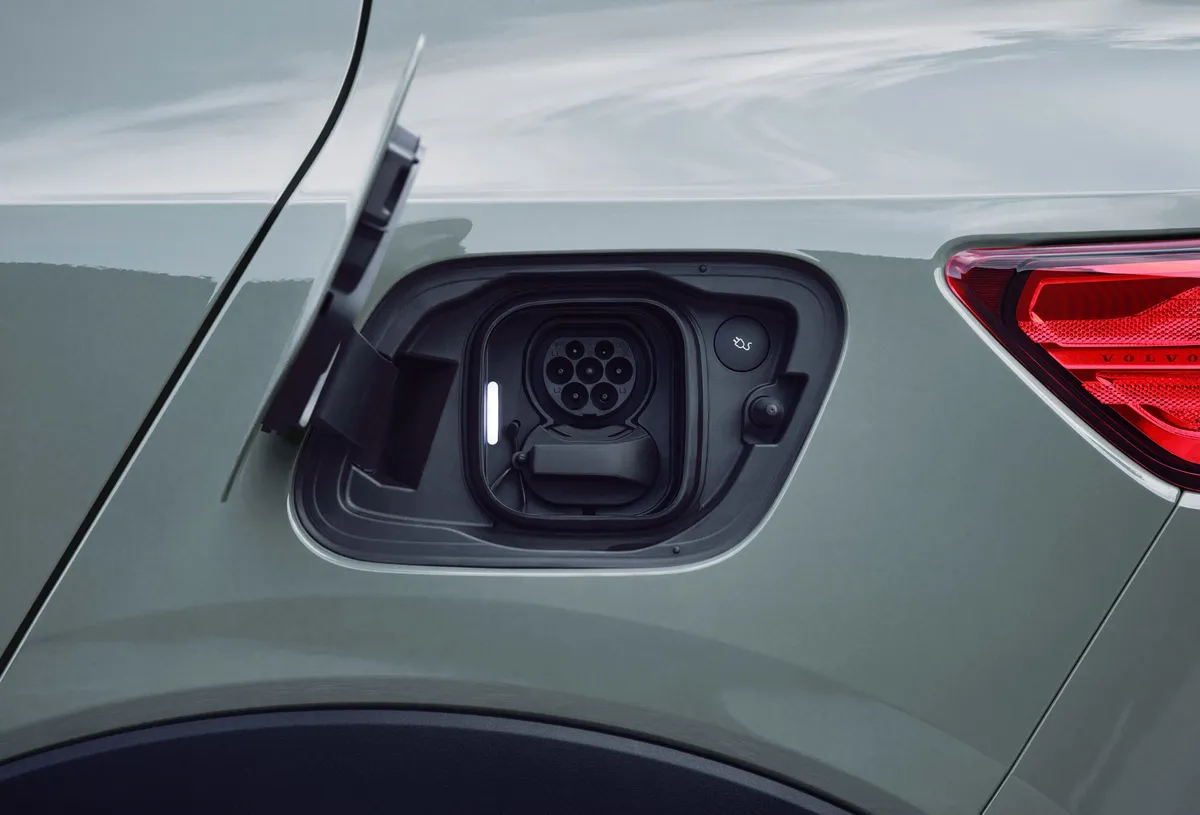
The EX90 Ultra Twin Motor Performance went on sale at South African dealerships in April 2025 (TimesLive). It carries a 111 kWh gross / 107 kWh usable battery pack (Cars.co.za), a WLTP range claim of 604 km (CARmag), and supports DC fast-charging at up to 250 kW. In practice, TopGear South Africa recorded a real-world range of 468 km on a local test drive, and the Cars.co.za reviewer made an observation that will be familiar to every SA EV driver:
“As far as charging goes, the EX90 supports up to 250 kW DC fast-charging, but as far as we’re aware, the fastest charger in South Africa is 150 kW. Still, 30 minutes at our local 75 kW DC box was enough to gain plenty of range.”
The car arrived with OTA software update 1.2.15, which activated V2L (Vehicle-to-Load), Apple CarPlay, and several safety features (Cars.co.za EX90 2025 Review). V2L means you can plug appliances directly into the car’s onboard outlet, which is genuinely useful during a blackout. But V2L is not V2H. Powering a specific device from your car’s socket and integrating your car bidirectionally with your home’s electrical distribution board are completely different things, technically and legally.
The TopGear South Africa reviewer captured the broader software maturity situation bluntly:
“The reality is that the EX90 hasn’t quite attained all of Volvo’s strategic accomplishments…yet. The car feels like it’s been released under pressure. Not thoroughly tested and signed off.”
The Cars.co.za journalist who attended the international California launch in September 2024 made the same point ahead of the SA release:
“Key features like Apple CarPlay, some of the Lidar-assisted safety tech, bidirectional charging and even one of the Bowers & Wilkins audio modes will only be activated in early 2025.”
For South African buyers, the bidirectional charging part of that sentence remains pending well past “early 2025.”
Where V2H Actually Is: The US-Only Activation
On November 18, 2025, Volvo Cars announced the official activation of V2H for the EX90 in the United States, via a partnership with dcbel. Jim Nichols, Head of Product and Technology Consumer Offer for Volvo Cars in the Americas, described it this way:
“We continue to enhance the benefits of ownership of our flagship EX90 by enabling it to send power back to the home through bi-directional charging. By working with dcbel, we’re taking an important next step in our electrification and smart home energy strategy journey to offer smarter home energy options and added peace of mind.”
The Volvo global support page currently lists the EX90 as “Coming Soon” for bidirectional charging and describes availability as “when available in your market” (Volvo Cars official support page). No South African launch date has been announced. The Australian Electric Vehicle Association (AEVA) EX90 fact sheet from June 2025 describes the identical situation for that market: “The Volvo EX90 has been announced as capable of V2L and V2H/G, however no information has been released about when/if these features will be enabled.” South Africa is in the same position.
The US activation also requires specific hardware that does not come with the car. Volvo’s own support documentation lists three prerequisites for V2H: a wallbox with bidirectional functionality (such as the Volvo-approved unit), a home load balancer (such as the Volvo real-time energy meter), and a Home Energy Management System (HEMS). None of these three items are included in the South African purchase price.
Furthermore, Volvo’s own press release confirms the feature requires a new NVIDIA Orin core computer configuration inside the car. The South African market EX90 runs a 400-volt architecture; the 2026 model year moves to 800-volt, and the systems are not interchangeable (Go-Parts.com). Buyers of 2025 South African units should confirm their car’s exact computer configuration with Volvo before assuming a future software update alone will unlock V2H.
The Hardware Cost: What V2H Would Actually Cost if It Were Available Here
The only currently certified V2H home energy station compatible with the EX90 is the dcbel Ara Home Energy Station, starting at $9,999 USD before incentives, and available in select US states only (dcbel official pricing page). It has launched in the UK but has no South Africa availability announced (SustainableBiz Canada). A Polestar 3 owner (the EX90’s platform-twin, sharing the same SPA2 architecture and bidirectional hardware) shared a real installation quote received in the US:
“After a site visit, a few days later I received the install quote, which was just about US$10,000, plus the Ara purchase price of also about US$10,000, for a total of just about US$20,000.”
At an exchange rate of approximately R18.50 per USD, that US all-in figure of $12,000, $20,000 translates to roughly R222,000, R370,000 for hardware and installation alone, before South African import duties, electrical compliance costs, or a Certificate of Compliance (CoC). TheChargePort.com’s 2026 V2H guide confirms the US installed range at $12,000, $15,000 baseline, rising to $20,000 with panel upgrades.
In South Africa those costs would almost certainly be higher, not lower, given import duties on electronics, the scarcity of qualified installers, and the additional regulatory compliance work described in the next section.
The Regulatory Wall: Why V2H Is Not Simply a Software Update Away
This is the part of the V2H story that Volvo’s marketing does not cover, and it deserves careful attention from any South African buyer.
South Africa has no dedicated V2H or V2G grid code, no NERSA approval pathway, and no specific standard for residential bidirectional EV chargers (NRS 097-2-1:2024 and NERSA Grid Code). Any device sending power back through a home’s DB board and potentially to the grid must comply with NRS 097-2-1:2024, the mandatory standard for all grid-tied embedded generation below 1 MVA. Critically, municipalities require a NRS 097-2-1 type-test certificate from a SANAS-accredited or ILAC/IAF-recognised laboratory for any inverter or charger connecting to the grid. No residential bidirectional EV charger is publicly known to hold such a certificate in South Africa as of mid-2026 (AMEU/SALGA SSEG Requirements Document).
NERSA finalised net-billing rules in December 2024, but those rules cover solar PV export only. There is no V2G tariff and no V2G metering application process in any South African metro. South Africa also has 278 municipalities each running their own separate SSEG registration process with different portals, document requirements, and approval timelines (SurgePV), creating a fragmented environment for any novel bidirectional connection application.
The SANS 10142-1:2024 Edition 3.2 electrical installation standard (released August 12, 2024) includes an Annex N covering EV charging infrastructure, but Annex N covers unidirectional charging only. It does not address bidirectional V2H discharge back to the home (ECA(SA)). Eskom began formal enforcement of unregistered SSEG systems in February 2025, meaning that connecting any unapproved grid-tied device is a breach of the supply agreement, with real consequences for home insurance.
A Certificate of Compliance (CoC) issued by a DoL-registered electrical contractor is legally mandatory for every EV charger installation under the Occupational Health and Safety Act (ChargePoint SA installation guide). Without a CoC, your home insurance may be void in the event of a claim. For a standard unidirectional wallbox, getting a CoC is well-understood. For a V2H device without NRS 097-2-1 type certification, the path to a lawful, insured installation does not yet exist in South Africa.
Install the wallbox that actually comes with your EX90
The Charger That Does Come With Your EX90
The R2,650,000 purchase price includes a GridCars Advanced Home 7.4 kW single-phase AC wallbox with a R7,500 installation allowance from Volvo Car South Africa (TechFinancials / Volvo Car South Africa press release) and a two-year warranty on parts and installation. Markus Cromwell, Head of Commercial at Volvo Car South Africa, framed this as part of a broader ownership package:
“South African motorists have shown they’re ready for electric motoring as demonstrated by Volvo’s strong EV sales. In 2024, Volvo sold 539 EVs and we aim to continue attracting drivers with this offer, making the transition to electric easier.”
The bundled wallbox is a solid unit for everyday home charging. However, it is a standard unidirectional charger: it charges the car but cannot receive power from it (GridCars/ChargeStations SA Volvo Onboarding Portal). It is also rated at 7.4 kW single-phase, below the EX90’s 11 kW onboard AC charger maximum, meaning buyers who want maximum-speed home AC charging will need to source and install a separate 11 kW (or 22 kW three-phase) wallbox at additional cost.
The Complete Cost Picture: EX90 Specs and Included Value
| Item | Detail | Source |
|---|---|---|
| Retail price (incl. VAT) | R2,650,000 | Volvo Cars SA / CARmag |
| Variant available in SA | Ultra Twin Motor Performance only | Cars.co.za |
| Battery (gross / usable) | 111 kWh / 107 kWh | Cars.co.za / AutoTrader SA |
| WLTP range | 604 km (468 km measured locally) | CARmag / TopGear SA |
| Max DC fast charge | 250 kW (10-80% in ~30 min), capped at ~150 kW locally | TimesLive / Cars.co.za |
| Max AC onboard charger | 11 kW | Recharged.com |
| Bundled wallbox | GridCars Advanced Home 7.4 kW AC (unidirectional only) | GridCars / Volvo SA |
| Wallbox install allowance | R7,500 | TechFinancials / Volvo SA press release |
| Public charging voucher | R12,000 GridCars card (valid 24 months) | TechFinancials / Volvo SA press release |
| In-car data | 10 GB Vodacom/month for 36 months | AutoTrader SA |
| Maintenance plan | 3 years / 60,000 km | CARmag |
| Vehicle warranty | 5 years / 100,000 km | CARmag |
| Battery warranty | 8 years | CARmag |
| Roadside assistance | 5 years / unlimited mileage | TimesLive |
| Google digital services | 4 years included; new terms on renewal | Volvo Cars SA official website |
| V2H status in SA | Hardware present; feature listed “Coming Soon” globally; no SA date | Volvo Cars official support page |
| V2H activated market | United States only (November 2025) | Volvo Cars US Media press release |
V2H vs. Home Battery: A Realistic Cost-of-Ownership Comparison
For the South African buyer whose primary concern is load-shedding relief, the relevant question is not whether V2H sounds compelling but whether it makes financial sense compared to what you can actually buy and install today.
| Option | Upfront cost (SA) | Usable backup capacity | Legal / compliant today? | Key limitation |
|---|---|---|---|---|
| EX90 V2H (if it were activated) | R222,000, R370,000+ for V2H hardware and install only (at US rates + ZAR conversion); plus R2,650,000 for the car | 107 kWh usable (up to ~10 days essential loads per marketing claim) | No, no NRS 097-2-1 type-test cert; no regulatory pathway in SA | Feature not available in SA; hardware not sold here; regulatory framework does not exist |
| Dedicated home battery (e.g. 5 kWh Sunsynk / Hubble) | R30,000-R45,000 installed (EnergyBee.co.za) | 5 kWh (covers essential loads for 4-8 hours of Stage 2-4 load-shedding) | Yes, CoC issued; NRS 097-2-1 compliant inverters available; SSEG pathway exists | Less total capacity; does not move with the car |
| V2L (EX90 onboard outlet, available now) | R0 additional (included via OTA) | Powers individual appliances (TV, fridge, lights, medical devices) | Yes, no grid connection required; no CoC needed for V2L use | Manual plug-in per appliance; not whole-home integration; draws from driving range |
| Standard unidirectional home wallbox (7 kW, e.g. ChargePoint SA Caro Plus CP-AC7) | From ~R8,900 for unit; installation quoted per home (ChargePoint SA) | Charges car only; does not provide backup power | Yes, CoC issued; fully compliant | One-directional only; pairs well with solar to minimise fuel cost |
The honest conclusion from this comparison: for load-shedding relief today, a dedicated home battery costs R30,000-R45,000 all-in, is legally compliant, can be CoC-certified, and is available from dozens of SA installers. The EX90’s V2H capability, even if it were activated tomorrow, would require an additional R222,000, R370,000+ in hardware and installation at US rates (before SA import premiums), would face a regulatory pathway that does not yet exist, and would require the car to be at home during every load-shedding window. A Johan V., a Johannesburg BYD Atto 3 owner who described his experience during Stage 6 in our complete SA EV guide, captured the simpler near-term reality of V2L well:
“I bought a BYD Atto 3 expecting it to be my car. It became my backup power supply. During Stage 6, my neighbors ran diesel generators for R500/day. I powered my house from my car for R0. Best purchase decision ever.”
Johan’s R0 backup came from V2L, not V2H. It is a meaningful distinction. V2L works from the car’s onboard socket without touching the home’s electrical system. V2H routes power through your DB board to run fixed appliances, lights, and outlets throughout the house, which is far more useful but vastly more complex and currently impossible to do legally in South Africa with any EV.
A Known Hardware Reliability Issue Worth Noting
If you are buying an EX90, you should also be aware of a documented hardware fault. Numerous owners (globally and in the US, where the car has been sold longer) have reported the EX90 stopping AC home charging due to failure of the Grid-to-High-voltage Converter A (GHCA) module. One dealer reportedly told a customer that GHCAs produced before August 2025 are expected to eventually fail (Go-Parts.com EX90 Charging Fault Guide). Replacement is covered under warranty. A US forum member with a closely related Polestar 3 (identical SPA2 platform) noted the situation plainly:
“I have a Polestar 3, so I am all too familiar with the bugs, missing features and functions. That and I’m waiting on GHCA replacement number 3. But, I think some really don’t appreciate the difficulty in bringing a core computing car to market.”
For South African buyers, the key point is that the GHCA failure affects the same AC charging circuit that would handle V2H power flow. Any meaningful discussion of V2H reliability in South Africa must account for both the regulatory gaps and the hardware maturity of the platform itself.
What a Practical Home Charging Setup Looks Like for SA EX90 Owners Right Now
While V2H remains unavailable, setting up efficient home charging for your EX90 is straightforward and worthwhile. The bundled GridCars 7.4 kW wallbox will charge the car from near-empty to full in roughly 14-15 hours overnight, which works perfectly for most daily driving patterns. If you want faster AC charging closer to the car’s 11 kW OBC maximum, you will need a separately purchased and installed 11 kW single-phase or 22 kW three-phase wallbox.
At ChargePoint SA, the two home chargers we recommend most for EX90 owners are:
- ChargePoint SA Caro Plus (CP-AC7) — 7 kW home wallbox from ~R8,900 for the unit: a 7 kW single-phase tethered Type 2 charger (5–7 m cable) with plug, RFID or app start, Wi-Fi/Bluetooth, OCPP 1.6/2.0.1, optional dynamic load balancing and PV solar charging, and IP65 weatherproof housing with built-in Type A + 6 mA DC earth-leakage protection. It is the ideal entry-level home charger — lowest cost, full charge while parked overnight (~8 h). It integrates with solar and battery systems for solar-surplus charging, making it a smart pick if your home has, or is planning, a PV setup.
- ChargePoint SA Caro Pro (CP-AC22) — 22 kW AC wallbox from ~R13,900 for the unit: a 22 kW three-phase tethered 7 m Type 2 charger — up to ~3× faster than the 7 kW model if the car accepts it — with dynamic load balancing, Wi-Fi/Ethernet/4G/Bluetooth, OCPP, PV solar charging, and IP65 · IK10 construction. It turns a bay over in a couple of hours and is the best everyday AC choice for homes and workplaces where you want the fastest possible home charge.
Both are available at chargepointsa.co.za/ev-charger-supply/. We install other quality chargers too, and installation cost varies by property (DB board distance, cable run, whether a dedicated circuit exists). Our installer will assess your property and quote accordingly.
A Cape Town EV owner who had a standard wallbox installed through ChargePoint SA described the experience:
“Recently purchased an EV in Cape Town and these guys did an amazing job with the install. I love people who communicate and show up on time, will use again.”
And a Johannesburg owner whose standard installation covered home and office noted something important for anyone navigating the Johannesburg installer market:
“Very reliable, used them for both home and office. Lots of installers in Joburg that don’t know what they’re doing; these guys did a good job. Referred my cousin in Cape Town too, same feedback.”
The installer knowledge gap Michael describes is real. ChargePoint SA’s own research found zero dedicated residential EV charging specialists in Johannesburg as of 2025, with only large industrial contractors in that space (ChargePoint SA Top Installers Johannesburg 2025). Choosing an installer who understands EV charging specifically, not just general electrical work, matters for getting your CoC right and your charger configured correctly.
When Might V2H Actually Arrive for South African EX90 Owners?
Honest answer: we do not know, and neither does Volvo in South Africa. The hardware is there. The software framework is being built, in the US market. The regulatory environment in South Africa is not ready, and no published government or NERSA document suggests it will be ready within the next 12-24 months.
A peer-reviewed University of Pretoria study published in the South African Journal of Science in January 2026 identified bidirectional metering, V2G capabilities, and time-of-use tariffs as essential preconditions for BEV cost parity with ICE vehicles in South Africa. None of those three preconditions are in place nationally. The research also confirmed that with V2G enabled, BEV-owning households can reach cost parity with ICE households, which is a compelling policy argument. But policy arguments and regulatory implementation in South Africa do not move on the same timeline as consumer expectations.
South Africa’s solar SSEG registration framework grew by 474% from 2022 to end-2024 (SurgePV), proving the country can move fast on distributed energy when the policy framework exists. The same machinery could, in principle, be extended to bidirectional EV chargers. But that requires NERSA rulemaking, NRS 097-2-1 type-test certification for at least one bidirectional EV charger product, SANS 10142-1 amendment to cover bidirectional discharge, and municipal uptake across 278 separate local authorities. That is a multi-year process even in a well-resourced regulatory environment.
If load-shedding returns in force (Eskom reported over 168 consecutive days without load-shedding as of November 2025, so the immediate urgency has eased), political will for faster V2H regulation could increase. For now, plan your EX90 home charging around what exists: a quality unidirectional wallbox, solar integration if your home has it, and V2L for blackout appliance power.
The Bottom Line for South African Buyers
The Volvo EX90 is a genuinely impressive vehicle. At R2,650,000 it is priced above the BMW iX50 and Mercedes-EQ EQE350 (Double Apex), but it offers seven seats and a comprehensive ownership package that neither rival matches. The 8-year battery warranty (CARmag), 5-year vehicle warranty with unlimited roadside assistance (TimesLive), and included public charging voucher worth R12,000 (TechFinancials) add real value. Felipe Yagi, Head of Marketing and Communications at Volvo Car South Africa, called it “a bold new chapter for safety in South Africa” at the March 2025 local launch (TechPression). On safety technology and luxury credentials, that is a fair claim.
On V2H as a load-shedding solution: it is a future feature in South Africa, not a current one. The car has the hardware. The software exists in the US. The regulatory framework to use it legally in South Africa does not exist. The additional hardware you would need is not sold here. The installers with V2H expertise are not here. And Eskom’s enforcement of unregistered grid-tied devices has been active since February 2025, meaning a DIY workaround is not a sensible risk to take with a R2.65-million vehicle, your home insurance, or your municipal supply agreement.
Buy the EX90 if the car itself, on its current merits, justifies R2,650,000 to you. Use V2L for load-shedding relief in the meantime. Plan your permanent home backup solution separately, with a dedicated battery system that is available, legal, and CoC-certifiable today.
Ready to set up home charging properly for your EX90 or any other EV? Get a free installation quote and we will assess your home, recommend the right wallbox, and handle the CoC paperwork from start to finish.
Understand what EV charging actually delivers today in SA
Compare real-world features, not marketing promises from overseas.
Compare EV options →WhatsApp us
CoC-certified installers, nationwide