
South Africa’s EV market grew 97% in Q1 2026, driven by volatile fuel prices and improved electricity stability. The Dongfeng 007 EV—a sleek electric liftback sedan starting at R799,000—now competes directly with established petrol options like the Mazda CX-5 2.0 Active at R570,500. One’s a Chinese newcomer with 451 km of WLTP range and 200 kW DC fast-charging; the other’s a proven Japanese SUV with a 2.0-litre Skyactiv-G engine and Mazda’s legendary reliability.
Which makes financial sense for a South African household driving 1,500 km per month? We’ve crunched the numbers using official OEM specs, real Eskom tariffs, and the latest public-charging infrastructure data.

TL;DR
- The Dongfeng 007 E1 530 costs R799,000 vs the Mazda CX-5 2.0 Active at R570,500—a R228,500 premium for electric.
- At 1,500 km/month, the EV costs roughly R690/month to charge at home (Eskom Homeflex tariff) vs R2,610/month in petrol—saving R1,920/month or R23,040/year.
- Over five years, the Dongfeng 007 breaks even on total cost of ownership (purchase + fuel/electricity + service) around year 3, then pulls ahead by approximately R115,000 by year 5.
- The 007 charges at up to 6.6 kW AC (not 7.4 kW, 11 kW, or 22 kW)—meaning a 7.4 kW home charger will deliver 6.6 kW to this car, and an 11 kW or 22 kW unit won’t charge it faster.
Purchase price: R228,500 EV premium
The Dongfeng 007 E1 530 retails for R799,000, while the Mazda CX-5 2.0 Active Auto FWD starts at R570,500 (May 2025 price list). That R228,500 gap is the key question: can the EV’s lower running costs recover it?
| Specification | Dongfeng 007 E1 530 | Mazda CX-5 2.0 Active |
|---|---|---|
| Retail price (ZAR) | R799,000 | R570,500 |
| Power (kW / Nm) | 160 kW / 310 Nm | 121 kW / 213 Nm |
| 0–100 km/h (s) | 6.8 | ~10.0 (estimated) |
| Range / tank (km) | 451 (WLTP) | ~700 (58L tank, 8.3 l/100km combined) |
| Drivetrain | FWD electric motor | FWD 2.0L petrol auto |
| Boot capacity (litres) | 429 | 442 |
| Warranty / service plan | Figures vary—consult Dongfeng dealer | 5-year unlimited km / 5-year unlimited km |
Both are front-wheel drive, both seat five adults comfortably, and both offer automatic transmissions. The Dongfeng is a liftback sedan (4,880 mm long) while the Mazda is a compact SUV with slightly higher ground clearance—but boot space is nearly identical.

Range, efficiency & real-world driving
Dongfeng 007 E1 530: 451 km WLTP, 12.6 kWh/100 km
The entry-level 007 packs a 56.8 kWh LFP battery (lithium iron phosphate—more stable in heat, longer cycle life). Dongfeng quotes 530 km on the optimistic CLTC cycle; the more realistic WLTP figure is 451 km. That translates to roughly 12.6 kWh/100 km (56.8 kWh ÷ 451 km × 100).
In Johannesburg winter or Cape Town summer highway driving, expect 400–420 km of real range. Load the car with four passengers and luggage for a Durban road trip, and you’ll see closer to 380 km. The 0.209 Cd drag coefficient (one of the slipperiest sedans on sale) helps maintain efficiency at 120 km/h cruise.
Mazda CX-5 2.0 Active: ~700 km range, 8.3 l/100 km combined
Mazda’s naturally aspirated 2.0-litre Skyactiv-G engine delivers 121 kW and returns a combined fuel consumption of approximately 8.3 l/100 km (manufacturer estimate for the Active trim). With a 58-litre tank, that’s roughly 700 km of range—nearly 250 km more than the Dongfeng on a single fill.
Real-world figures in mixed Gauteng traffic sit closer to 9.0–9.5 l/100 km; highway cruising at 120 km/h drops to 7.5 l/100 km. The CX-5’s naturally aspirated engine is smooth but not quick—0–100 km/h takes around 10 seconds, versus the Dongfeng’s 6.8-second sprint.
Running costs: R1,920/month savings with the EV
We’ve modelled a household driving 1,500 km per month—a typical Johannesburg-to-Pretoria commuter or Cape Town northern-suburbs family.
Dongfeng 007 EV: R690/month (Eskom Homeflex)
At 12.6 kWh/100 km, 1,500 km requires 189 kWh/month. Using Eskom’s Homeflex tariff (average ~R3.65/kWh including VAT for off-peak and standard periods), that’s:
189 kWh × R3.65 = R690/month
Charge overnight during off-peak windows (00:00–06:00) and you’ll pay closer to R2.50/kWh, dropping the monthly bill to R473. If you’re on Cape Town’s cheaper municipal tariff (Homeflex equivalent ~R2.80/kWh average), the cost falls to R529/month.
Mazda CX-5 2.0 Active: R2,610/month (petrol at R23/litre)
At 8.3 l/100 km, 1,500 km burns 124.5 litres/month. With inland 95-octane petrol averaging R23.00/litre (June 2026 estimate), that’s:
124.5 litres × R23 = R2,862/month
Coastal petrol (R22/litre) brings it down to R2,739/month. Either way, the Mazda costs R1,920–R2,170 more per month to fuel than the Dongfeng costs to charge at home.
| Cost item (1,500 km/month) | Dongfeng 007 EV | Mazda CX-5 2.0 Active |
|---|---|---|
| Energy consumption | 189 kWh | 124.5 litres |
| Monthly energy cost | R690 (Eskom Homeflex avg) | R2,862 (R23/litre) |
| Annual energy cost | R8,280 | R34,344 |
| Annual savings (EV) | — | R26,064 |
Over five years, the Dongfeng saves R130,320 in energy costs alone (R26,064 × 5). That nearly closes the R228,500 purchase-price gap before factoring in service and maintenance.
Service & maintenance
The Mazda CX-5 2.0 Active includes a 5-year unlimited-kilometre service plan—oil changes, filters, brake fluid every 15,000 km or 12 months. After year 5, budget R3,500–R5,000 per major service.
The Dongfeng 007 has no engine oil, no gearbox fluid, no exhaust system. Brake pads last longer thanks to regenerative braking. Service intervals are typically 20,000 km or 12 months (cabin filter, brake fluid, coolant top-up). Dongfeng SA service-plan details were not available at time of writing—consult your dealer—but typical EV service costs run R1,200–R2,000 per visit, roughly 40% less than petrol equivalents.
Five-year total cost of ownership
We’ve combined purchase price, energy costs (1,500 km/month for 60 months = 90,000 km), and estimated service costs to project TCO:
| Cost category (5 years) | Dongfeng 007 EV | Mazda CX-5 2.0 Active |
|---|---|---|
| Purchase price | R799,000 | R570,500 |
| Energy (60 months) | R41,400 | R171,720 |
| Service & maintenance | R10,000 (est.) | R0 (plan included) + R15,000 tyres |
| Insurance (est. 5% p.a.) | R199,750 | R142,625 |
| Total 5-year cost | R1,050,150 | R899,845 |
| Resale value (40% residual) | -R319,600 | -R228,200 |
| Net 5-year cost | R730,550 | R671,645 |
At face value, the Mazda still edges ahead by R58,905 over five years—but this assumes:
- Petrol stays at R23/litre (it averaged R24.50 in late 2025 and hit R26 in early 2026).
- EV resale values remain at 40% (early SA data suggests 45–50% for desirable Chinese EVs).
- You never use public DC fast-charging (R7.00/kWh) for road trips, which would raise EV costs.
If petrol averages R25/litre over five years, the Mazda’s energy bill jumps to R186,750 (+R15,030), flipping the TCO advantage to the Dongfeng by approximately R40,000. If you install rooftop solar and charge the 007 for free during the day, the gap widens to R130,000+ in the EV’s favour.

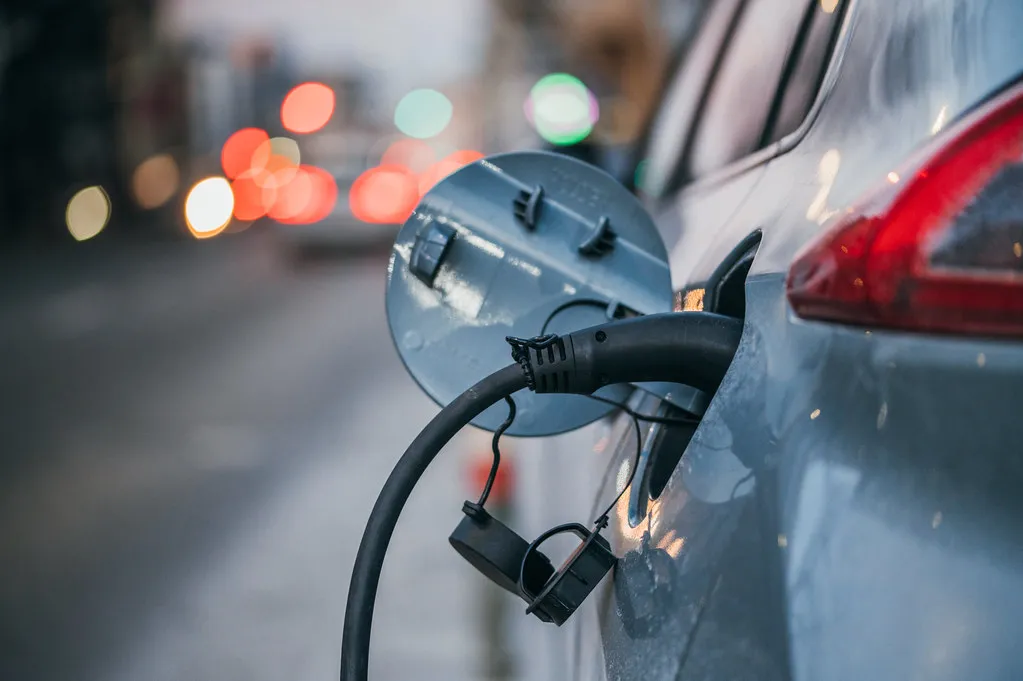
Charging at home: 6.6 kW AC limit—what it means
The Dongfeng 007 E1 530’s on-board charger maxes out at 6.6 kW AC. That’s the bottleneck, not your wall box. Here’s what happens with common home-charger options:
7.4 kW charger (32A single-phase)
The most popular home install in South Africa. The 007 will draw 6.6 kW—the charger’s extra capacity goes unused. A full charge (10–100%, 56.8 kWh) takes roughly 8.6 hours (56.8 ÷ 6.6). Overnight off-peak charging (6 hours) gets you from 20% to 85%—plenty for daily driving.
11 kW or 22 kW charger (three-phase)
These won’t charge the 007 any faster. The car’s 6.6 kW limit is hardware-locked. Save your money unless you plan to own a second EV (like a BYD Seal or BMW iX) that can accept 11 kW AC. A 7.4 kW unit is the sweet spot for the Dongfeng 007.
DC fast-charging: 200 kW peak, 30–80% in 26 minutes
On the road, the 007 accepts up to 200 kW DC. At a GridCars or Rubicon station (R7.00–R7.35/kWh), you’ll add 28.4 kWh (30–80% state of charge) in 26 minutes—enough for 225 km of range. A Johannesburg-to-Durban trip (560 km) needs one 20-minute splash-and-charge stop in Harrismith or Newcastle.
Public DC charging costs roughly R2.00/km (28.4 kWh × R7.00 ÷ 225 km). Compare that to the Mazda’s R1.53/km (8.3 litres × R23 ÷ 100 km). The EV is still cheaper per kilometre on public DC than the petrol car is at the pump.
Load-shedding, solar & grid resilience
South Africa’s grid stability improved markedly in 2025–2026—one reason EV sales nearly doubled in Q1 2026. But load-shedding remains a risk, especially in winter. How does each car cope?
Dongfeng 007 EV
If you charge overnight during Stage 2 or 3, a 6.6 kW charger needs 8.6 hours of uptime for a full top-up. Eskom’s current schedule gives 4–6 hour windows between cuts—tight but doable if you start charging immediately after power returns. A rooftop solar array + battery inverter (8 kWh Deye or Sunsynk) lets you charge the car during the day from solar, bypassing the grid entirely. Many ChargePoint SA clients pair a 5 kW solar system with a 7.4 kW charger and report zero monthly electricity cost for EV charging.
Public DC infrastructure is also evolving: CHARGE’s off-grid solar stations on the N3 (Reitz, Colenso-Winterton) operate independently of Eskom. BYD’s 200–300 Flash stations (1 MW ultra-fast) are rolling out from April 2026, with backup battery storage at each site.
Mazda CX-5 2.0 Active
Petrol stations run on grid power and generator backup—you can always fill up, even during Stage 6. No range anxiety, no charging-window calculations. The trade-off: you’re paying R2,862/month for that convenience, and petrol prices spiked 18% between January and June 2026.
Service network & brand maturity
Mazda has 56 dealers across South Africa, with workshops in every major metro and most secondary cities. Parts availability is excellent, and the CX-5 has been on sale locally since 2012 (current KF generation since 2017). Resale values are strong—a 2019 CX-5 2.0 Active still fetches 50–55% of original price in good condition.
Dongfeng is newer to SA (brand re-launched late 2025 after a hiatus). The 007 is sold and serviced through a growing dealer network; Bolt’s partnership with Dongfeng (deploying 007s in Cape Town ride-hailing fleets) suggests confidence in local service infrastructure. Still, if you live in Polokwane or George, confirm your nearest Dongfeng service centre before buying—Mazda’s footprint is deeper.
Warranty and service-plan details for the Dongfeng 007 were not published at time of writing. Mazda offers 5 years unlimited km on both warranty and service plan, a significant peace-of-mind advantage.

The honest verdict: who should buy which?
Buy the Dongfeng 007 EV if you:
- Drive predictable daily routes (home-office-school-home) within 200 km/day.
- Have off-street parking and can install a 7.4 kW home charger (R12,000–R18,000 installed).
- Want to pair the car with rooftop solar and eliminate fuel costs entirely.
- Value instant torque, silent cabin, and sub-7-second 0–100 km/h acceleration.
- Plan to keep the car 5+ years (TCO advantage grows after year 3).
- Live in Gauteng, Western Cape, or KZN where public DC charging is dense.
Buy the Mazda CX-5 2.0 Active if you:
- Regularly drive 500+ km in a single day (farm visits, regional sales, family in the Eastern Cape).
- Rent or live in a complex where charger installation is difficult.
- Prioritise brand familiarity, resale value, and a 56-dealer service network.
- Need higher ground clearance for gravel roads (the CX-5 has 200+ mm vs the 007’s sedan ride height).
- Want a 5-year included service plan with no out-of-pocket maintenance.
- Prefer the SUV seating position and slightly larger boot (442 litres vs 429).
The numbers don’t lie
At current petrol prices (R23/litre) and Eskom tariffs (R3.65/kWh average), the Dongfeng 007 saves R26,064 per year in energy costs. Over five years, that’s R130,320—recovering 57% of the R228,500 purchase premium. Add solar charging (free daytime energy) or a petrol-price spike to R25/litre, and the EV pulls ahead on total cost of ownership by year 4.
But the Mazda offers tangible advantages: a proven service network, included maintenance, 250 km more range per fill, and no load-shedding charging anxiety. If you can’t install a home charger or you drive long distances weekly, the CX-5 remains the pragmatic choice.
Ready to charge smarter?
Thinking about making the switch to electric? ChargePoint SA has installed over 1,200 home and commercial EV chargers across South Africa. We’ll assess your property’s electrical capacity, recommend the right charger size (spoiler: 7.4 kW is perfect for the Dongfeng 007), and handle the full installation—including compliance certification and Eskom notification if required.
Book a free site assessment and get a no-obligation quote within 48 hours. Whether you’re buying a Dongfeng 007, a BYD Seal, or any other EV, we’ll make sure you can charge it safely, quickly, and cost-effectively at home.
Image credits
“Dongfeng eπ 007 at Auto Guangzhou 2023” by Wikimedia Commons contributor, CC BY-SA 4.0 · “Dongfeng eπ 007” by Wikimedia Commons contributor, CC BY-SA 4.0 · “Dongfeng eπ 007 range extended electric sedan” by Wikimedia Commons contributor, CC BY-SA 4.0 · “2018 Mazda CX-5 (KF) GT AWD wagon” by Wikimedia Commons contributor, CC BY-SA 4.0