
Key points
- Mercedes-Benz South Africa (MBSA) is investing R40 million across two phases to deploy 127 EQ-branded charging stations nationwide, via implementation partner Chargify (a Level 2 BBBEE company) and network operator GridCars.
- Phase 1 delivered 67 stations by July 2024; Phase 2 adds 60 more with a higher share of DC fast chargers, targeting completion by 2026.
- All chargers on the network are open to every EV brand, not just Mercedes vehicles, EQ customers get a 10% discount through the Chargify app.
- Public DC fast-charging tariffs were R7.35/kWh (GridCars eMSP) as of August 2025 and rose by approximately 15% from 1 December 2025. They are no longer at the 2025 benchmark rate.
- A full charge of a Mercedes EQA (66.5 kWh) at a public DC charger costs roughly R515 versus approximately R245 at home (at ~R3.50/kWh).
- MBSA includes a wallbox and installation with every new EQ vehicle purchase at no additional cost.
- Critical highway gaps remain: the N1 between Beaufort West and Three Sisters (roughly 300 km), the N2 between East London and Durban, and Limpopo outside Polokwane.
- South Africa has no Tesla Supercharger network and no IONITY presence. Every public charge here runs through GridCars, Rubicon, Chargify or smaller operators.
When Mercedes-Benz South Africa announced a R40 million investment in its own branded EV charging network, it was the clearest signal yet that the German marque was serious about converting local luxury buyers to battery-electric vehicles. Two phases, 127 stations, and a Level 2 BBBEE implementation partner: on paper, it reads like exactly the kind of ecosystem commitment that fence-sitters need before ordering an EQA or EQS.
The reality, as with most EV infrastructure stories in South Africa, is more nuanced. The network is real, the investment is confirmed, and the locations are well-chosen. But coverage gaps persist in ways that matter to anyone planning a long-distance road trip, and the app and charging-session reliability issues reported by EQ owners internationally are worth understanding before you take delivery. This article works through all of it, with hard numbers at every step.
What Mercedes-Benz is actually building
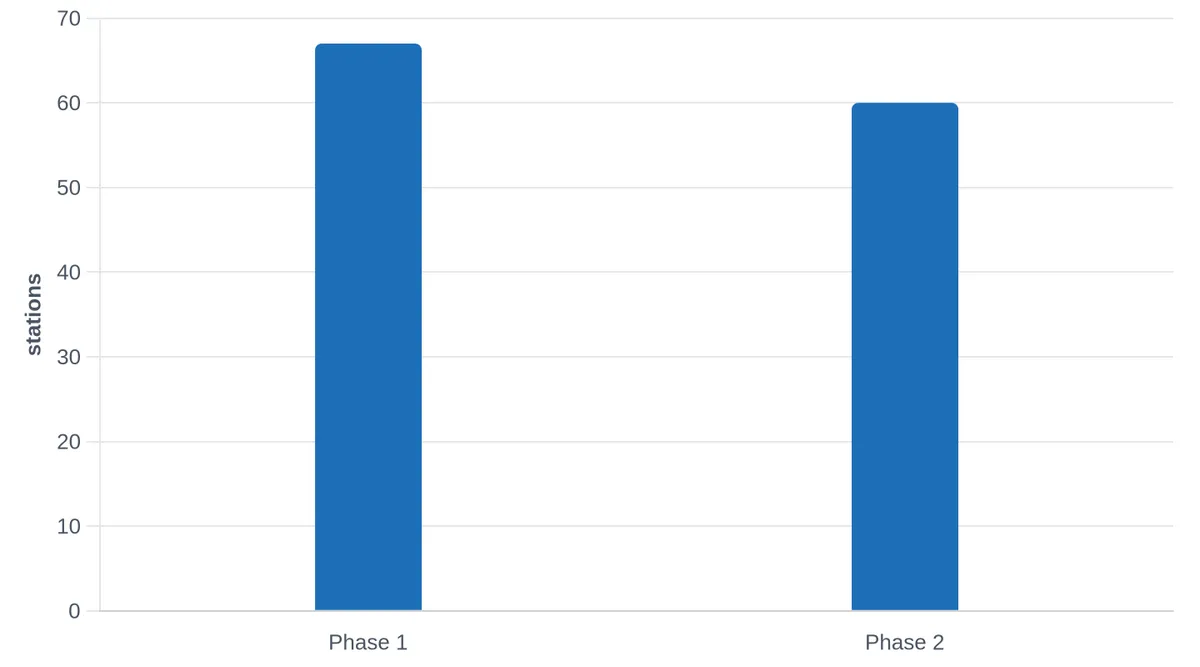
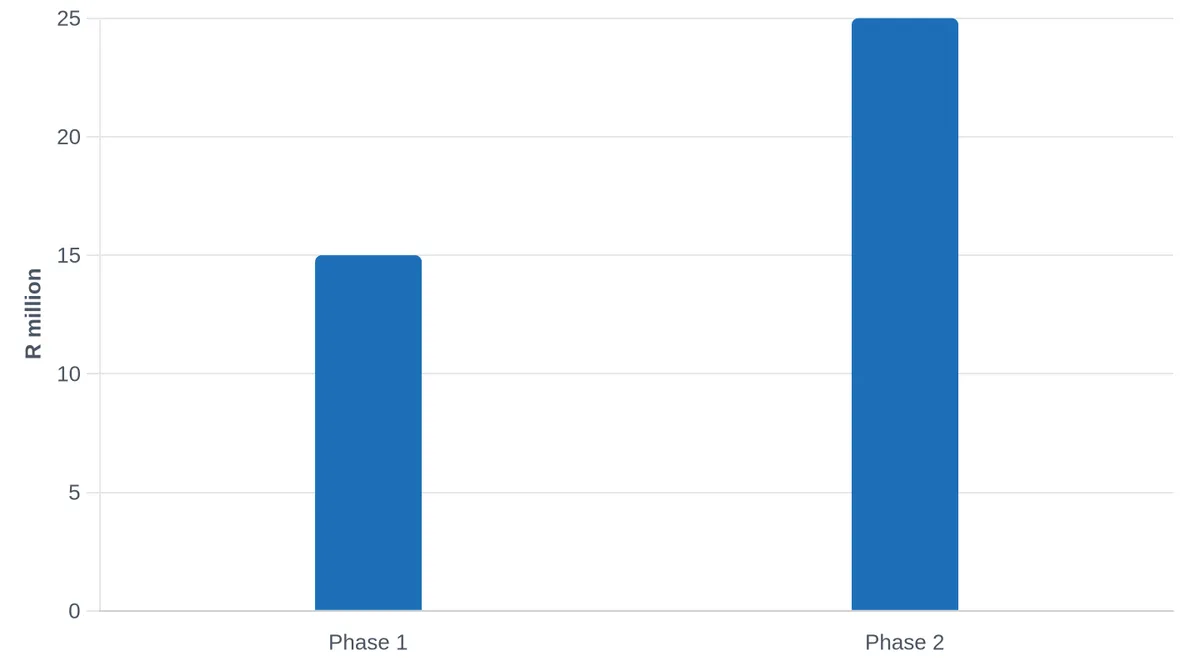
The R40 million programme breaks into two distinct phases. Phase 1 cost R15 million and targeted Q1 2024 for completion, though Engineering News reported delays caused by long-term lease negotiation complexities at certain sites. By July 2024, all 67 Phase 1 stations were operational across six provinces: Gauteng, Free State, Western Cape, Eastern Cape, KwaZulu-Natal, and North West (EV24.africa).
Phase 2 adds R25 million and 60 further stations, with Chargify still expanding into Northern Cape, Limpopo, and Mpumalanga as of mid-2024. MBSA co-CEO Mark Raine confirmed that the DC charger split improves in Phase 2:
“Phase 2 will have a higher DC share relative to Phase 1. In terms of distribution, we have DC chargers installed and planned for across the country including Johannesburg, Pretoria, Bloemfontein, Mthatha, Richards Bay and the Kruger.”
Phase 1 ran roughly 80% AC chargers and 20% DC fast chargers (Bizcommunity). Several of the DC units reach 150 kW, which is meaningful: a 150 kW station can charge a Mercedes EQA from 10% to 80% in approximately 35 minutes, adding around 280 km of WLTP range in a coffee stop.
The confirmed live locations at launch included BT Ngebs Mall and Mayfair Hotel in Mthatha, Woodhill Estate and Country Club, Da Vinci Hotel in Sandton, Champagne Castle in the Drakensberg, Highwaymans Garage at Pilgrim’s Rest, Courtyard Sandton, and Silvermist Wine Estate in Hout Bay (MBSA via LinkedIn). Additional sites confirmed as in the installation phase included the Plettenberg Hotel, Wilderness Hotel, Swartberg Hotel in Prince Albert, and Karoo Junction Mall in Beaufort West (Bizcommunity). The site-type strategy is deliberate: airports, shopping malls, restaurant hubs, private hospitals, residential estates, and small towns along main inter-metropolitan routes (TechCentral).
The overarching strategic intent, in MBSA’s own words:
“Next to offering the most extensive and diverse all-electric vehicle portfolio in the market, we want to provide not only our customers but all EV drivers the luxury and peace of mind of a comprehensive charging network and with the installation of over 100 electric vehicle charging stations across South Africa fulfilling our strategic objectives of creating sustainable ecosystems in support of our all-electric strategy.”
Who can use it, and what it costs
The network is open to all EV brands (CARmag). You do not need a Mercedes to plug in. Sessions are managed via the Chargify app, and the GridCars ChargePocket app covers 450-plus stations on the GridCars National Charging Network, which includes the MBSA/Chargify sites (EV24.africa).
EQ customers receive a 10% discount when charging through the Chargify network, and the MB Charge Card is accepted at all GridCars-operated public charge points. The billing rates that apply are GridCars eMSP standard rates: R7.35/kWh DC and R5.88/kWh AC as of the August 2025 benchmark (AutoTrader SA and ChargePoint SA research). Importantly, GridCars implemented a further approximately 15% increase from 1 December 2025, so current 2026 DC rates are higher than those August 2025 figures. No OEM-subsidised tariff for Mercedes EQ customers has been publicly confirmed beyond the 10% Chargify app discount.
For context on why tariff structure matters, Hilton Musk, Rubicon’s Head of E-mobility, explained the two-tier market in plain terms:
“Think of it like the fibre internet model. The fibre network providers, like Openserve or Vumatel, sell bandwidth to internet service providers such as Afrihost or MWeb, who then add their margin before offering it to customers. Public EV charging works in much the same way.”
What this means practically: the same physical charging station can cost different amounts depending on which app or RFID card you use. At AIDC-EC stations, for example, Rubicon eMSP customers pay R7.00/kWh while GridCars eMSP customers pay R8.24/kWh at the same charger. Shopping around your eMSP, and carrying a physical RFID card as a backup, is not paranoia, it is good financial hygiene for any South African EV owner.
Mercedes EQ charging specs: what your car can actually accept
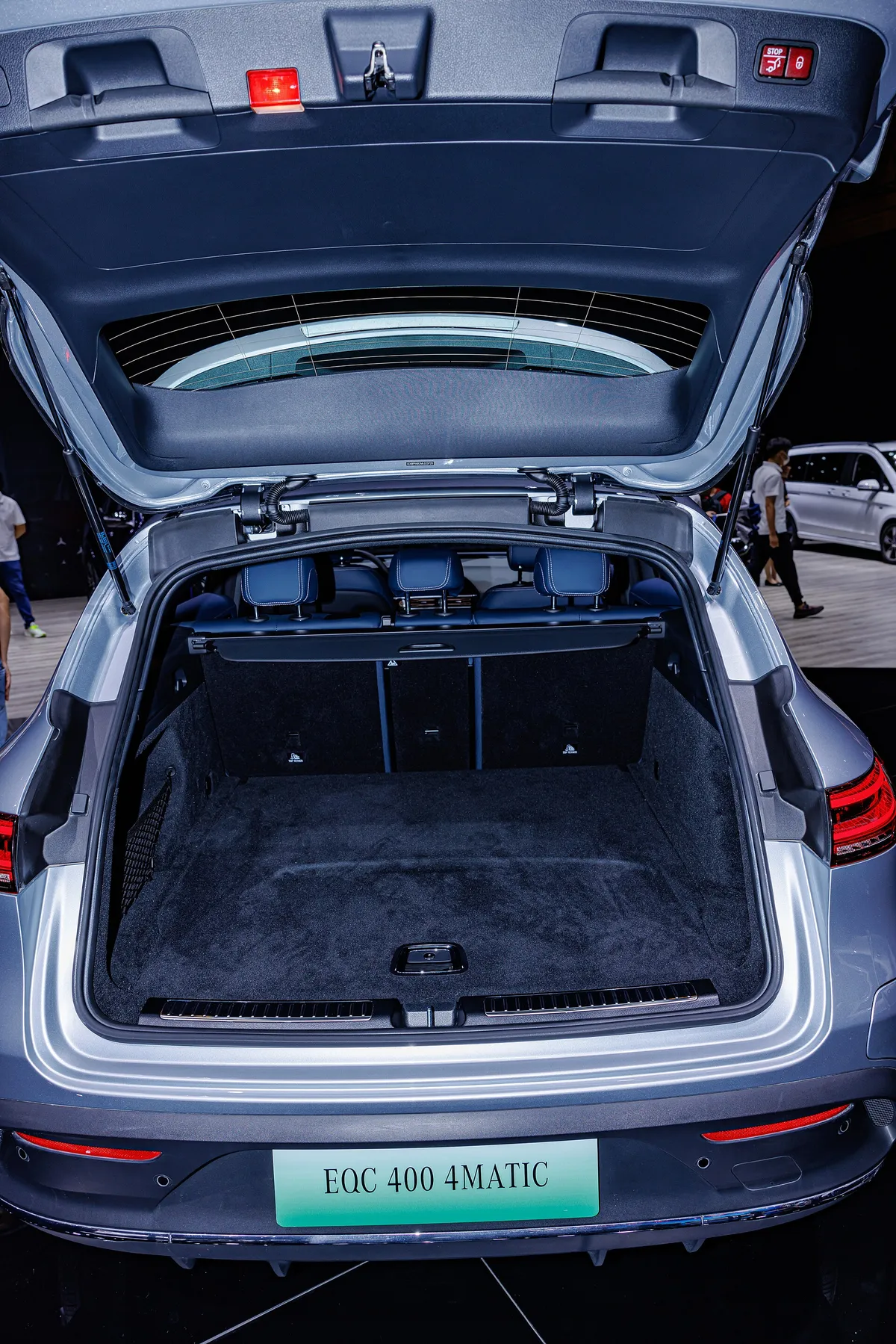
Understanding what the network offers is only half the equation. The other half is knowing what your specific EQ model can absorb.
| Model | Battery (usable) | Max AC charge | Max DC charge | 10-80% DC time | Full charge on 7 kW wallbox | WLTP range |
|---|---|---|---|---|---|---|
| EQA 250 | 66.5 kWh | 11 kW | 100-102 kW | ~35 min | ~11 h 11 min | ~425 km |
| EQB 250+ | 70.5 kWh | 11 kW | 102 kW | ~35 min | ~11 h 11 min | 395-423 km |
| EQC 400 4MATIC | ~80 kWh | 11 kW | 112 kW | ~36 min | ~12 h 42 min | Not stated |
| EQE 350+ | 90 kWh | 22 kW | 170 kW | ~32 min | ~5-6 h | ~654 km |
| EQS 450+ | 107.8 kWh | 22 kW | 200 kW | N/A (stated full DC ~32 min) | ~6-7 h | ~782 km |
| G580 EQ Technology | 116 kWh | Not stated | 200 kW | ~32 min (full DC) | N/A | ~473 km |
Sources: EVcourse.com, Mercedes-Benz EQ Charging FAQs, IOL Motoring, CAR Magazine SA, Cars.co.za.
One critical detail for EQA and EQB owners: the onboard AC charger is capped at 11 kW. If you plug into a 22 kW public AC charger, you will draw no more than 11 kW. The charge time is identical to a 7 kW session at AC (you just do not get the speed benefit). The EQE and EQS do support 22 kW AC, which makes the Phase 2 AC charger rollout meaningfully faster for those models.
SANS 62196-2 mandates Type 2 AC connectors for all public AC charging in South Africa, and SANS 62196-3 mandates CCS2 or CHAdeMO for public DC fast charging (ChargePoint SA). Every Mercedes EQ sold in South Africa uses these standards, so connector compatibility is not a concern on any site in the MBSA/Chargify/GridCars network.
Cost of ownership: home charging is where the economics live
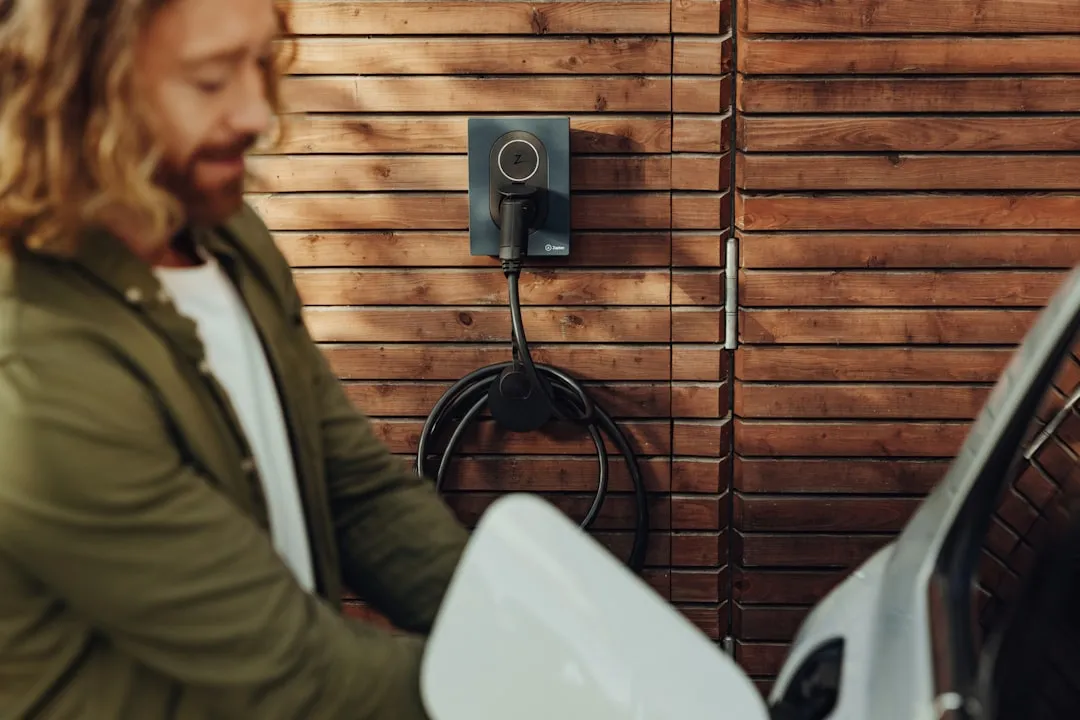
MBSA includes a wallbox charger and installation with every new EQ vehicle purchase at no additional cost (Mercedes-Benz South Africa official charging page). This is not a minor perk. A 7 kW home wallbox costs R14,000 to R26,000 installed in South Africa in 2025, including the unit itself and a Certificate of Compliance (ChargePoint SA). Getting it bundled with the car changes the total-cost calculation materially.
Here is what the numbers look like once you have that wallbox installed:
| Charging scenario | Cost per kWh | Full charge cost (70 kWh EQA) | Cost per 100 km (15 kWh/100 km) |
|---|---|---|---|
| Home, Durban (eThekwini) flat rate | ~R3.20 | ~R224 | ~R48 |
| Home, Cape Town standard rate | ~R3.45 | ~R242 | ~R52 |
| Home, Johannesburg (City Power) flat rate | ~R3.80 | ~R266 | ~R57 |
| Eskom Homeflex off-peak overnight | R1.45-R2.25 | R102-R158 | ~R22-R34 |
| Public AC (GridCars/Chargify, Aug 2025 benchmark) | R5.88 | ~R412 | ~R88 |
| Public DC (GridCars eMSP, Aug 2025 benchmark) | R7.35 | ~R515 | ~R110 |
| Public DC (post Dec 2025, approx +15%) | ~R8.45+ | ~R592+ | ~R127+ |
| Petrol equivalent (9 L/100 km at R23.36/L) | N/A | N/A | ~R210 |
Sources: ChargePoint SA, Procompare.co.za, Eskom 2026/27 tariff schedule, ChargePoint SA home charger guide.
The key takeaway: even at post-December 2025 public DC tariffs, an EV is cheaper per kilometre than a petrol car (roughly R1.27/km public DC versus R2.10/km petrol at R23.36/L). But if you rely exclusively on public DC charging, your annual energy cost is R10,000 to R15,000 higher than it would be with a home wallbox (Procompare.co.za). Put differently, public charging can roughly double your annual fuel equivalent bill compared to home charging. The MBSA wallbox bundle matters not just at delivery, it matters every month for the life of the car.
Eskom tariffs rose 8.76% from 1 April 2026 and a further 9.01% from 1 July 2026. Home charging is still dramatically cheaper than public DC, but the gap between the cheapest and most expensive charging options is widening. If you have solar, the calculus shifts further: a typical Gauteng home with a 10 kWp rooftop system can push 25 to 35 kWh per day into an EV at no grid cost, covering roughly 130 km daily for free (ChargePoint SA).
Get your home charger installed with your next Mercedes EQ
Where the network still falls short
The MBSA/Chargify/GridCars rollout adds meaningful coverage, but South Africa’s charging geography remains uneven. As of early 2026, the country has approximately 445 charging sites, 650 individual chargers, and 1,200-plus connectors. GridCars operates roughly 60% of that capacity. The EV-to-charger ratio is approximately 1:7, which sounds reasonable until you map it and discover the concentrations.
Gauteng has 29 free charging stations. Limpopo has one (EV24.africa, May 2025). The disparity captures the broader problem: urban EV drivers in Johannesburg, Cape Town, and Durban can generally find a charger within 20 km, but inter-provincial travel requires careful routing (Daily Maverick).
The single worst corridor gap remains the N1 between Beaufort West and Three Sisters. ChargePoint SA’s infrastructure analysts describe it plainly:
“The N1 between Beaufort West and Three Sisters is the most notorious. There’s a roughly 300 km stretch of semi-desert where public fast charging is essentially non-existent. For most EVs, that’s a range-and-a-half, which means careful planning, conservative driving speeds, and a fair amount of stress if you’ve left Beaufort West with less than 80% charge.”
The Karoo Junction Mall in Beaufort West is among the MBSA/Chargify installation-phase sites, which will help close this gap, but the Three Sisters end remains unserved. Other problematic corridors include the N2 between East London and Durban (sparse coverage) and the Free State interior between Bloemfontein and neighbouring provinces. ChargePoint SA’s assessment of Limpopo is blunt:
“The Free State interior and Limpopo outside Polokwane are, for most practical purposes, EV no-go zones if you’re depending on public infrastructure.”
Pretoria presents a specific policy problem: Rubicon has avoided investing in the city because the Tshwane Basic Charge policy makes DC charging installations financially unviable, according to EV24.africa. The MBSA network includes Pretoria in its DC charger city list, which suggests the Chargify model may be able to navigate what pure commercial operators cannot.
South Africa also has no Tesla Supercharger network (Morocco is the only African country with Supercharger sites, as of July 2024) and no IONITY presence (IONITY operates across 24 countries, all in Europe). Every public charge in South Africa runs through GridCars, Rubicon, Chargify, or smaller operators. There is no premium ultra-rapid corridor network analogous to what European Mercedes EQ owners access.
The off-grid solar sector is beginning to address the rural corridor problem. CHARGE (formerly Zero Carbon Charge) launched a pilot site on the N12 between Klerksdorp and Wolmaransstad in November 2024, with six DC fast chargers and two AC chargers delivering over 700 kW combined output via solar and battery storage at 99% uptime with no grid connection (EV24.africa). N3 corridor stations followed, each delivering 50% more capacity than the pilot site, with the N1 Johannesburg-Cape Town corridor identified as the next target after that (Engineering News). At the N3 launch, CHARGE’s Joubert Roux made the ambition explicit:
“By building off-grid EV charging infrastructure along key transport corridors like the N3, we are reducing dependence on volatile fuel prices while creating greater energy independence.”
App reliability and real-world owner experience
The charging infrastructure conversation cannot ignore the software layer. International Mercedes EQ owners, whose experience with the same firmware and app stack applies to South African buyers, have documented a consistent pattern of charging session failures that are software- and configuration-driven rather than hardware-driven.
App-to-station handshake failures are the most commonly reported issue. One EQB owner described a week of complete charging failure across multiple stations after both the Mercedes me app and MBUX in-car charging initiation stopped working. A German EQA owner in the same forum thread offered a practical workaround:
“The RFID card works better than the app. In some cases (smaller charging locations), the charging stations seem to be offline. So only the RFID card works. App won’t work, but RFID card did instantly.”
Scheduled overnight charging failures are a separate reported pattern. An EQS owner described a recurring bug where the car fails to resume charging automatically when the wallbox activates at the scheduled off-peak time, requiring a nightly manual intervention. An EQE owner reported the opposite problem: the app falsely reporting the car as fully charged and stopping the session prematurely, with the charge level dropping from a displayed 100% to 50%. The expert summary from Recharged.com captures the pattern across reported faults:
“Most Mercedes EQE charging headaches come from communication and configuration issues, not the battery pack itself.”
The practical implication for South African buyers: request the physical MB Charge RFID card at delivery, do not rely on the app alone, and test your home wallbox scheduled charging before the end of your first week of ownership. If your EQ fails to charge overnight, try unplugging and re-plugging before calling the dealer, the firmware handshake issue is well-documented and often resolves with a reconnect.
One charger-location accuracy issue is also worth noting. A Mercedes EQ owner on the MBEQClub.com international owner forum flagged a problem directly relevant to planning SA road trips:
“The data behind these sources is very inaccurate with a number of charges either broken, removed, never existed or are for private use only.”
Cross-reference charger locations on the ChargePocket app (GridCars) or PlugShare before leaving home. MBUX navigation charger data lags real-world availability in most markets.
Battery warranty: read the fine print
Mercedes-Benz provides a battery performance certificate valid for 10 years and 250,000 km for the EQS and EQE. Newer EQ models (electric GLB, CLA, GLC, G-Class) carry an 8-year/160,000 km battery warranty. These are genuinely strong terms on paper.
However, an EQC400 owner on MBEQClub.com documented a disputed battery warranty claim in which the dealer told them the warranty only covers the owner up to the value of the car, and the owner must pay the difference when a new pack exceeds that value. A fellow forum member responded with a copy of the pre-2024 warranty document that contained no vehicle-value cap, noting that a post-October 2024 revision appears to have added the cap. The owner’s summary:
“I’ve owned an EQC400 for around 2 years. The car has developed a fault that it discharges extremely quickly once it reaches a threshold of around 45% charge. I took it to the main dealer who advised it needs a new battery pack due to a single failed cell at a cost of over 60,000 euros. They have accepted that the car has a valid battery certificate but say the warranty only covers you up to the value of the car and the owner must pay the difference (roughly 30,000 euros).”
South African buyers purchasing the EQS or EQE should request the specific battery warranty document in writing at the time of purchase and confirm whether a vehicle-value cap applies. If you are buying a used EQ, verify the warranty version in the vehicle documentation before signing.
The broader context: where the SA EV market stands
South Africa had 3,543 registered battery electric vehicles at the end of 2024 (GreenCape 2025 data via ChargePoint SA), growing to approximately 4,502 BEV registrations by end of 2025 (Daily Maverick). Fully electric vehicle sales rose 22% in 2024, and NAAMSA data shows new energy vehicle sales grew by nearly 83% between Q1 2023 and Q1 2024 (Briefly.co.za). Rubicon’s charging sessions doubled in 2024 compared to 2023, with early 2026 data showing a further 64% increase (Daily Maverick).
MBSA predicted that 50% of all new Mercedes-Benz passenger vehicles sold in 2026 will be battery-powered (CBN, Engineering News group). That ambition sits against the reality that Mercedes-Benz SA sales fell 82% from 28,993 units in 2014 to 5,048 units in 2024 (BusinessTech), with price increases far outpacing inflation, the A-Class rose 41% between 2021 and 2024 versus 20% inflation over the same period. The R40 million charging investment is partly about selling more cars, not just supporting existing owners.
Winstone Jordaan, MD of GridCars, South Africa’s largest public EV charging network operator, was direct about the economics at Enlit Africa 2025:
“There’s just no business case. We need about 100,000 vehicles on the road before any of us will see real profitability. But that doesn’t mean we shouldn’t build the foundation now.”
The MBSA investment, like Audi’s R50 million-plus infrastructure spend since 2022 and Jaguar Land Rover’s R30 million Powerway network launched in 2018, reflects an OEM calculation that the charging infrastructure has to be seeded ahead of volume, not after it. For buyers, that means the foundation is being laid even if profitability is still a future event.
What to do at the point of purchase
If you are buying or considering a new Mercedes EQ in South Africa today, here is the practical checklist that the facts above point to:
Confirm the wallbox inclusion. MBSA includes a wallbox and installation with every new EQ purchase (Mercedes-Benz South Africa official charging page). Pin down the exact model of wallbox, its power rating (ideally 11 kW single-phase minimum; 22 kW three-phase if you have three-phase supply at home for an EQE or EQS), and confirm that the installation includes a Certificate of Compliance. Without a CoC, your home insurance may be void and property transfer may be blocked.
Request the RFID card. Do not rely on the Mercedes me app alone. The physical MB Charge RFID card consistently outperforms the app for initiating sessions, particularly at smaller or newer sites.
Download ChargePocket separately. The GridCars ChargePocket app provides real-time availability across 450-plus stations including the MBSA/Chargify sites. Cross-reference it against MBUX navigation charger data, which is known to lag real-world availability.
Know your car’s AC limit. EQA and EQB are capped at 11 kW AC. Plugging into a 22 kW AC station will not speed things up. Plan AC charging sessions accordingly, you need roughly 11 hours for a full charge on a 7 kW home wallbox. EQE and EQS can use the full 22 kW AC, which halves that time.
Get the battery warranty in writing. Confirm the exact terms, including whether any vehicle-value cap applies to the battery performance certificate for your specific model and model year.
Plan long-distance routes carefully. The N1 Beaufort West to Three Sisters gap (roughly 300 km), the N2 East London to Durban stretch, and Limpopo outside Polokwane remain the highest-risk corridors. Leave Beaufort West at above 80% charge and drive conservatively. The ChargePocket app will show you what is operational on your planned route, check it the night before, not at the side of the road.
Home charger recommendation for Mercedes EQ owners
Since MBSA includes a wallbox in the purchase price, the question is less about whether to install one and more about whether the supplied unit is the right one for your situation.
For EQA and EQB owners (11 kW AC max), the ChargePoint SA Caro Plus (CP-AC7), a 7 kW single-phase tethered Type 2 wallbox, from approximately R8,900 per unit (indicative) plus installation quoted per site, covers the car’s real-world daily charging need with a full charge in around 11 hours overnight. It includes plug, RFID, or app start, OCPP 1.6/2.0.1, Wi-Fi, IP65 weatherproofing, and a built-in Type A plus 6 mA DC earth-leakage protection. It is SANS 10142-1 compliant and includes a CoC.
For EQE and EQS owners who have three-phase supply at home, the ChargePoint SA Caro Pro (CP-AC22), a 22 kW three-phase tethered Type 2 unit, from approximately R13,900 (indicative) plus installation, cuts home charge time to around five to six hours for the EQE and six to seven hours for the EQS. It adds dynamic load balancing, Wi-Fi, Ethernet, 4G, and Bluetooth connectivity, OCPP, and PV solar charging integration if you have a solar system. IP65 and IK10 rated.
Installation cost varies by site (DB board condition, cable run length, phases available, and any civils required) and should be confirmed by a site assessment. Both units qualify for a Certificate of Compliance under SANS 10142-1 Annex N (the EV-specific wiring annex introduced in the 2024/2025 update). See the full ChargePoint SA charger range at chargepointsa.co.za/ev-charger-supply/.
The bottom line
Mercedes-Benz South Africa’s R40 million charging programme is a genuine infrastructure commitment, not marketing copy. One hundred and twenty-seven stations across all nine provinces, a Level 2 BBBEE implementation partner, 150 kW DC units in major cities, and a 10% customer discount through the Chargify app: the bones of a workable public network are there.
What it is not is a complete substitute for home charging. Public DC tariffs have risen materially since December 2025. Critical highway gaps remain on the N1 Karoo, the N2 eastern corridor, and across Limpopo. App reliability requires a physical RFID card backup. And the battery warranty terms deserve careful scrutiny before signing.
The MBSA wallbox bundle changes the ownership equation: a Mercedes EQ charged at home in Durban at R3.20/kWh costs approximately R48 per 100 km versus R210 per 100 km for a 9 L/100 km petrol car at R23.36/L. That is the real value proposition, and it lives in your garage, not on a public charger.
Ready to work out exactly what home charging will cost you month by month? Calculate your home charging cost with the ChargePoint SA EV cost calculator, input your model, daily distance, and municipality, and get a figure you can actually plan around.
Photo: Dietmar Rabich / WikimediaCommons
Compare your Mercedes EQ charging cost: home vs public network
A full EQA charge costs roughly R515 at DC fast chargers, versus R245 at home.
Calculate your savings →WhatsApp us
CoC-certified installers, nationwide