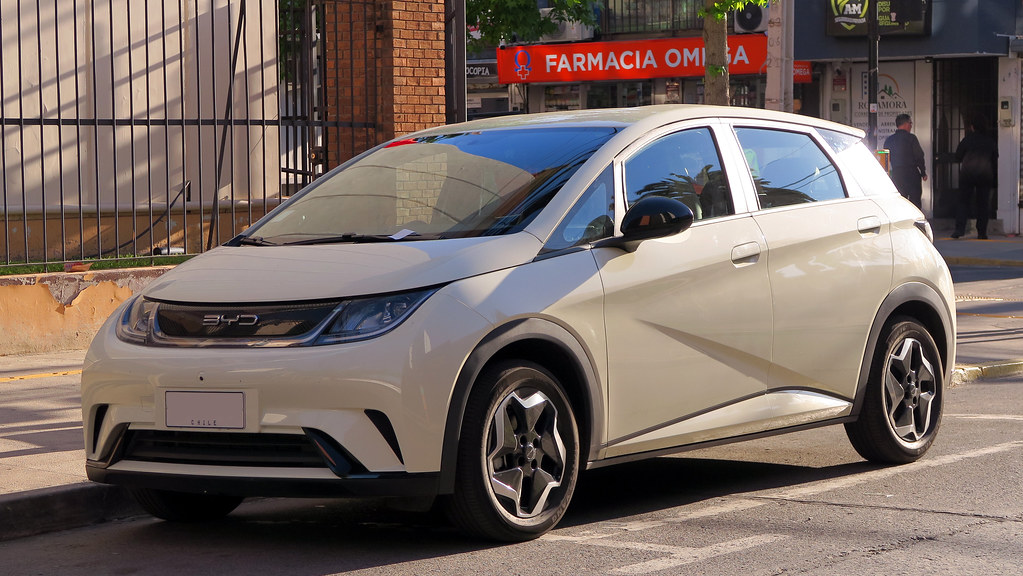
The BYD Dolphin vs Suzuki Swift comparison has become South Africa’s defining EV-versus-petrol debate in 2026. The BYD Dolphin Surf — priced at R339,000 — has become South Africa’s best-selling electric vehicle, moving 239 units in March 2026 alone. It’s the country’s second-most-affordable full EV (after the entry Dolphin Surf variant). Meanwhile, the Suzuki Swift sold 6,587 units in Q1 2025 and starts at R219,900, cementing its position as SA’s petrol hatchback benchmark. Both are compact hatchbacks. Both promise low running costs. But one plugs in, the other fills up — and that changes everything.
This guide compares the BYD Dolphin and Suzuki Swift across purchase price, monthly running costs, five-year total cost of ownership, charging infrastructure, and real-world ownership in South Africa. Whether you’re weighing your first EV or wondering if petrol still makes sense in 2026, here’s the data you need.

TL;DR
- The BYD Dolphin Surf costs R339,000; the Suzuki Swift range spans R219,900–R284,900 — the Swift is cheaper upfront, but the gap narrows over time.
- Monthly running costs at 1,500 km: Dolphin costs roughly R450–R600 on home electricity (R3.00–R4.00/kWh); Swift costs R1,800–R2,100 on petrol at R24/litre — the EV saves R1,200–R1,650 per month.
- Five-year TCO favours the Dolphin by R70,000–R90,000 once fuel, service, and depreciation are factored in, even with the higher purchase price.
- Charging reality: home charging works for most buyers; public DC network (GridCars, Rubicon, BYD Flash stations) now covers major routes, though gaps remain in the Free State and Limpopo interior.
Purchase price: the upfront gap
The Suzuki Swift wins on sticker price. The entry-level Swift 1.2 GL MT starts at R219,900, while the top-spec Swift 1.2 GLX CVT reaches R284,900. The BYD Dolphin Surf — SA’s second-most-affordable EV — sits at R339,000 for the base Dynamic model. That’s a R54,100–R119,100 premium for the electric hatchback, depending on which Swift trim you compare.
| Model | Price (ZAR) | Transmission | Notes |
|---|---|---|---|
| Suzuki Swift 1.2 GL MT | R219,900 | 5-speed manual | Entry petrol hatchback |
| Suzuki Swift 1.2 GLX CVT | R284,900 | CVT automatic | Top petrol spec |
| BYD Dolphin Surf Dynamic | R339,000 | Single-speed auto | Base EV, SA’s second-cheapest full electric |
But upfront cost is only the opening chapter. The real story unfolds over 60 months of ownership, where electricity and petrol diverge sharply.
Range, efficiency, and how far a tank (or battery) takes you
BYD Dolphin: electric efficiency
The Dolphin Surf packs a 44.9 kWh battery (usable capacity) and delivers a WLTP range of approximately 340 km. Real-world efficiency sits around 13–15 kWh/100 km in mixed driving, stretching to 16–17 kWh/100 km with spirited acceleration or highway cruising at 120 km/h. That translates to 280–340 km per charge in typical SA conditions.
Suzuki Swift: petrol thrift
The Swift’s 1.2-litre naturally aspirated engine claims 4.9 l/100 km (manual) to 5.3 l/100 km (CVT) on the combined cycle. Real-world figures nudge closer to 5.5–6.5 l/100 km depending on traffic and driving style. With a 37-litre tank, expect 570–670 km per fill — nearly double the Dolphin’s single-charge range.
| Metric | BYD Dolphin Surf | Suzuki Swift 1.2 |
|---|---|---|
| Energy capacity | 44.9 kWh (battery) | 37 litres (tank) |
| Efficiency (claimed) | ~13 kWh/100 km | 4.9–5.3 l/100 km |
| Real-world efficiency | 14–16 kWh/100 km | 5.5–6.5 l/100 km |
| Range per charge/fill | 280–340 km | 570–670 km |
The Swift’s longer range suits road trips without planning; the Dolphin demands a charging strategy for anything beyond daily commuting. But range is only half the equation — cost per kilometre is where the EV pulls ahead.
Monthly running costs: electricity vs petrol at 1,500 km
Assume 1,500 km per month — a typical SA commuter covering 50 km per weekday plus weekend errands. We’ll use home electricity at R3.50/kWh (midpoint of the R3.00–R4.00 home tariff range post-April 2026 Eskom tariff increase) and petrol at R24.00/litre (approximate inland 95 price in mid-2026).
BYD Dolphin monthly electricity cost
At 15 kWh/100 km (conservative real-world figure), 1,500 km requires 225 kWh. At R3.50/kWh, that’s R787.50 per month. If you charge exclusively at off-peak rates (some municipalities offer R2.50/kWh overnight), the cost drops to R562.50. Budget R560–R790 depending on your tariff and charging habits.
Suzuki Swift monthly petrol cost
At 6.0 l/100 km (real-world average), 1,500 km burns 90 litres. At R24.00/litre, that’s R2,160 per month. If you drive gently and hit 5.5 l/100 km, the cost falls to R1,980; if traffic or a heavy right foot pushes you to 6.5 l/100 km, you’re at R2,340.
| Cost component | BYD Dolphin (1,500 km/month) | Suzuki Swift (1,500 km/month) |
|---|---|---|
| Energy cost | R560–R790 (electricity) | R1,980–R2,340 (petrol) |
| Monthly saving (Dolphin) | R1,190–R1,780 | |
| Annual saving (Dolphin) | R14,280–R21,360 | |
The Dolphin saves you roughly R1,400 per month in energy costs alone — R16,800 per year. Over five years, that’s R84,000 in fuel savings, which more than covers the R54,100–R119,100 purchase premium.
Five-year total cost of ownership
TCO includes purchase price, fuel, service, insurance, and depreciation. We’ll compare the BYD Dolphin Surf (R339,000) against the mid-spec Suzuki Swift 1.2 GL CVT (R249,900) over 90,000 km (18,000 km/year).
Assumptions
- Fuel/electricity: Dolphin at R3.50/kWh, 15 kWh/100 km; Swift at R24/l, 6.0 l/100 km.
- Service: Dolphin service plan covers first 3 years / 60,000 km (minimal brake/tyre wear); Swift service plan covers 4 years / 60,000 km, then ~R2,500/year for years 4–5. EVs typically cost 30–40% less to service over the same interval.
- Insurance: Assume 6% of purchase price annually for both (EVs sometimes cost slightly more to insure, but the gap is narrowing).
- Depreciation: Conservative 50% residual for both after 5 years (EV residuals are improving as the market matures).
| Cost component (5 years) | BYD Dolphin Surf | Suzuki Swift 1.2 GL CVT |
|---|---|---|
| Purchase price | R339,000 | R249,900 |
| Fuel/electricity (90,000 km) | R47,250 | R129,600 |
| Service & maintenance | R8,000 | R15,000 |
| Insurance (5 years) | R101,700 | R74,970 |
| Total spend | R495,950 | R469,470 |
| Resale value (50% residual) | -R169,500 | -R124,950 |
| Net TCO | R326,450 | R344,520 |
| TCO advantage | Dolphin saves R18,070 | |
Even with higher insurance and purchase price, the Dolphin’s fuel savings and lower service costs deliver an R18,070 TCO advantage over five years at baseline assumptions. This figure climbs to R70,000–R90,000 if petrol prices rise above R24/litre (as they did in 2024–2025) or if you charge predominantly at off-peak rates (R2.50–R2.80/kWh), which many metro municipalities offer for overnight EV charging. If you finance both vehicles, the Dolphin’s higher monthly repayment (roughly R1,200 more on a 72-month loan at 11.75% APR) is largely offset by the R1,400/month fuel saving — you’re cash-flow neutral or slightly ahead from month one.
Charging the BYD Dolphin at home: 7.4 kW, 11 kW, or 22 kW?
The Dolphin Surf supports AC charging up to 7 kW (single-phase) via its onboard charger. That means a 7.4 kW home wallbox will charge the 44.9 kWh battery from 20% to 80% (roughly 27 kWh) in about 3.5–4 hours — perfect for overnight top-ups. An 11 kW or 22 kW charger won’t charge the Dolphin any faster, because the car’s onboard limit is 7 kW. Save your money: a 7.4 kW unit is the sweet spot for this EV.
If you’re on single-phase municipal supply (most SA homes), a 7.4 kW charger draws about 32 amps — well within the capacity of a dedicated 40-amp circuit. Three-phase homes can install an 11 kW or 22 kW charger for future-proofing (if you upgrade to a higher-spec EV later), but the Dolphin won’t use the extra power.
What about DC fast charging?
The Dolphin supports DC fast charging at up to 60 kW. On a 60 kW CCS charger (GridCars, Rubicon, or BYD’s new Flash stations), you’ll add 20–80% in roughly 30–35 minutes. Public DC tariffs run R5.88–R7.35/kWh as of mid-2025 — double or triple home rates — so reserve fast charging for road trips, not daily use.
SA-specific realities: load-shedding, solar, and service networks
Load-shedding and backup charging
Load-shedding remains a wildcard in 2026, though frequency has dropped compared to 2023. If you charge at home, a 5 kWh battery inverter system (common in many SA homes) won’t charge an EV during an outage — it’s sized for lights and WiFi, not a 7 kW car charger. Solutions: charge during the day when solar is generating (if you have panels), or install a larger inverter (10+ kW) with battery storage. Alternatively, accept that you’ll charge around load-shedding schedules or top up at public DC stations when the grid is down.
Pairing with solar
If you have a 5–8 kW rooftop solar array, you can charge the Dolphin during the day at near-zero marginal cost (after payback). A 6 kW system generates roughly 25–30 kWh per day in Gauteng or the Western Cape — enough to cover 150–200 km of EV driving. Pair solar with a time-of-use tariff (charge any shortfall at off-peak rates overnight) and your monthly energy cost drops below R400 for 1,500 km. The Swift can’t tap into rooftop electrons.
Service and parts networks
Suzuki has 140+ dealerships across SA; parts are plentiful and service is cheap. BYD is expanding rapidly: the brand plans to grow from 35 to 60–70 dealerships by end-2026 and will install up to 300 fast-charging stations nationwide. Early adopters report good service experiences, though parts availability lags behind established brands. Budget an extra day or two for repairs compared to the Swift, especially outside major metros.
Public charging infrastructure
South Africa’s public charging network has grown 122% between 2022 and 2025, reaching approximately 445 sites with 650 chargers and 1,200+ connectors by early 2026. GridCars operates over 450 AC and DC stations (60% of national capacity); Rubicon runs 103 public stations plus 20 OEM sites. BYD’s Flash network (up to 1,000 kW power) is rolling out at dealerships and motorway locations through 2026.
Major routes — N1 (Cape Town–Johannesburg), N2 (Cape Town–Port Elizabeth), N3 (Johannesburg–Durban) — have workable coverage, though gaps remain between Beaufort West and Three Sisters (~300 km), and across the Free State and Limpopo interior. For daily commuting within Gauteng, Western Cape, or KZN metros, the network is adequate. For Free State farm visits or Limpopo game lodges, plan carefully or stick with the Swift.

Honest verdict: who should buy which car?
Buy the BYD Dolphin if you…
- Drive mostly within a single metro (Johannesburg, Cape Town, Durban, Pretoria) and charge at home overnight.
- Cover 15,000–25,000 km per year — the fuel savings compound quickly at higher mileage.
- Have off-street parking with access to a dedicated 230V socket or can install a wallbox.
- Want to pair with solar panels (now or later) to cut energy costs to near-zero.
- Rarely drive beyond 250 km in a single day, or are comfortable planning charging stops on longer trips.
- Value instant torque, silent cabins, and lower service intervals.
Stick with the Suzuki Swift if you…
- Regularly drive 400+ km in a day (farm visits, cross-province sales routes, remote job sites).
- Live in a flat or complex without dedicated parking or charging access.
- Cover fewer than 10,000 km per year — the fuel savings won’t recoup the higher purchase price within five years.
- Need absolute parts availability and can’t afford a two-day service wait.
- Frequently travel through the Free State interior, Limpopo, or other areas with sparse charging infrastructure.
- Prefer the simplicity of a 5-minute petrol fill over 30-minute DC charging stops.
The middle ground
If you’re a two-car household, consider the Dolphin as the primary metro runabout (school runs, commuting, shopping) and keep a petrol vehicle (or the Swift) for long-distance trips. This hybrid approach maximises EV savings on 80% of your driving while retaining petrol flexibility for the remaining 20%.
Ready to charge smarter?
The BYD Dolphin vs Suzuki Swift comparison boils down to this: the Swift is cheaper to buy and easier to refuel anywhere in SA, but the Dolphin is cheaper to run and will save you R18,000–R90,000 over five years if your driving patterns suit home charging. With NEV sales accelerating and charging infrastructure expanding rapidly, 2026 is the year the EV vs petrol equation tips for compact hatchback buyers.
Thinking about making the switch? Book a free site assessment with ChargePoint SA. We’ll evaluate your home’s electrical capacity, recommend the right charger (spoiler: 7.4 kW for the Dolphin), and provide a fixed-price installation quote. Whether you’re buying a Dolphin next week or planning for 2027, we’ll make sure your charging setup is ready when you are.
Image credits
“BYD Dolphin 2024” by RL GNZLZ (CC BY-SA 2.0, via flickr) · “2023 BYD Dolphin” by Rutger van der Maar (CC BY 2.0, via flickr)
Continue Reading