
Key points
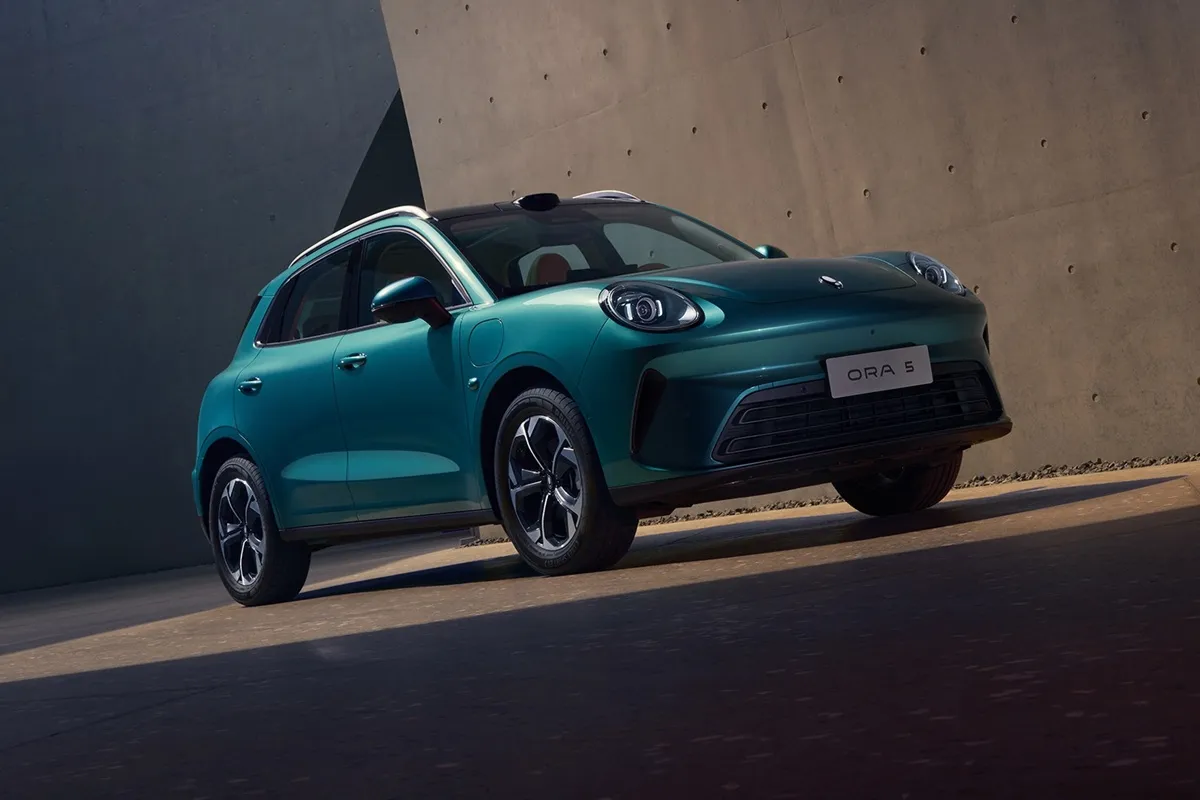
- The GWM Ora 5 accepts up to 6.6 kW AC on single-phase supply and up to 11 kW AC on three-phase. A 22 kW wallbox will be capped at 11 kW by the car’s onboard charger.
- Approximately 70% of South African residential properties are on single-phase supply, making a 7 kW wallbox the practical default for most Ora 5 owners.
- A fully installed single-phase 7 kW wallbox costs R14,000 to R26,000 including the Certificate of Compliance (CoC), based on ChargePoint SA’s 2026 installation data.
- All residential EV charger installations must comply with SANS 10142-1, be performed by a registered electrician, and be covered by a valid CoC.
What the GWM Ora 5 actually accepts from a home charger
Before spending money on installation, it helps to understand exactly what the Ora 5’s onboard charger will accept, because the car sets the ceiling, not the wallbox.
According to GWM South Africa’s official Ora 5 page, the car accepts up to 11 kW AC on three-phase supply. On a single-phase connection, the limit is 6.6 kW, delivering a full charge in approximately 6.6 hours from a compatible wallbox. If you install a 7 kW single-phase wallbox, the car will draw close to its maximum and complete an overnight charge comfortably.
The implication of the three-phase cap matters for wallbox selection: a 22 kW AC wallbox will only supply 11 kW to an Ora 5, because the car’s onboard charger limits the draw. You are not wasting a three-phase wallbox on this car, but you are not getting 22 kW either. If your home already has three-phase supply and you are thinking ahead to a future EV with a higher onboard charger, a three-phase unit makes sense. If you are optimising purely for the Ora 5 today, a well-specified 7 kW single-phase wallbox is the pragmatic choice for roughly 70% of South African homeowners who are on single-phase supply.
For DC fast charging on the road, the Ora 5 supports up to 120 kW via CCS2, taking the battery from 10% to 80% in approximately 30 minutes. That is the public network’s job, not your garage wall.
Single-phase or three-phase: the supply question most buyers skip
ChargePoint SA’s 2026 installation guide notes that approximately 70% of South African residential properties are on single-phase supply. Larger estates, newer sectional-title developments, and most upper-middle Gauteng suburbs are more likely to have three-phase available, but it is worth confirming with your municipality or body corporate before budgeting for an 11 kW setup.
If you are on single-phase, your ceiling is around 6.6 to 7 kW regardless of what the wallbox is rated at. That is enough to fully replenish the Ora 5’s 58.3 kWh LFP battery overnight in a single session. Most owners park for eight or more hours at home, so the slower rate is rarely a real constraint for daily driving.
If three-phase is available and you want the flexibility of 11 kW, the installed cost jumps: ChargePoint SA prices a three-phase 11 kW to 22 kW wallbox installation at R19,000 to R40,000, compared to R14,000 to R26,000 for the single-phase equivalent. That R5,000 to R14,000 premium buys speed that the Ora 5 itself caps at 11 kW. Do the arithmetic for your specific situation before committing.
What a home installation actually costs in 2026

Installation costs vary more than the equipment itself, because they depend on cable run distance, DB board capacity, the age of your existing wiring, and where in South Africa you live. Here is a breakdown of the verified cost components:
| Cost component | Typical range |
|---|---|
| Wallbox equipment (well-specified) | R9,000 to R18,000 |
| Electrician labour (cable run, DB work) | R3,500 to R9,500 |
| Certificate of Compliance (CoC) | R800 to R1,900 |
| Single-phase 7 kW wallbox, fully installed | R14,000 to R26,000 |
| Three-phase 11 kW to 22 kW wallbox, fully installed | R19,000 to R40,000 |
| Bloemfontein single-phase turnkey (indicative) | R14,000 to R18,000 |
| Smart charger premium over basic unit | R1,500 to R3,000 extra |
Labour rates vary substantially by city. Johannesburg is the most expensive at R750 to R950 per hour, compared to Durban at R520 to R720 per hour and Cape Town at R400 to R600 per hour. Pretoria and other Gauteng areas sit at R350 to R500 per hour. These differences partly explain why the same wallbox and cable run can cost several thousand rands more in Sandton than in Bloemfontein.
On-site work typically takes four to eight hours for a straightforward single-phase installation. From quote acceptance to CoC in hand, budget seven to fourteen days, per ChargePoint SA’s installation guide.
The CoC is not optional
South African law requires all low-voltage electrical installations to comply with SANS 10142-1 and to be signed off by a registered electrician with a Certificate of Compliance. There are two practical reasons this matters beyond legal compliance.
First, the Electrical Certificate of Compliance must be no older than two years at the time of property transfer. If you install a wallbox without a CoC and then sell your home, you face the cost of a new CoC or the risk of a delayed transfer. Second, and more immediately, home insurance policies routinely reject claims for electrical fires when no valid CoC is in place. A R14,000 wallbox installation that saves you R25,000 in insurance payout is still a net loss.
The CoC itself costs R800 to R1,900, and any reputable installer includes it in their quote.
Compare wallboxes that fit the GWM Ora 5’s 11 kW limit
Wallbox comparison: which unit fits an Ora 5 at home?
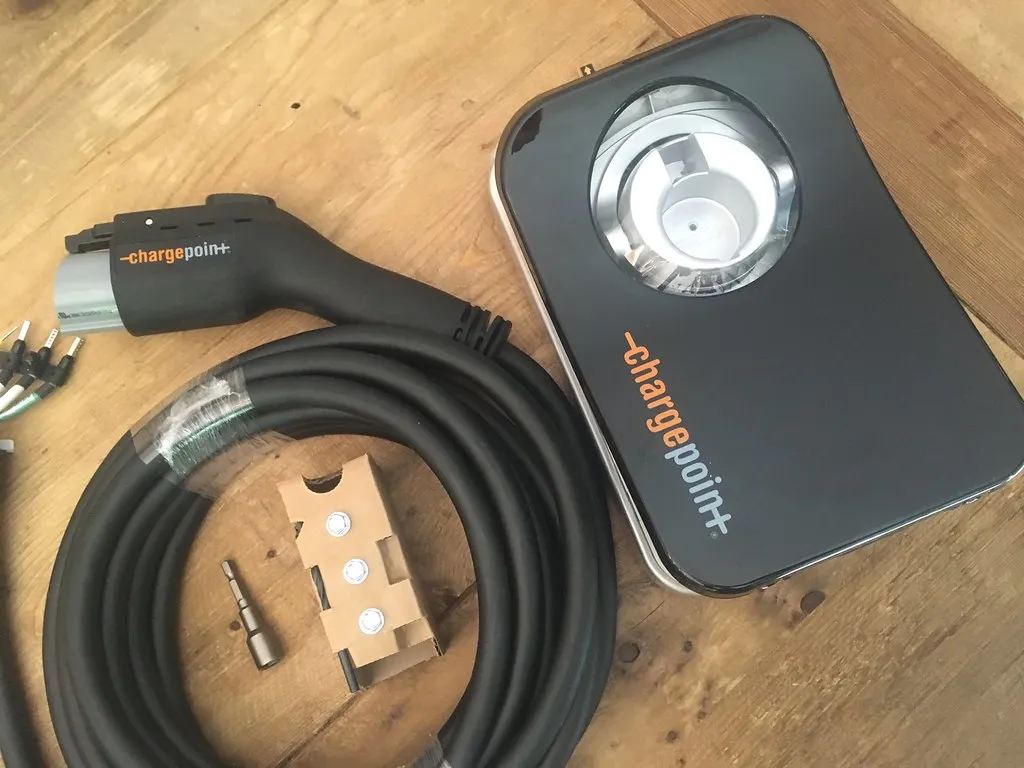
Given the Ora 5’s charging capabilities, the two ChargePoint SA home wallboxes most relevant to Ora 5 owners are the Caro Plus (CP-AC7) for single-phase homes and the Caro Pro (CP-AC22) for three-phase homes.
| Feature | Caro Plus (CP-AC7) | Caro Pro (CP-AC22) |
|---|---|---|
| Rated output | 7 kW, 230V single-phase, 32A | 22 kW, 400V three-phase, 32A |
| Effective output for Ora 5 | 6.6 to 7 kW | 11 kW (car caps at 11 kW) |
| Approximate km added per hour | ~46 km/hour | ~71 km/hour (at 11 kW to Ora 5) |
| Cable | 5 m standard, tethered Type 2 | 7 m standard (4 m optional), tethered Type 2 |
| Connectivity | Wi-Fi, Bluetooth, OCPP 1.6/2.0.1 | Wi-Fi, Ethernet, 4G, Bluetooth, OCPP |
| Smart features | Off-peak scheduling, optional dynamic load balancing, PV solar integration | Dynamic load balancing, PV solar integration, Plug and Play / RFID / app activation |
| Protection ratings | IP65, IK10, Type A + 6 mA DC earth-leakage | IP65, IK10 |
| Indicative unit price | From ~R8,900 (unit only) | From ~R13,900 (unit only) |
| Installed total (indicative range) | R14,000 to R26,000 (quoted per site) | R19,000 to R40,000 (quoted per site) |
| Best for Ora 5 owners | Single-phase home (70% of SA properties), everyday overnight charge | Three-phase home, faster top-up, future-proof for higher-spec EVs |
For most Ora 5 owners on single-phase supply, the Caro Plus (CP-AC7) is the practical, cost-efficient choice. It delivers the car’s full single-phase charging rate, supports off-peak scheduling via app, integrates with solar systems, and is IP65-rated for outdoor installation. The built-in Type A and 6 mA DC earth-leakage protection is a meaningful safety feature that general electricians sometimes omit with off-the-shelf units.
If you have confirmed three-phase supply and want the 11 kW rate the Ora 5 can accept, the Caro Pro (CP-AC22) adds Ethernet and 4G connectivity on top of Wi-Fi, a longer 7 m cable, and dynamic load balancing as standard. At 22 kW rated output, it is also genuinely future-proof if you upgrade to a vehicle with a higher onboard AC charger down the line.
Ready to find out what a properly specified installation costs for your property? Get a free installation quote from ChargePoint SA and have the full picture before you commit.
What does it actually cost per 100 km?
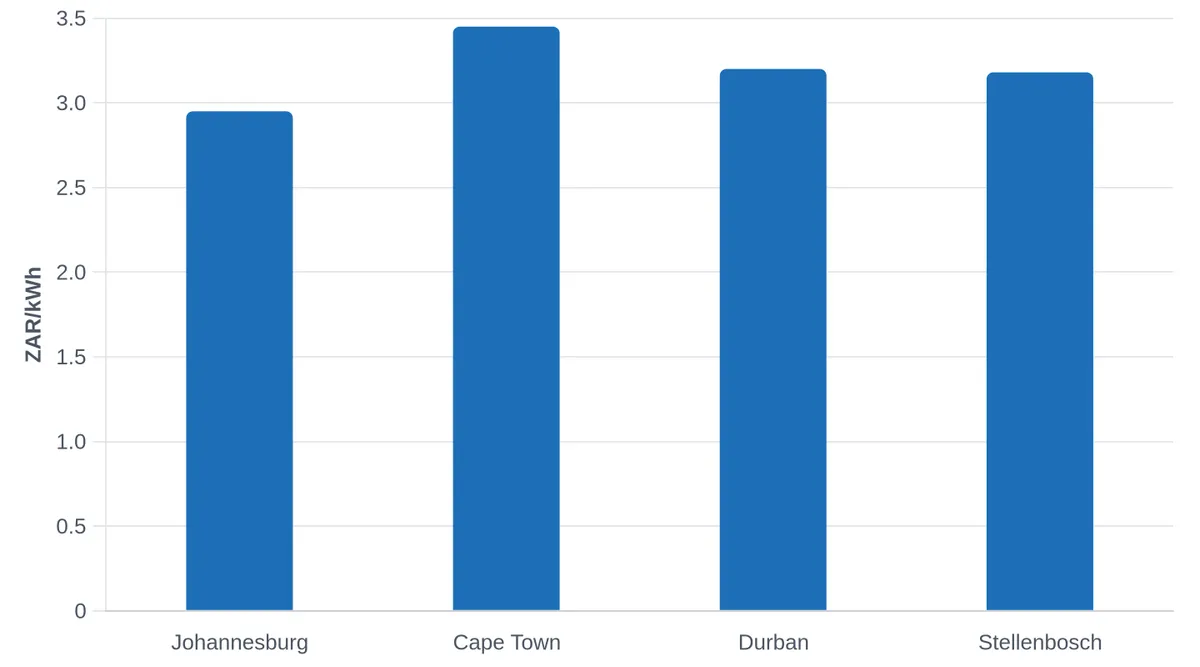
The Ora 5 uses approximately 15.5 kWh per 100 km in real-world conditions. Here is what that costs across the main scenarios Ora 5 owners in South Africa encounter:
| Charging scenario | Rate per kWh | Cost per 100 km |
|---|---|---|
| Home, Johannesburg (City Power) | R2.95/kWh | ~R46 |
| Home, Cape Town (standard tariff) | R3.45/kWh | ~R53 |
| Home, eThekwini (Durban) | R3.20/kWh | ~R50 |
| Home, Cape Town off-peak (Home Power Plus TOU) | R2.10/kWh | ~R33 |
| Eskom direct (Homepower off-peak) | R2.92/kWh | ~R45 |
| Solar self-generated (amortised over 25 years) | R0.95/kWh | ~R15 |
| Public AC charger | R5.88/kWh | ~R91 |
| Public DC fast charger | R7.00 to R7.35/kWh | ~R108 to R114 |
To put those home-charging figures in perspective: a full charge of the 58.3 kWh battery at Johannesburg’s R2.95/kWh works out to roughly R172. At Cape Town’s standard R3.45/kWh, it is around R201. Even at the upper end of the residential tariff range (R4.20/kWh), a full charge costs about R245. Public DC fast charging at current 2026 rates costs roughly twice as much per kilowatt-hour as home charging, which is the clearest financial argument for getting your home setup right from day one.
The smart-charger premium of R1,500 to R3,000 pays back quickly if you use off-peak scheduling consistently. A Cape Town owner switching from the standard R3.45/kWh rate to the R2.10/kWh off-peak Home Power Plus rate saves R1.35 per kWh. On a 15,000 km annual driving pattern at 15.5 kWh/100 km, that is about 2,325 kWh and a saving of approximately R3,139 per year, the smart-charger premium recovers in under a year.
Does solar change the calculation?
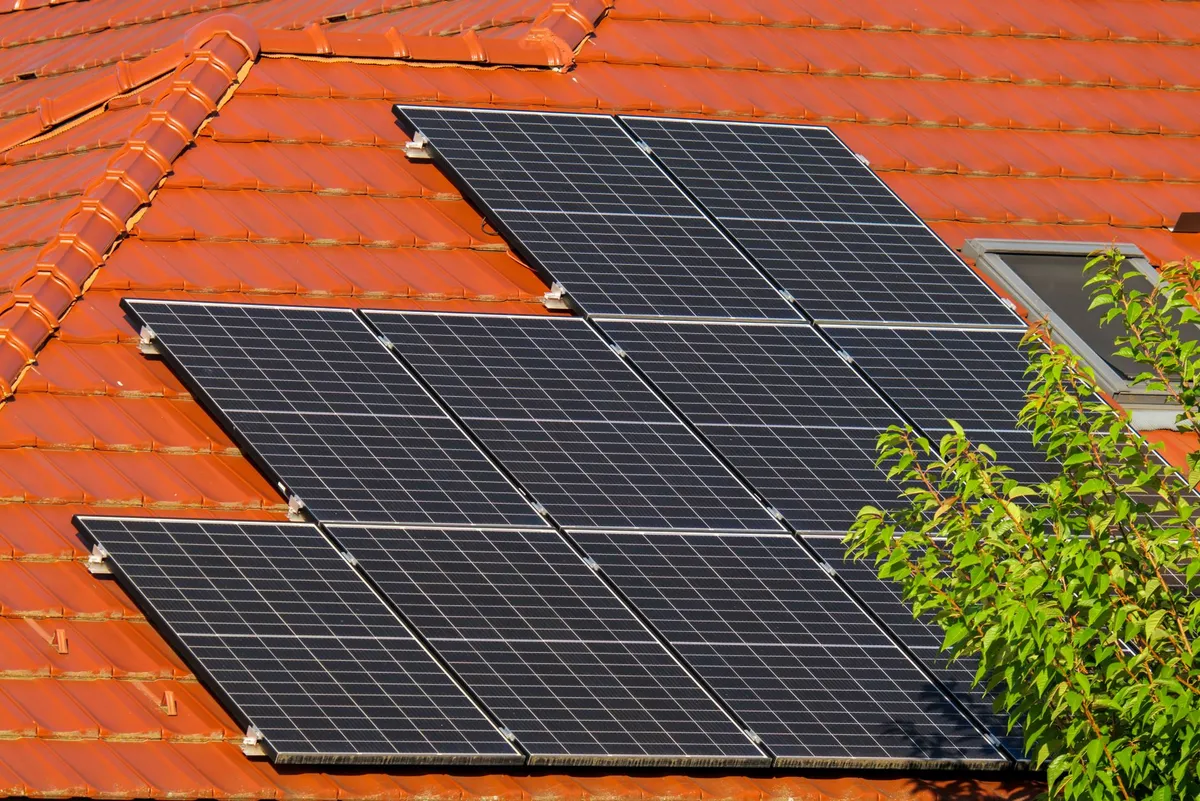
If you already have solar panels, or are considering them alongside your wallbox, the numbers shift substantially. A 5 kW solar system generates approximately 9,250 kWh per year in Cape Town. The Ora 5 needs roughly 2,100 kWh per year for 15,000 km of driving. That means a modest 5 kW system can theoretically cover the car’s full annual energy requirement with several thousand kilowatt-hours to spare for the house.
Solar-generated electricity amortised over 25 years costs approximately R0.95/kWh, versus R2.95 to R3.45/kWh from the grid in major metros. At a R3.50/kWh grid tariff, a solar-plus-EV-charger solution has a payback period of approximately 4.4 years. Solar payback periods have compressed from over eight years in 2022 to under five years in 2026, driven by rising tariffs and falling panel costs.
The Caro Plus (CP-AC7) and Caro Pro (CP-AC22) both support PV solar integration natively via OCPP EMS TCP/RTU, meaning the wallbox can be configured to prioritise charging from solar generation rather than the grid when surplus power is available. This requires proper commissioning by an installer who understands both the charger’s EMS protocols and your inverter’s communication interface, another reason to use a specialist rather than a general electrician.
South Africa has also achieved 365 consecutive days without load-shedding as of May 2026, with Eskom’s Energy Availability Factor at 65.85% for the financial year to date. That is good news for overnight home charging reliability, though pairing with solar backup remains worthwhile for grid-resilience over the long term.
What Ora 5 buyers in sectional title schemes need to know
A growing share of Ora 5 buyers live in sectional title complexes or estates. Installing a charger in an exclusive-use parking area requires an ordinary resolution from the body corporate (a simple majority, more than 50%) under the Sectional Titles Schemes Management Act. Exclusive-use-area rights are governed by section 27 of the STSMA (real rights), while personal-use rights fall under sections 10(7) and 10(8). You do not need a special resolution (75%) for a charger on common property allocated to your exclusive use, that is a persistent misconception in homeowner circles.
If you want to install on a common parking bay without exclusive-use rights, the process involves the body corporate and potentially a trustee resolution. Get the governance question answered in writing before commissioning an installation quote.
A realistic cost-of-ownership snapshot
The GWM Ora 5 Super Luxury is priced at R549,900 and the Ultra Luxury at R599,900. Add a fully installed single-phase 7 kW wallbox at R14,000 to R26,000, and your all-in acquisition cost is R563,900 to R625,900 before financing.
Against that, running costs are notably lower than a comparable petrol vehicle. At Johannesburg’s R2.95/kWh, 20,000 km of annual driving in an Ora 5 (at 15.5 kWh/100 km) costs approximately R9,145 in electricity. A comparable petrol SUV at 8 litres per 100 km and current pump prices represents a dramatically higher annual fuel spend, the annual saving puts the wallbox installation cost well within reach on fuel savings alone, with ongoing savings accumulating after that.
Public charging on the road adds cost if you rely on it heavily, which is why the home setup matters. New off-grid charging corridors are expanding on routes like the N3, complementing the existing network for road trips, but public charging remains significantly more expensive per kilowatt-hour than overnight home charging.
Summary: what to do before you call an installer
Check whether your home has single-phase or three-phase supply. Confirm the supply capacity at your DB board, a 7 kW charger draws 32A on single-phase, and your board and main breaker need to accommodate this alongside your existing loads. Measure the cable run from the DB board to where the charger will mount. Find out your municipal tariff and whether a time-of-use option is available to you. If you are in a sectional title scheme, confirm the governance process before committing to a date. Get at least two quotes from EV-specialist installers who can address solar integration, load balancing, and OCPP configuration, not just the wiring.
Installation takes four to eight hours on-site and seven to fourteen days from quote to CoC. The CoC is legally required and insurance-critical. A smart wallbox with off-peak scheduling typically recovers its R1,500 to R3,000 premium within one year at current metro tariff rates.
Ready to find out what a properly specified installation costs for your specific property? Get a free installation quote from ChargePoint SA and have the full picture before you commit.
Get a real Ora 5 installation quote for your home
Based on your supply type and location—free with no obligation.
Get my installation quote →WhatsApp us
CoC-certified installers, nationwide
Photo: Bing