

BYD plans to bring flash charging with up to 1,000 kW charging power to South Africa, with the first locations set to go live in April or May 2026, according to ChargePoint SA. The Chinese automaker aims to install 200–300 stations by year-end, more than doubling the country’s public charger count. Installations begin at BYD dealerships, then expand to motorways—and critically for retail property owners, the rollout arrives just as shopping malls cement their role as South Africa’s most viable destination-charging hubs.
It’s a pivot point. GridCars secured 75% shareholding from an Energex-affiliated investor in January 2026 to accelerate its footprint to 450+ sites. The government’s 150% tax deduction for EV production investments took effect 1 March 2026, signalling OEM commitment that will lift demand. And NERSA’s 8.76% tariff increase for direct Eskom customers (effective 1 April 2026) brings unbundled pricing transparency that helps mall operators model kWh pass-through costs with confidence.
TL;DR
- BYD’s ultra-fast network — 200–300 flash-charging stations (up to 1,000 kW) rolling out from April 2026, starting at dealerships then expanding to highways and high-traffic retail nodes.
- Mall advantage — Shopping centres repeatedly cited as easiest DC fast-charge locations due to engineered electrical capacity; natural 15–40 minute shopping duration aligns perfectly with charging sessions.
- Business case strengthens — GridCars expansion, 150% NEV tax incentive now live, and NERSA tariff transparency converge to make 2026 the inflection year for private charging investment.
- Capex reality — A single Level 3 DC station can cost up to R2 million, but revenue models (R7.00–R7.35/kWh) and customer-loyalty benefits justify the outlay for anchor tenants and property owners.
Background: Why malls became SA’s EV charging sweet spot
South Africa has approximately 650 public EV chargers across 445+ sites as of April 2026—a modest network for a country this size. Geographic gaps remain stark: Rubicon avoids Pretoria entirely due to the city’s Basic Charge policy making installations financially unviable. Meanwhile, NEV sales rose to 15,611 units in 2024, up from 7,782 in 2023, though year-on-year growth slowed to 6% in early 2025 as infrastructure constraints and grid-stability concerns tempered adoption momentum.
Into this gap stepped shopping malls. Most large malls and lifestyle centres now offer dedicated premium parking spots equipped with chargers, reflecting a shift from novelty to expected amenity. The reason is structural: malls have engineered electrical load capacity that standalone retail sites lack, making them the easiest locations for DC fast chargers. As u/lokey_convo put it on r/electricvehicles: “Fast charging takes anywhere from 10 to 40 minutes depending on how much you’re trying to get, and grocery stores have food and other goods. Most probably spend anywhere from 15–30 minutes at the grocery store… Only makes sense that you go to the grocery store AND plug in.”
That alignment—shopping duration matching charging time—creates a natural use case that home and workplace charging can’t replicate for apartment dwellers or those on the go. GridCars now operates over 450 public AC and DC stations, many at malls, with roaming and special pricing models that attract EV drivers and increase foot traffic. The business model works: one small construction company reported on Reddit that it generated R2,930 profit since installing four ChargePoint 80A Level 2 chargers two years ago, charging the public R0.55/kWh (roughly R10.23/kWh in ZAR terms, though the poster was US-based—SA rates are lower but the ROI principle holds).

The numbers: capex, tariffs, and ROI
Installing a single EV charging station in South Africa can cost as much as R2 million, sector experts say—particularly for Level 3 DC fast chargers. That’s the headline figure scaring off some property developers. But the revenue side is equally compelling:
| Charge type | Tariff (GridCars eMSP) | Tariff (Rubicon eMSP) | Typical session duration |
|---|---|---|---|
| DC fast (Level 3) | R7.35/kWh | R7.00/kWh | 15–40 minutes |
| AC (Level 2) | R5.88/kWh | R5.88/kWh | 1–3 hours |
| Home charging (reference) | R3.00–R4.00/kWh | — | Overnight |
Public DC charging costs roughly double what home charging does, but for drivers without home access—apartment dwellers, office workers, travellers—it’s the only option. And malls capture the premium: a Volvo EX30 with 175 kW peak charging can add 80% in 26 minutes; a BMW iX3 50 xDrive with 150 kW capability needs 34 minutes for the same top-up. Both windows fit a grocery run or a meal.
NERSA’s 8.76% tariff increase for direct Eskom customers (effective 1 April 2026) and 9.01% for municipal customers (from July 2026) improves cost transparency. The unbundled tariff structure lets mall operators calculate kWh pass-through with precision, a critical input for anchor-tenant negotiations and customer pricing.
Stakeholder reactions: OEMs, operators, and government
Automakers double down
BYD’s flash-charging rollout is the headline, but it’s not alone. Audi South Africa and Rubicon added six new 150 kW DC rapid chargers along the N1, N2, and N3 highways, bringing Audi’s total infrastructure investment to over R50 million since 2022. BMW’s new iX3 50 xDrive, arriving Q3 2026 with 678–805 km WLTP range, signals confidence in the charging network’s maturity. Volvo’s EC40, already on sale at R1,396,800 with 650 km range, relies on that same network for long-distance viability.
Charging operators expand aggressively
GridCars’ January 2026 investor injection funds expansion to 450+ sites, with malls remaining a priority due to existing electrical capacity. The company added 11 new stations in the Eastern Cape between January and February 2026 alone, nine supporting DC fast charging, through a partnership with the Automotive Industry Development Centre. Zero Carbon Charge (CHARGE) is building 120 solar-powered off-grid stations along the N3 corridor—proof that private capital sees the business case even where Eskom’s grid is weakest.

Government signals commitment
The 150% tax deduction for EV production investments, live since 1 March 2026, allows manufacturers to deduct 150% of facilities and machinery costs. Portfolio Committee sessions highlighted the need for component deepening and logistics improvements—code for “we want local EV assembly,” which will drive domestic sales volumes and, in turn, charging demand. It’s a virtuous cycle that benefits mall operators who install chargers now, before the rush.
What this means for SA EV buyers
If you’re an apartment dweller or someone who can’t install a home charger, 2026 is the year destination charging becomes genuinely viable. As u/Dan6erbond2 noted on r/electricvehicles: “We specifically bought an EV with relatively short range (410 km WLTP) because most of our driving is in the city… we go shopping, swimming, dance classes, etc. as part of our routine, many of them have public charging, some even free.” That model—routine errands covering your charging needs—works only if the network is dense and reliable.
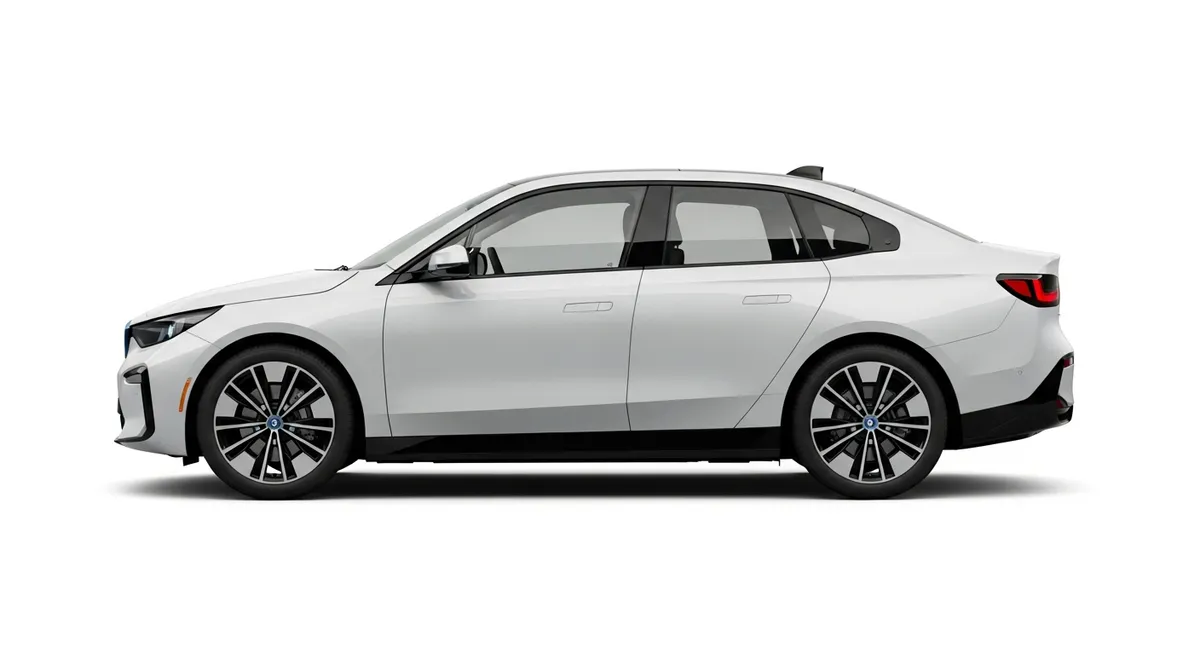
BYD’s 200–300 station target would more than double SA’s public charger count by year-end. GridCars’ 450+ sites and Rubicon’s highway focus fill the intercity gaps. For buyers of the BMW i5 eDrive40 (starting at R1,812,000 with 512–627 km range) or the Volvo XC40 Recharge (R1,108,000, 460–515 km range, 200 kW peak charging), the equation shifts: you’re no longer betting on a sparse network; you’re buying into an ecosystem that’s finally scaling.
But reliability matters. As one Reddit user lamented after a road trip: “Got to first charger… tried to use Kia Connect app, and it got stuck authenticating. Switched to Chargepoint and it just worked… a BMW was waiting and said that the available fast charger didn’t work.” Mall operators who prioritise uptime and seamless payment (GridCars’ Charge Pocket app, Rubicon’s roaming, or BYD’s proprietary system) will capture the loyalty premium.
What’s next: watch these three trends
- BYD’s April–May launch — The first flash-charging stations go live at BYD dealerships in April or May 2026. If the rollout hits the 200–300 target by December, SA’s public network will triple in eight months. Mall operators should monitor which retail nodes BYD selects for Phase 2 (post-dealership) expansion—those sites will become EV-driver magnets.
- OEM anchor-tenant deals — Audi’s R50 million investment sets a precedent. Expect BMW, Volvo, and BYD to negotiate co-branded charging zones at flagship malls, subsidising capex in exchange for branding and customer data. Property owners: start those conversations now.
- Tariff pass-through models — NERSA’s unbundled pricing (effective April 2026 for Eskom customers, July for municipalities) lets malls experiment with dynamic pricing: off-peak discounts, loyalty programmes, or bundled parking-and-charging packages. The first mall to nail this will own the EV-driver demographic.
Ready to charge smarter?
Whether you’re a mall operator evaluating anchor-tenant partnerships or an EV buyer wondering if destination charging can replace your garage, 2026 is the year the business case crystallises. BYD’s ultra-fast rollout, GridCars’ expansion, and the 150% tax incentive converge to make private charging investment not just viable—but competitive.
ChargePoint SA has installed commercial charging infrastructure across South Africa’s retail, hospitality, and corporate sectors. If you’re a property owner ready to capture the EV-driver demographic—or a business exploring charging as a revenue stream—get a free site assessment. We’ll model your capex, tariff pass-through, and ROI against real 2026 data, so you know exactly what you’re buying into.
Image credits
“Dark Days Ahead: Eskom Rolling Blackouts and Loadshedding” by Axel Bührmann (CC BY 2.0, via flickr) · “Eskom – they’re rolling blackouts, dammit” by Axel Bührmann (CC BY 2.0, via flickr) · “Green Machine” by jurvetson (CC BY 2.0, via flickr)