
The Milestone That Ended Range Anxiety
Eskom has reached 365 consecutive days without load shedding as of 17 May 2026 — the first time since September 2018 that South Africa’s grid has operated continuously for a full year. For electric vehicle owners and prospective buyers, this isn’t just a power utility statistic. It’s the end of the single biggest barrier to home EV charging: the fear that your car won’t charge when you need it most.
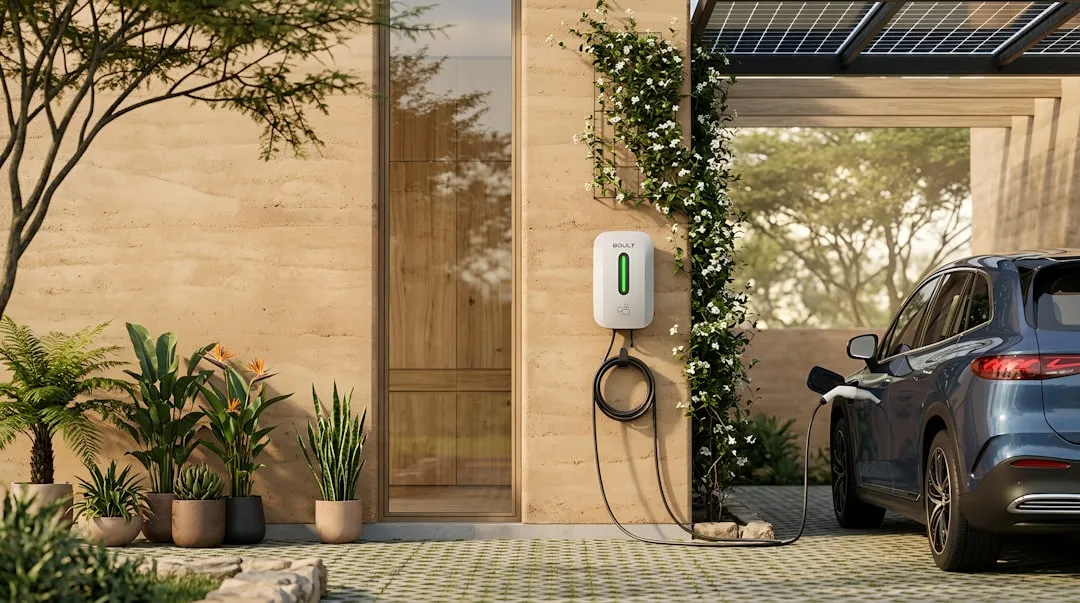
The implications are immediate and tangible. Home charging — which accounts for 80% of EV energy replenishment globally — is now predictable in South Africa. You can plug in overnight with confidence that your battery will be full by morning, whether you’re in Johannesburg, Cape Town, or Durban. That reliability fundamentally changes the economics and practicality of EV ownership in a market where public charging infrastructure is still maturing.
What 341 Days of Stability Actually Means for Charging
When Eskom reported 341 consecutive days without load shedding in April 2026 and projected continued energy stability through the 2026 winter season with a resilient power system and the Generation Recovery Plan firmly embedded, the message to EV buyers was clear: the grid is no longer a gamble. For context, South Africa endured 332 days of load shedding in 2023 alone, with Stage 6 blackouts lasting up to six hours at a time.
The practical impact on home charging is profound. A typical EV with a 60 kWh battery requires 8–10 hours on a standard 7 kW home charger to replenish from empty. During the load-shedding era, that meant gambling on whether you’d get an uninterrupted charging window — or waking up to a half-charged battery and a 200 km commute. One Gauteng-based EV owner on r/southafrica described the pre-stability era bluntly: “I had to keep a petrol car as backup because I couldn’t trust the grid to charge my EV overnight. Now I’ve sold the backup.”
Grid Stability Unlocks Home Charging Economics
With grid reliability restored, the cost advantage of home charging becomes undeniable. Municipal electricity tariffs in major metros average R2.50–R3.20 per kWh (including demand charges), compared to public DC fast charging at R7.00–R7.35 per kWh as of August 2025. For a driver covering 1,500 km per month in a vehicle consuming 18 kWh/100 km, that’s the difference between R675 and R1,890 in monthly fuel costs — a R1,215 saving that only works if you can reliably charge at home.
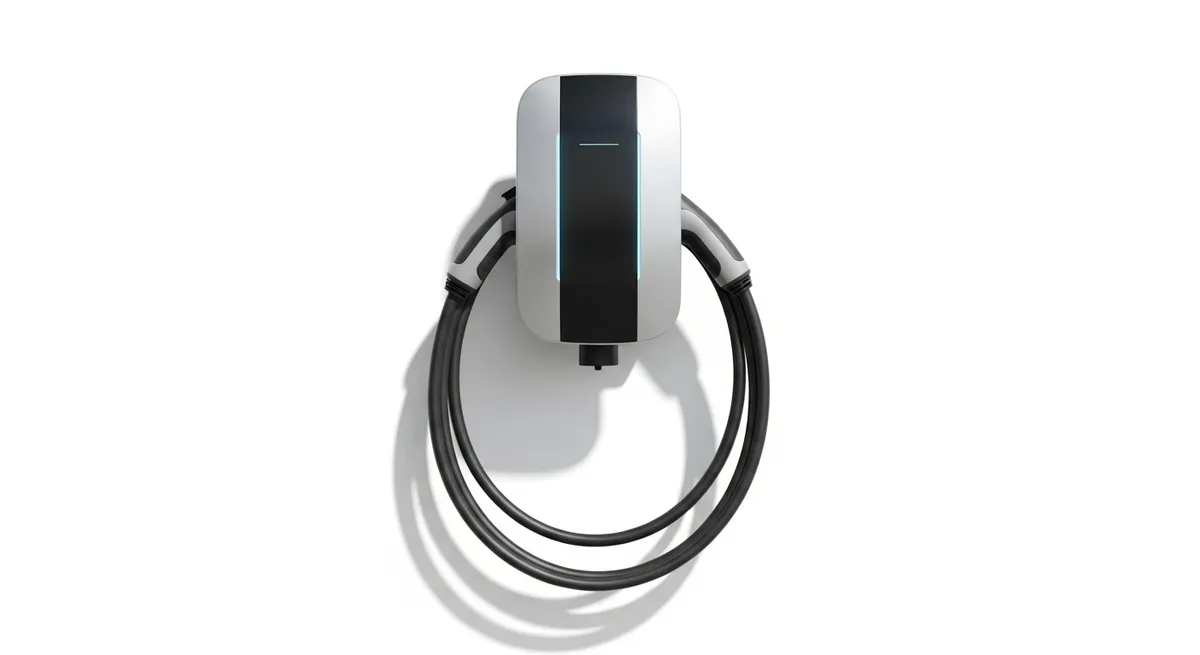
The NERSA-approved 8.76% tariff increase for Eskom direct customers from 1 April 2026 (and 9.01% for municipal customers from 1 July 2026) does erode some of that advantage, but the gap between home and public charging remains wide enough to justify the upfront cost of a home wallbox installation — typically R15,000–R25,000 for a 7 kW unit.
| Charging Location | Cost per kWh (2026) | Monthly Cost (1,500 km) | Annual Saving vs. Public DC |
|---|---|---|---|
| Home (municipal tariff) | R2.85 | R770 | R13,440 |
| Public AC (GridCars) | R5.88 | R1,588 | R3,624 |
| Public DC (Rubicon) | R7.00 | R1,890 | — |
Assumes 18 kWh/100 km consumption, 1,500 km/month driving, and 270 kWh monthly energy use.
Public Infrastructure Catches Up — With or Without the Grid
Grid stability hasn’t just made home charging viable; it’s accelerated public infrastructure deployment. ChargePoint SA now operates over 450 public AC and DC charging stations across South Africa, with the Charge Pocket app connecting drivers to 445 sites representing 650 chargers and more than 1,200 connectors as of early 2026. Rubicon’s network has grown to 103 public charging stations and 20 charging stations at OEM partner dealerships, with total installed capacity of 6,648 kW as of February 2026.
But the most significant development is the decoupling of charging infrastructure from grid dependence. CHARGE commissioned two off-grid, solar-powered HPC stations along the Johannesburg–Durban N3 corridor on 19–20 May 2026 — CHARGE N3 Roadside near Reitz Interchange (Free State) and CHARGE N3 Tugela at Colenso-Winterton Interchange (KwaZulu-Natal) — operating entirely off-grid using solar generation and battery storage. The R100 million equity investment from the Development Bank of Southern Africa (DBSA) comes with a funding condition to build off-grid charging infrastructure every 150 kilometres along major national roads, with plans to install 60 charging stations nationwide by end of 2027.
The BYD Megawatt Rollout
BYD’s announcement that it will build a nationwide network of 1 MW supercharger stations in South Africa — with construction commencing in Q2 2026 and plans to install 200 to 300 megawatt-level (up to 1,000 kW) Flash charging stations by end of 2026 — represents a dramatic expansion of public charging infrastructure. These stations can add 300–400 km of range in 15 minutes, making long-distance EV travel as convenient as petrol refuelling.
A Cape Town-based fleet operator on r/electricvehicles noted the shift: “Two years ago, we couldn’t justify EVs for our sales team because load shedding made route planning a nightmare. Now with grid stability and the new DC network, we’re electrifying the entire fleet by Q4 2026.”
- Rubicon added 11 new charging stations in the Eastern Cape between January and February 2026, nine of which support DC fast charging, through partnership with the Automotive Industry Development Centre (AIDC) Eastern Cape
- Off-grid solar charging eliminates range anxiety on major corridors, even if grid stability falters in future
- Megawatt-scale charging reduces charge times to under 20 minutes for 80% capacity, matching petrol station convenience
What This Means for Buyers in 2026
The convergence of grid stability, home charging economics, and expanding public infrastructure has eliminated the three biggest objections to EV ownership in South Africa: range anxiety from power cuts, prohibitive public charging costs, and infrastructure gaps on major routes. For buyers evaluating EVs in mid-2026, the calculation has fundamentally shifted.
If you have off-street parking and can install a home charger, the 365-day milestone means you can treat your EV like a smartphone: plug in overnight, wake up to a full battery, and only use public charging for long trips. The R13,440 annual saving versus public DC charging pays back a home wallbox installation in under two years. If you’re reliant on public charging, the combination of Eskom’s grid stability and the off-grid solar network means you’re no longer gambling on whether charging infrastructure will be available and operational when you need it.
The Confidence Factor
Eskom itself has piloted 10 charging stations at five sites and procured 20 EVs for its fleet, aiming for full electrification by 2040 — a signal that the utility backing the grid now trusts that grid enough to run EVs on it. That institutional confidence matters. When the entity responsible for keeping the lights on is willing to bet its own fleet on grid reliability, it validates the decision for individual buyers.
One Johannesburg-based early adopter on u/MyBroadband captured the sentiment: “I bought my EV in 2024 during Stage 4 load shedding and spent two years second-guessing the decision. Now, 365 days later, I’d make the same choice without hesitation. The grid works. The charging works. The anxiety is gone.”
The Path Forward
The 365-day milestone isn’t a guarantee that load shedding will never return — Eskom’s Generation Recovery Plan is still a work in progress, and winter demand peaks remain a test. But it proves that grid stability is achievable and sustainable in South Africa, and that’s enough to shift buyer psychology. The question is no longer “Can I trust the grid to charge my EV?” but “Which EV should I buy now that the grid is reliable?”
For ChargePoint SA and the broader EV ecosystem, the implications are clear: home charging is now the foundation of the market, public infrastructure is the enabler of long-distance travel, and off-grid solar charging is the insurance policy against future instability. The 365-day streak didn’t just end load shedding — it ended the era of EV ownership as a leap of faith.
If you’re ready to make the switch, get a personalised EV charging quote and see what a year of grid stability means for your home charging setup.