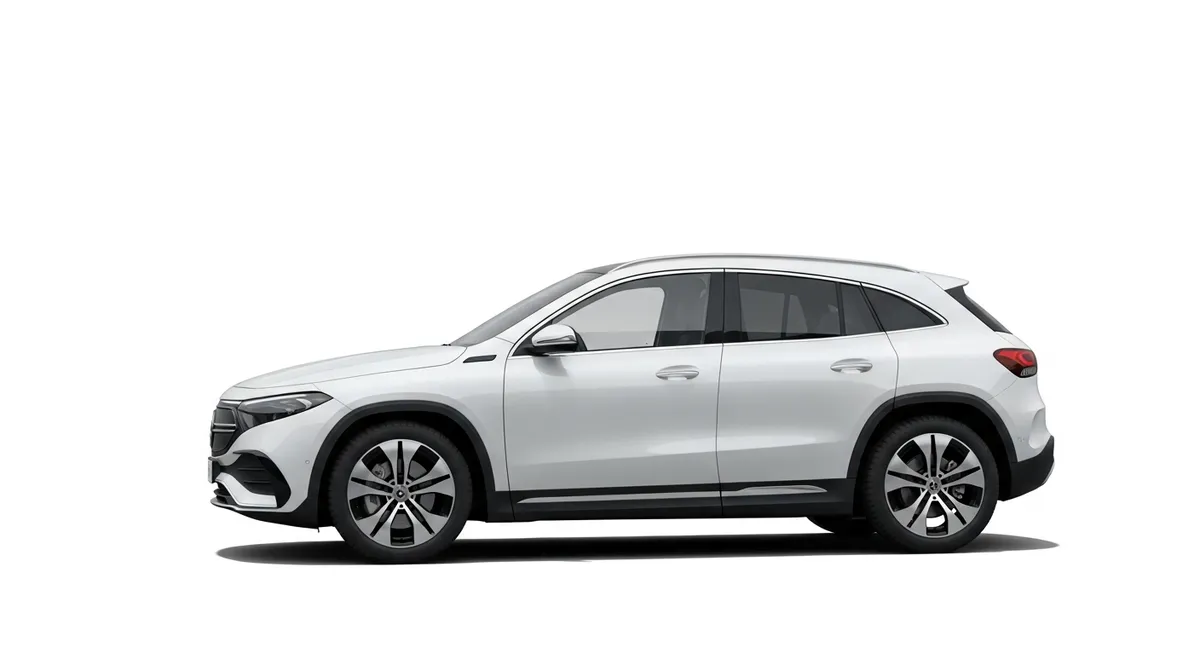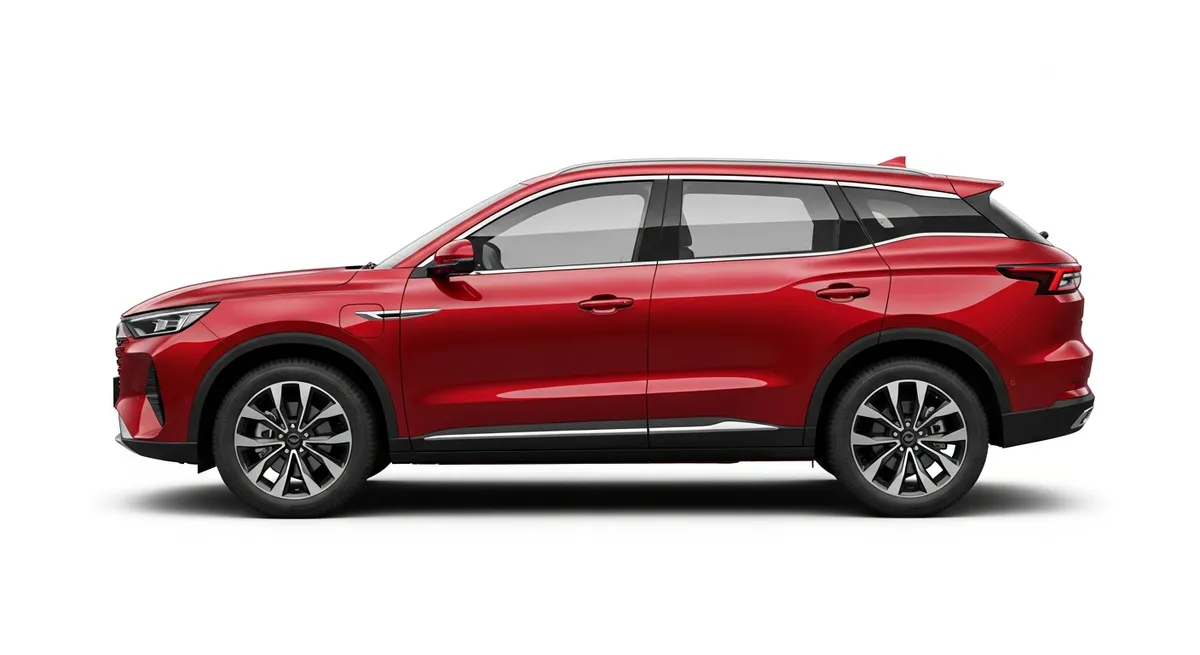

“TCO is the knockout punch,” u/Peccz wrote on r/electricvehicles after two years with an electric van. The Dongfeng 06 E1 landed in South African showrooms in April 2026 at R499,000 — R109,005 more than the Hyundai Creta 1.5 Executive — but over five years of 1,500 km monthly driving, the EV’s total cost of ownership undercuts the petrol SUV by roughly R12,000 when you factor in fuel, service, and depreciation. That margin widens if you drive more or if petrol climbs past R25/litre, and it narrows if you can’t charge at home or if Dongfeng’s resale value collapses.

On paper, the Creta looks cheaper: R389,995 for the 1.5 Executive versus the Dongfeng’s half-million asking price. But monthly fuel bills, service intervals, and five-year depreciation tell a different story. We’ve crunched the numbers using real Eskom tariffs, current petrol prices, and the kind of driving most South Africans do — 1,500 km a month, mix of highway and suburb. Here’s what the spreadsheet won’t tell you, and what it will.
Price and specifications: what you’re comparing
The Dongfeng 06 E1 arrived in South Africa in April 2026 as the country’s cheapest electric SUV, undercutting the BYD Atto 3 and Geely E5 by roughly R200,000. It’s a compact crossover with a 58.1 kWh battery, 401 km WLTP range, and a single front motor producing 120 kW. The Hyundai Creta 1.5 Executive, meanwhile, is a known quantity: naturally aspirated 1.5-litre petrol four-cylinder, 84 kW, manual gearbox, and a 50-litre tank good for roughly 700 km of mixed driving at the claimed 7.2 l/100 km.
| Specification | Dongfeng 06 E1 | Hyundai Creta 1.5 Executive |
|---|---|---|
| Price (ZAR) | R499,000 | R389,995 |
| Power (kW) | 120 kW electric | 84 kW petrol |
| Range / tank capacity | 401 km (WLTP) / 58.1 kWh battery | ~700 km / 50 litres |
| Efficiency | 15.8 kWh/100 km | 7.2 l/100 km (claimed) |
| Warranty | 5 years / 150,000 km vehicle; 8 years / 150,000 km battery | 5 years / 150,000 km vehicle |
| Service interval | 20,000 km or 12 months | 15,000 km or 12 months |
The Dongfeng’s 8-year battery warranty is worth noting — as u/tatlar on r/electriccars put it, “The 10-year battery warranty is the best protection I can get on a used buy.” That peace of mind matters when you’re betting half a million rand on a brand most South Africans have never heard of.
Running costs: the monthly fuel bill reality check
This is where the EV pulls ahead decisively. At 1,500 km per month — a typical family doing school runs, weekend trips to the coast, and the odd Gauteng–KZN holiday — here’s what you’ll spend on energy:
Dongfeng 06 E1 (electric)
Consumption: 15.8 kWh/100 km (manufacturer claim; real-world figure likely 17–18 kWh/100 km in mixed driving). Monthly distance: 1,500 km. Energy required: 237 kWh. Home-charging tariff: we’ll use the post-April 2026 Eskom rate of roughly R2.77/kWh for residential customers (8.76% hike applied to the 2025 average). Monthly cost: R656.
If you charge exclusively at public DC fast chargers — say, GridCars at R7.35/kWh — that same 237 kWh costs R1,742. Still cheaper than petrol, but the home-charging advantage is stark.

Hyundai Creta 1.5 Executive (petrol)
Consumption: 7.2 l/100 km (claimed; real-world closer to 8.5 l/100 km in traffic). Monthly distance: 1,500 km. Fuel required: 108 litres (using the claimed figure) or 127.5 litres (real-world). Petrol price: R24.50/litre (inland 95 octane, May 2026 average). Monthly cost: R2,646 (claimed) to R3,124 (real-world).
Monthly fuel saving (EV): R1,990 to R2,468, depending on how heavy your right foot is and whether you’re stuck in Sandton traffic or cruising the N2.
The load-shedding factor
“But what about load-shedding?” Fair question. At Stage 4, you’ll lose roughly 8–10 hours of grid access per day. The Dongfeng 06 E1 supports AC charging up to 7.4 kW — that’s a full 0–100% charge in about 8 hours, or 240 km of range in a typical overnight off-peak window (6–8 hours). If you’re disciplined about plugging in during Eskom’s cheap overnight slots (typically 22:00–06:00), you’ll rarely feel the pinch. Stage 6 for weeks on end? That’s when a petrol car or a solar-plus-battery setup becomes non-negotiable.
Five-year total cost of ownership
Monthly fuel is only part of the picture. Over five years (90,000 km), here’s the full ledger:
| Cost category | Dongfeng 06 E1 | Hyundai Creta 1.5 Executive |
|---|---|---|
| Purchase price | R499,000 | R389,995 |
| Fuel / electricity (60 months × 1,500 km) | R39,360 (home charging) | R158,760 (petrol @ R24.50/l, 7.2 l/100 km) |
| Service & maintenance | ~R18,000 (4 services, brake pads, tyres) | ~R32,000 (6 services, oil, filters, spark plugs, brake pads, tyres) |
| Insurance (estimated) | R84,000 (R1,400/month × 60) | R72,000 (R1,200/month × 60) |
| Depreciation (40% residual) | -R299,400 | -R233,997 |
| Total cost of ownership | R640,760 | R652,755 |
The EV wins by roughly R12,000 over five years — a modest margin that widens if petrol prices climb (they always do) or if you drive more than 1,500 km/month. That margin narrows or even inverts if you rely heavily on public fast charging or if the Dongfeng’s resale value craters (a real risk for a brand with no track record in SA). The R109,005 upfront premium means the Dongfeng needs nearly three years of fuel savings to break even — after that, you’re in the black.
One hidden cost worth flagging: as u/FRENCHTECH75 on r/electricvehicles noted, “€100/month: a one-size-fits-all model that fits no one… the model structurally penalizes occasional users, with no technical justification.” Some EV brands (Tesla, Polestar) lock features behind subscriptions. The Dongfeng 06 E1 doesn’t — yet. But if that changes, your TCO advantage evaporates fast.
Charging at home: 7.4 kW vs 11 kW vs 22 kW — which suits the Dongfeng?
The Dongfeng 06 E1’s onboard AC charger maxes out at 7.4 kW. That means installing an 11 kW or 22 kW wallbox won’t charge it any faster — you’re capped at 7.4 kW regardless. For context:
- 7.4 kW: 0–100% in ~8 hours. Perfect for overnight charging. Adds roughly 30 km of range per hour plugged in.
- 11 kW: Overkill for this car, but future-proofs your garage if you upgrade to a BYD Seal or BMW i4 later.
- 22 kW: Only useful if you’re charging two EVs simultaneously or planning a fleet. Single-phase residential supplies in SA typically can’t deliver 22 kW anyway without an expensive three-phase upgrade.

Verdict: a 7.4 kW wallbox is the sweet spot for the Dongfeng 06 E1. Expect to pay R8,000–R12,000 installed (estimate based on typical market rates), depending on your DB board’s proximity to the parking bay and whether you need a dedicated circuit breaker.
Pairing with solar
If you’ve already got a solar-plus-battery setup (say, 5 kW inverter, 10 kWh lithium battery, 8 panels), you can charge the Dongfeng during the day when your panels are pumping out 3–4 kW. That won’t fill the battery quickly, but it’ll top up 120–160 km of range over a sunny afternoon — enough to make municipal electricity a backup rather than your primary fuel source. Just don’t expect to charge from flat in one day unless you’ve got a serious array (15+ panels, 10 kW inverter).
SA-specific considerations: infrastructure, service, and the Dongfeng gamble
Charging infrastructure in 2026
South Africa’s public charging network is expanding, but it’s still patchy. GridCars operates 445 sites (650 chargers, 1,200 connectors) as of January 2026. Rubicon runs 103 public stations plus 20 OEM dealership chargers. In May 2026, CHARGE launched two off-grid solar-powered stations on the N3 Johannesburg–Durban corridor, and BYD plans to roll out 200–300 flash chargers (up to 1,000 kW) by year-end.
Translation: if you live in Gauteng, Cape Town, or along the N3/N2 corridors, you’re covered for road trips. If you’re in Limpopo, the Free State interior, or the Eastern Cape beyond Gqeberha, you’ll be doing a lot of route planning — or sticking with the Creta.
Service network and brand risk
Hyundai has an extensive dealer network across South Africa. Dongfeng has… a handful, mostly concentrated in major metros. If your 06 E1 throws a fault code in Upington, you’re either flatbedding it to Cape Town or waiting days for a mobile technician. The Creta, meanwhile, can limp into any Hyundai dealer for a same-day fix.
Dongfeng’s 8-year battery warranty is reassuring, but warranty claims are only as good as the service network enforcing them. This is the biggest unknown: will Dongfeng still be selling cars in South Africa in 2031? Will parts be available? The 150% NEV production tax incentive that came into force in March 2026 suggests the government is serious about attracting Chinese EV makers, but policy doesn’t guarantee longevity.
Resale value
The Creta holds its value like a Krugerrand. Hyundais routinely fetch 55–60% of their original price after five years in the used market. The Dongfeng? We don’t know yet. It could follow the BYD trajectory (solid residuals once buyers trust the brand) or the Chery route (steep depreciation because spare parts dry up). If you’re buying the 06 E1, budget for a 40% residual at best — and hope to be pleasantly surprised.
Honest verdict: who should buy which?
Buy the Dongfeng 06 E1 if…
- You drive >1,200 km/month and can charge at home overnight — the fuel savings justify the upfront cost over three to five years.
- You’ve got solar or a stable off-peak Eskom supply and aren’t fazed by Stage 4 load-shedding.
- You live in Gauteng, Cape Town, or along major EV corridors where public charging is dense enough for road trips.
- You’re an early adopter willing to bet on Dongfeng’s staying power in exchange for lower running costs and instant torque.
- You value silent, smooth driving and don’t mind explaining to your mates what a Dongfeng is.
Buy the Hyundai Creta 1.5 Executive if…
- You drive <1,000 km/month — the fuel savings won’t offset the R109k upfront gap, and the Creta’s proven reliability wins out.
- You can’t install a home charger (apartment dweller, landlord won’t allow it, or your municipal supply is too unreliable).
- You live in rural SA or small towns where the nearest DC fast charger is 200 km away.
- You want proven resale value and a service network you can rely on from Musina to Mthatha.
- You’re not ready to be an EV guinea pig — you want a car that just works, everywhere, every time, and you value the R109k saving upfront.
As u/Due-Cardiologist-706 on r/electriccars asked: “I just want the best value for money, not to overpay for branding… should I just go for the cheapest one?” The answer depends on your monthly km, your charging access, and your tolerance for risk. The Dongfeng is the cheapest electric SUV in SA — but it’s R109k more than the Creta Executive upfront. Cheap doesn’t always mean best value if the infrastructure or brand support isn’t there when you need it, or if you don’t drive enough to recoup the premium.
Ready to charge smarter?
If the Dongfeng 06 E1’s monthly savings have you convinced, the next step is making sure your home can handle it. A 7.4 kW charger installation starts at around R8,000, but every property is different — DB board capacity, cable runs, and municipal supply all matter.
ChargePoint SA offers free site assessments across Gauteng, Cape Town, and Durban. We’ll check your electrical setup, recommend the right charger, and give you a no-obligation quote. Whether you’re buying the Dongfeng, a BYD, or just future-proofing your garage, we’ll make sure you’re charging safely and efficiently. Book your free assessment here — it takes two minutes, and you’ll have answers within 24 hours.
The EV transition in South Africa is messy, exciting, and full of question marks. But if you’ve got the right driving profile and the right charging setup, cars like the Dongfeng 06 E1 prove that electric isn’t just cleaner — it can be cheaper over time, too. Just make sure you’re buying the car for the roads you actually drive, not the ones you wish existed.
Image credits
“Close-up of an electric car charging. Traffic lights in a blurry background” by Ivan Radic (CC BY 2.0, via flickr) · “ESB electric car charging point” by Sean MacEntee (CC BY 2.0, via flickr) · “Electric car charging” by Alan Trotter (CC BY 2.0, via flickr) · “Smart Car: White and green electric car charging – Aston Street” by ell brown (CC BY 2.0, via flickr)