

EV Charger Installation Rosebank: Your 2026 Investment Guide
Rosebank stands at the centre of Gauteng’s electric vehicle revolution. As Johannesburg’s premium business and residential hub—neighbour to Sandton and home to some of South Africa’s most valuable properties—this suburb is seeing unprecedented demand for EV charger installation in Rosebank across office parks, body corporates, and high-value homes.
With AutoTrader reporting a 220% year-on-year increase in EV searches between March 2025 and March 2026, and the BYD Dolphin Surf outselling petrol rivals with 302 units in April 2026 alone, the question for Rosebank property owners is no longer whether to install a charger—it’s how much will it cost and how quickly can I get it done.
This guide provides everything you need to know about EV charger installation costs, City Power tariffs, permit requirements, and return on investment for Rosebank properties in 2026.
Understanding Rosebank’s Electricity Infrastructure
Rosebank falls under City Power Johannesburg’s jurisdiction, with a municipal electricity tariff of R2.95 per kWh as of 2026. This rate is significantly lower than public DC fast-charging (R7.00–R7.35/kWh) and even public AC charging (R5.88/kWh), making home charging the most economical option for daily use.
Following NERSA’s approval of an 8.76% average tariff increase for Eskom direct customers (effective 1 April 2026) and 9.01% for municipal customers (effective 1 July 2026), City Power rates remain competitive. The new Homeflex time-of-use structure—now compulsory for solar-fed homes—offers off-peak rates between R1.45 and R2.25/kWh, making overnight EV charging up to 80% cheaper than petrol on a per-kilometre basis.
Why Rosebank’s Grid Matters for EV Charging
City Power’s infrastructure in Rosebank is generally robust, with fewer load-shedding interruptions than outlying areas. However, body corporates and office parks should still consider:
- Load management systems to prevent grid overload when multiple vehicles charge simultaneously
- Battery backup integration for uninterrupted charging during Stage 1–2 load-shedding
- Solar-plus-storage to maximise the Homeflex tariff benefits and reduce grid dependence
Complete Cost Breakdown: EV Charger Installation Rosebank 2026
Installation costs vary significantly based on property type, electrical capacity, and charger specifications. Here’s what Rosebank property owners can expect:
Residential Installation Costs
| Component | Budget Option | Premium Option |
|---|---|---|
| AC Charger Unit (7.4kW) | R8,500 – R12,000 | R15,000 – R22,000 |
| Installation Labour | R3,500 – R6,000 | R7,000 – R12,000 |
| Electrical Compliance Certificate | R1,200 – R1,800 | R1,200 – R1,800 |
| DB Board Upgrade (if required) | R4,500 – R8,000 | R8,000 – R15,000 |
| Trenching/Cabling (per 10m) | R2,000 – R3,500 | R3,500 – R6,000 |
| Smart Load Management (optional) | — | R8,000 – R18,000 |
| Total Estimated Cost | R19,700 – R31,300 | R42,700 – R74,800 |
Budget options typically include basic weatherproof AC chargers with manual operation. Premium options feature app-controlled smart chargers, solar integration, and load management—ideal for Rosebank’s high-value properties where future-proofing justifies the investment.
Body Corporate and Office Park Installations
Multi-unit installations in Rosebank’s sectional-title complexes and commercial properties require additional infrastructure:
| Scope | Cost Range (2026) |
|---|---|
| Single Dedicated Bay (AC 7.4kW) | R22,000 – R45,000 |
| 4-Bay Shared System with Load Management | R95,000 – R180,000 |
| 10-Bay Commercial Installation (22kW AC) | R320,000 – R580,000 |
| DC Fast Charger (50kW, single unit) | R450,000 – R750,000 |
Body corporates should budget an additional 15–25% for project management, trustee approvals, and tenant communication. Office parks targeting GBCSA Green Star certification may qualify for municipal rebates—contact City Power’s Energy Services Department for current incentive programmes.
Permit and Compliance Requirements in Rosebank
All EV charger installations in Rosebank must comply with City of Johannesburg by-laws and SANS 10142-1 wiring standards. Here’s the step-by-step compliance process:
1. Electrical Certificate of Compliance (CoC)
Every installation requires a CoC issued by a registered electrical contractor. This certificate confirms:
- Wiring meets SANS 10142-1:2017 specifications
- Earth leakage protection is correctly installed (mandatory 30mA RCD)
- DB board capacity is adequate for the additional load
- All work complies with Occupational Health and Safety Act requirements
Cost: R1,200 – R1,800 (included in most installation quotes)
Timeframe: Issued on completion, valid indefinitely
2. City Power Notification (Loads >7kW)
Installations exceeding 7kW require written notification to City Power at least 14 days before commissioning. This applies to:
- 22kW three-phase AC chargers
- Any DC fast-charging equipment
- Multiple chargers totalling >7kW on a single connection
Submit the Application for Additional Load form (available at citypower.co.za) with your CoC and installation drawings.
3. Body Corporate Approval (Sectional Title Properties)
Rosebank’s numerous sectional-title complexes require trustee consent before installation. Prepare a written application including:
- Detailed installation plan showing cable routes and charger location
- Electrical load assessment from a qualified engineer
- Proof of liability insurance covering installation and operation
- Commitment to cover electricity costs (sub-metering recommended)
Allow 4–8 weeks for trustee meetings and approval. Some schemes have adopted standardised EV charging policies—request a copy before submitting your application.
4. Homeowners Association (HOA) Consent (Estates)
Gated estates in greater Rosebank typically have architectural guidelines governing external installations. Ensure your charger and any visible conduit comply with aesthetic requirements. Most HOAs approve wall-mounted chargers within garages without objection.
Choosing the Right Charger for Your Rosebank Property
South Africa’s EV market shows 83% preference for plug-in hybrids over pure EVs as of 2026, but charging requirements differ significantly between vehicle types.
AC Charging (7.4kW – 22kW)
Best for: Daily home charging, overnight top-ups, PHEVs
Charging speed: 40–60 km of range per hour (7.4kW single-phase)
Typical cost: R8,500 – R22,000 (unit only)
AC chargers are the standard for Rosebank residential installations. A 7.4kW unit fully charges a BYD Dolphin (60.4kWh battery) in approximately 8 hours—perfect for overnight charging on City Power’s off-peak Homeflex tariff.
Recommended models for Rosebank homes:
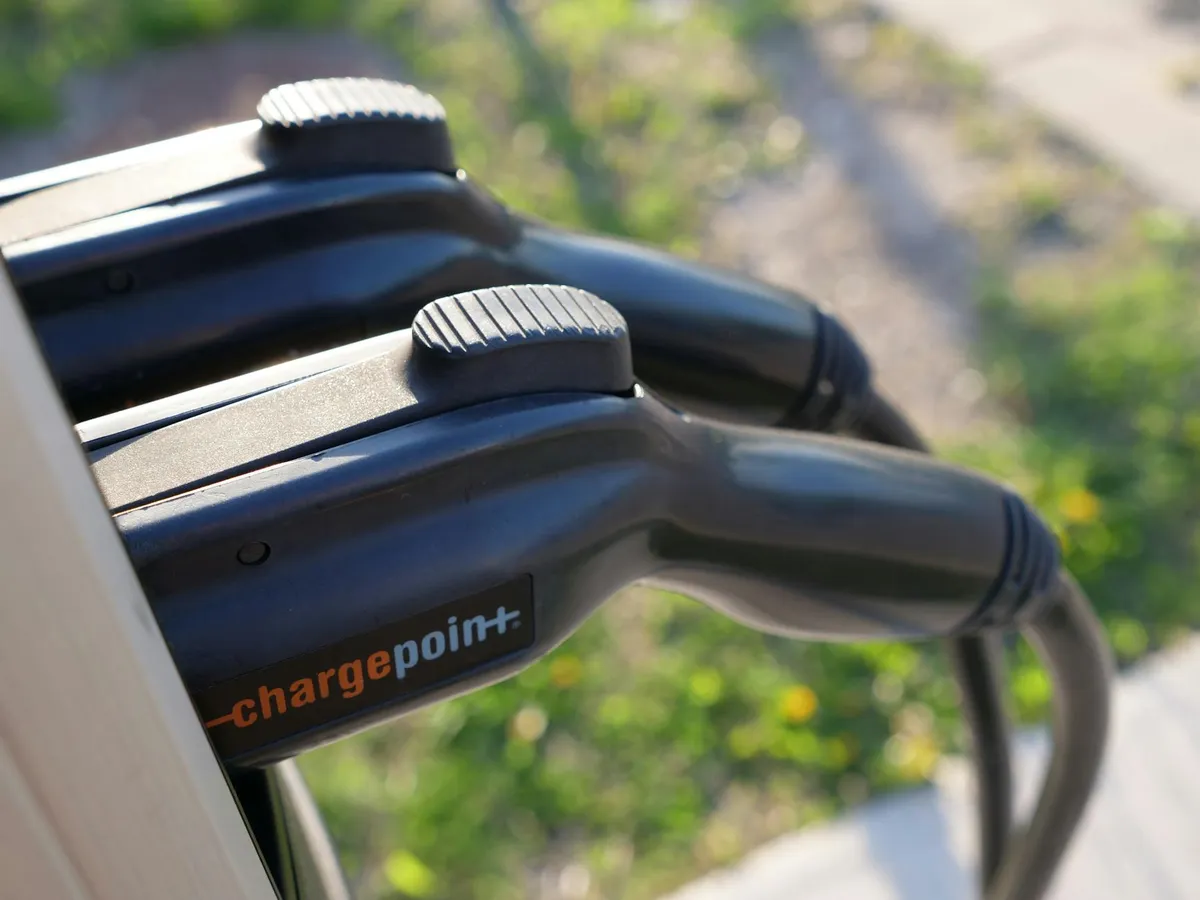
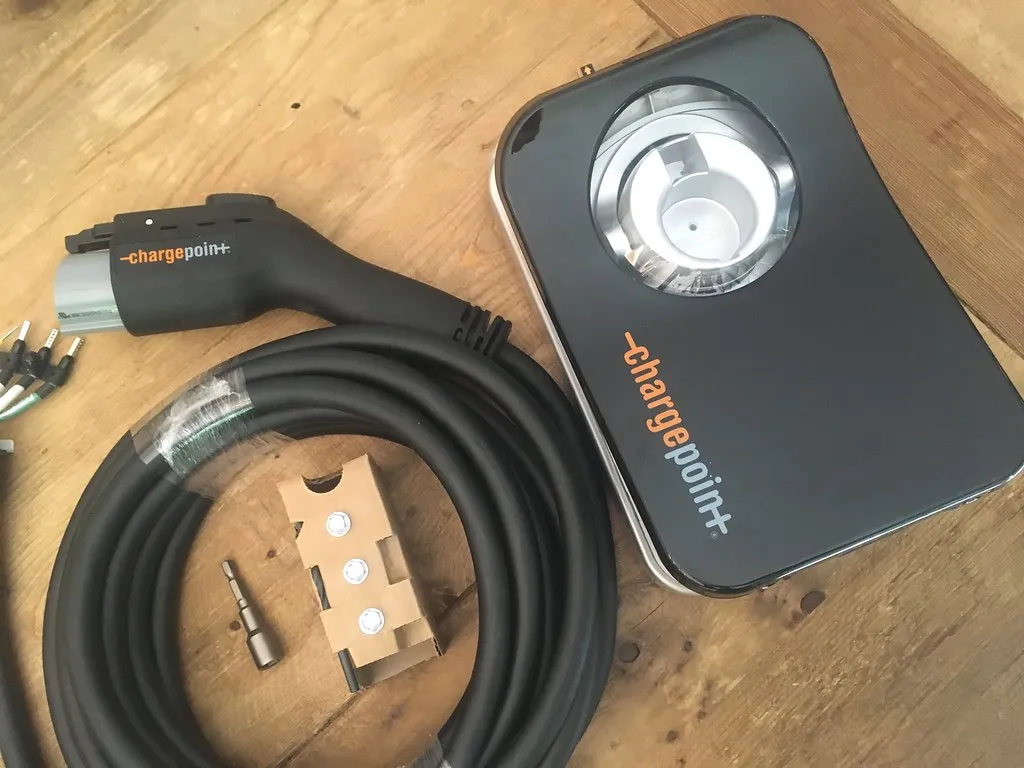
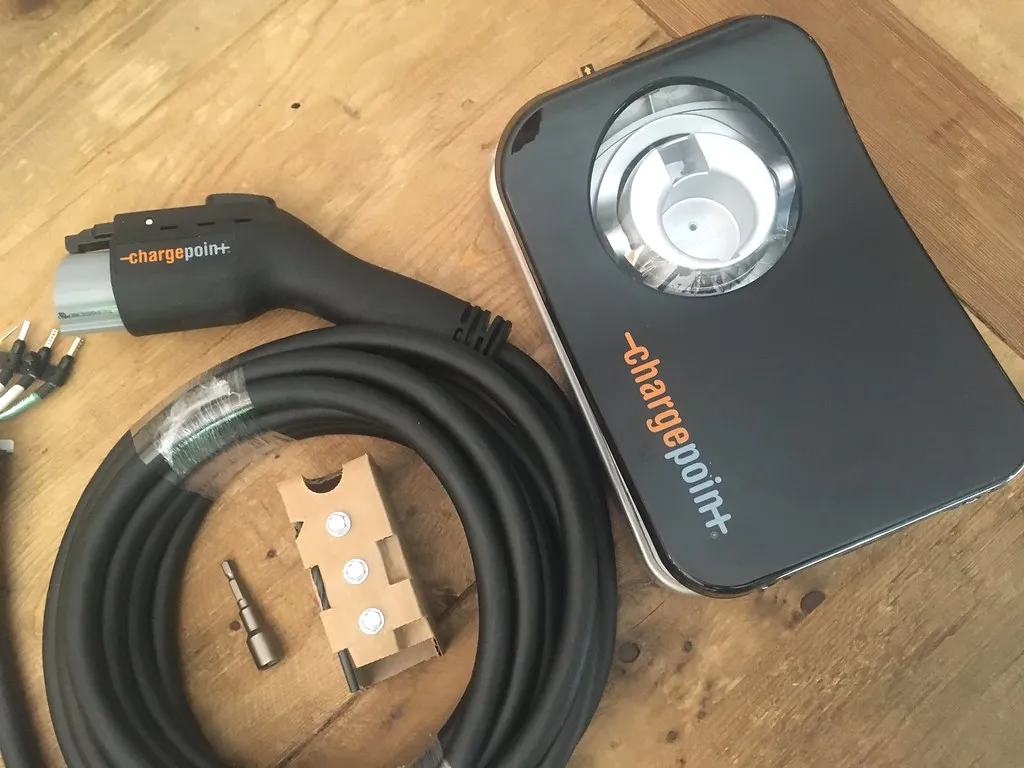
- ChargePointSA CP-AC7-CP (7kW): R7 400 – Tethered Type 2 cable, IP65-rated, our standard home charger
- ChargePointSA CP-AC22-CP (22kW three-phase): R13 900 – Tethered Type 2, built for homes and offices with three-phase power
- ChargePointSA CP-DUO-44B: Quote on request – dual 2×22kW, MID meter, OCPP 1.6J, ideal for body corporates
DC Fast Charging (50kW+)
Best for: Commercial properties, fleet operators, public-access installations
Charging speed: 200–300 km of range per hour (50kW)
Typical cost: R450,000 – R750,000 (50kW unit installed)
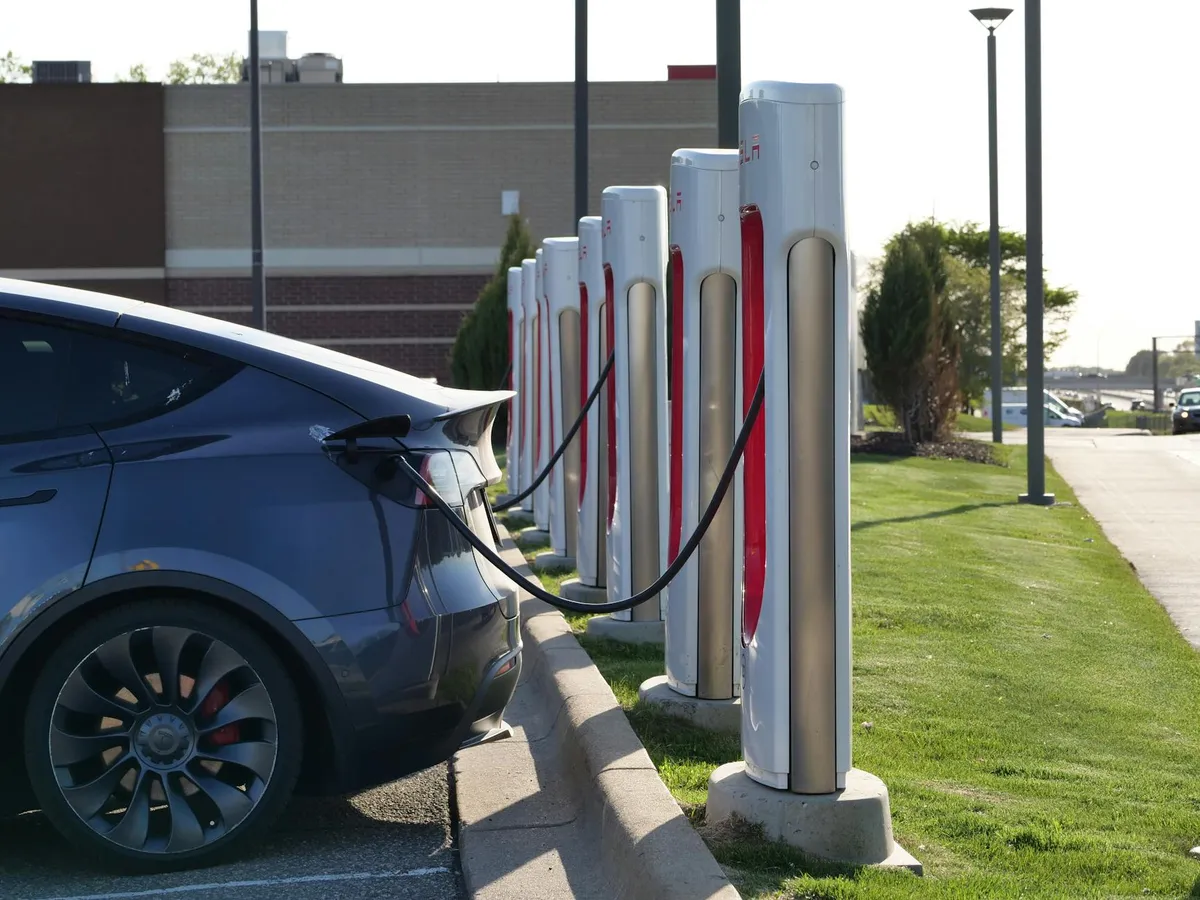
DC fast chargers make sense for Rosebank office parks where employees need rapid top-ups during work hours. With BYD planning to deploy 200–300 megawatt-scale “Flash” charging stations across South Africa by end of 2027—starting Q2 2026 at dealerships—commercial property owners should assess whether public infrastructure will meet tenant demand before investing in on-site DC equipment.
Return on Investment: Home Charging vs Public Charging in Rosebank
ChargePoint SA operates over 450 public AC and DC charging stations across South Africa as of early 2026, accounting for approximately 60% of the country’s total public charging capacity. The Charge Pocket app connects drivers to 445 sites representing 650 chargers and more than 1,200 connectors nationwide.
Despite this growing network, home charging delivers superior economics for Rosebank residents:
Cost Comparison: 20,000 km Annual Driving
| Charging Method | Cost per kWh | Annual Electricity Cost | 5-Year Total Cost |
|---|---|---|---|
| Home (City Power standard rate) | R2.95 | R8,850 | R44,250 |
| Home (Homeflex off-peak) | R1.85 avg | R5,550 | R27,750 |
| Public AC charging | R5.88 | R17,640 | R88,200 |
| Public DC fast charging | R7.00 | R21,000 | R105,000 |
| Petrol (R24/litre, 7L/100km) | — | R33,600 | R168,000 |
Assumes 15 kWh/100 km consumption (typical for BYD Dolphin, GWM Ora, BMW iX1). Homeflex off-peak rate assumes 80% of charging occurs between 22:00–06:00.
Payback Period Analysis
For a mid-range home installation costing R25,000:
- vs Public AC charging: 2.8 years payback
- vs Public DC charging: 2.1 years payback
- vs Petrol: 1.0 years payback
Rosebank property owners who install solar-plus-storage systems and maximise Homeflex off-peak charging achieve payback in under 18 months compared to petrol, while adding R50,000–R80,000 to property resale value according to 2026 Gauteng estate agent surveys.
Rosebank’s EV Charging Ecosystem in 2026
While home charging provides the best economics, Rosebank residents benefit from expanding public infrastructure for long-distance travel and emergency top-ups.
Public Charging Near Rosebank
As of May 2026, the nearest public charging options include:
- Rosebank Mall (AC 22kW): 2 bays, R5.88/kWh, accessible during mall hours
- The Zone @ Rosebank (DC 50kW): 1 bay, R7.00/kWh, 24/7 access with Charge Pocket app
- Sandton City (DC 60kW): 4 bays, 3 km away, R7.00/kWh
- BMW Midrand dealership (DC 150kW): 12 km away, free for BMW iX owners, R7.35/kWh for others
Long-Distance Charging Confidence
On 19 May 2026, Zero Carbon Charge launched South Africa’s first off-grid, solar-powered charging stations along the N3 Johannesburg-Durban corridor—positioned approximately 180 km from Johannesburg and 200 km from Durban at the Reitz and Colenso interchanges. Backed by R100 million from the Development Bank of Southern Africa (DBSA), the network targets 60 stations nationwide by 2027, with N1 expansion planned next.
This infrastructure build-out directly addresses range anxiety for Rosebank EV owners planning coastal trips or business travel to Durban, Cape Town, and other major centres. Combined with BYD’s planned 1 MW “Flash” supercharger network (200–300 stations by end of 2027), South Africa’s charging backbone is rapidly maturing.
Solar Integration: Maximising Your Rosebank EV Charger Investment
Rosebank’s sunny Gauteng climate (average 8.5 peak sun hours daily) makes solar-plus-EV-charging an attractive proposition. With the Homeflex tariff now compulsory for solar-fed homes, the economics have shifted:
Solar-to-EV Charging Economics
A typical 5 kW rooftop solar system in Rosebank generates approximately 8,000 kWh annually—enough to power:
- 20,000 km of EV driving (3,000 kWh)
- Plus household consumption (5,000 kWh)
System cost: R85,000 – R120,000 installed (2026 pricing)
Payback period: 4.5 – 6.5 years (including EV charging savings)
25-year savings: R850,000 – R1.2 million (accounting for 3% annual tariff escalation)
Battery Storage Considerations
Adding a 10 kWh lithium battery (R65,000 – R95,000) enables:
- Load-shedding immunity for critical loads and EV charging
- Time-of-use arbitrage (charge battery off-peak, discharge during peak)
- 100% solar self-consumption (store excess daytime generation for evening EV charging)
For Rosebank’s high-value properties where uninterrupted power is non-negotiable, solar-plus-storage-plus-EV-charging represents a comprehensive energy solution with 6–8 year payback.
Choosing Your EV Charger Installation Partner in Rosebank
Quality installation is critical for safety, compliance, and long-term reliability. When selecting a contractor for your Rosebank EV charger installation, verify:
Essential Credentials
- Electrical Contractor Registration: Must hold valid registration with the Department of Employment and Labour
- Wireman’s Licence: Installation must be supervised by a licensed electrician (Grade 1 or higher)
- Professional Indemnity Insurance: Minimum R5 million cover
- SANS 10142-1 Certification: Demonstrated competence in current wiring standards
- OEM Accreditation: Authorised installer status for your chosen charger brand (ensures warranty validity)
Red Flags to Avoid
- Quotes significantly below market range (suggests corner-cutting or unlicensed labour)
- Unwillingness to provide Certificate of Compliance
- No written warranty on installation workmanship (minimum 12 months standard)
- Pressure to purchase specific charger models without technical justification
- Inability to provide client references from similar Rosebank installations
Government Incentives and Tax Implications
While South Africa currently offers limited consumer incentives for EV adoption, recent policy developments signal growing government support:
Manufacturing Incentive (Indirect Benefit)
In January 2025, government approved a 150% tax deduction for EV and hydrogen vehicle manufacturing, effective 1 March 2026 and capped at R500 million for the 2026/27 financial year. While this incentive targets manufacturers rather than consumers, the National Association of Automobile Manufacturers of South Africa (naamsa) notes it should stabilise long-term EV pricing and justify infrastructure investment—positive signals for Rosebank property owners considering home charger installations.
Section 12B Allowance (Commercial Properties)
Businesses installing EV charging infrastructure may qualify for accelerated depreciation under Section 12B of the Income Tax Act. Consult a tax advisor to determine eligibility—office parks and commercial properties in Rosebank’s business district should explore this avenue.
Municipal Rebates
City Power periodically offers energy-efficiency rebates for commercial properties. Contact their Energy Services Department to inquire about current programmes applicable to EV charging infrastructure.
Future-Proofing Your Rosebank EV Charger Installation
With South Africa’s EV market accelerating (220% increase in online searches year-on-year, 302 BYD Dolphin units sold in April 2026 alone), today’s installation should accommodate tomorrow’s needs:
Capacity Planning
- Install 10mm² cabling minimum: Supports future upgrade from 7.4kW to 22kW without rewiring
- Specify three-phase-ready DB board: Even if installing single-phase charger initially
- Include conduit for second charger: Multi-EV households are becoming common in affluent suburbs
- Specify OCPP-compliant chargers: Open Charge Point Protocol ensures compatibility with future networks and billing systems
Smart Features Worth the Premium
- Solar integration: Automatic switching to solar when available
- Load management: Prevents tripping when other high-draw appliances operate
- Scheduled charging: Automatically charges during Homeflex off-peak hours
- Remote monitoring: Track consumption, costs, and carbon savings via smartphone app
- Access control: NFC or app-based authentication (essential for body corporate installations)
Common Installation Challenges in Rosebank Properties
Heritage and Aesthetic Restrictions
Some Rosebank properties fall within heritage overlay zones or architectural conservation areas. External conduit and wall-mounted chargers may require City of Johannesburg heritage approval—add 4–6 weeks to your project timeline if applicable.
Underground Parking Complexes
Rosebank’s high-rise residential towers present unique challenges:
- Cable run distances: Parking bays may be 50+ metres from DB boards, increasing installation costs by R8,000 – R15,000
- Cellular connectivity: Underground parking often has poor signal—specify chargers with Wi-Fi or hardwired Ethernet connectivity
- Shared electrical infrastructure: Body corporate approval more complex; may require load study by consulting engineer (R12,000 – R18,000)
Older Electrical Installations
Pre-1990 properties may require DB board upgrades to accommodate EV charging loads safely. Budget an additional R8,000 – R15,000 if your home has:
- Fuse-based distribution board (rather than circuit breakers)
- Aluminium wiring (common in 1970s–1980s construction)
- Insufficient earth bonding
- No existing RCD protection
Get Your Rosebank EV Charger Installation Quote Today
ChargePoint SA has installed over 450 charging stations across South Africa, including numerous residential and commercial projects in Gauteng’s premium suburbs. Our network of certified installers understands Rosebank’s unique requirements—from body corporate approvals to City Power compliance to heritage considerations.
Your installation includes:
- Free site assessment and load calculation
- Detailed written quote with no hidden costs
- OEM-certified charger installation
- SANS 10142-1 compliant wiring
- Certificate of Compliance
- 12-month workmanship warranty
- Ongoing technical support
Ready to join Rosebank’s EV revolution? Get your free, no-obligation installation quote today. Our team will contact you within 24 hours to schedule your site assessment.
ChargePoint SA: Powering South Africa’s electric future, one installation at a time.