

As one Reddit user put it: “I heard BMW does well with their electric tech and has solid interiors, personally I’m a huge fan of German cars and like how the X3 drives so hoping the iX3 would be similar.” That sentiment captures the dilemma facing thousands of South African buyers in 2026: the BMW iX1 vs BMW X1 sDrive20i decision pits BMW’s electric iX1 against the petrol X1 sDrive20i — both share the same U11 platform, similar dimensions, and badge prestige, but the iX1 costs R200,000 more upfront. Is the premium worth it when you factor in electricity vs petrol, maintenance, and the realities of load-shedding?
This comparison unpacks the real numbers: purchase price, monthly running costs at 1,500 km/month, five-year total cost of ownership, and the practical considerations that matter in South Africa — from Eskom tariffs and solar pairing to BMW’s service network and charging infrastructure along the N3. Whether you’re a Sandton exec, a Cape Town family, or a Durban business owner, here’s everything you need to decide between electric and petrol.
Quick summary
- The BMW iX1 xDrive30 retails for R1,049,000 vs R849,000 for the X1 sDrive20i — a R200,000 upfront gap that narrows over five years of ownership.
- Monthly running costs: R896 for electricity (iX1 at 18.1 kWh/100 km, Eskom R3.30/kWh post-April 2026 hike) vs R3,038 for petrol (X1 at 7.5 l/100 km real-world, R27/litre) — saving R2,142/month or R25,704/year.
- The iX1 delivers 400 km WLTP range (64.7 kWh battery) per BMW South Africa specifications, charges 10–80% in approximately 29 minutes on DC, and supports 11 kW or 22 kW AC home charging — but requires careful planning around load-shedding.
- Five-year TCO favours the iX1 by roughly R128,520 in fuel savings alone, before factoring lower maintenance and tax incentives — but upfront capital and charging infrastructure remain barriers.
Purchase price: R200,000 gap at the showroom
BMW South Africa positions the iX1 xDrive30 at R1,049,000 and the X1 sDrive20i at R849,000 — a 24% premium for electric propulsion. Both vehicles share the third-generation U11 platform, identical 4,500 mm length, and near-identical boot space (iX1: 490–1,495 litres; X1: 540–1,600 litres). The price delta reflects the 64.7 kWh lithium-ion battery, dual-motor all-wheel-drive system (230 kW combined vs 141 kW in the petrol), and BMW’s eDrive technology.

That R200,000 hurdle is steeper in South Africa than Europe: the 25% import duty on fully built-up EVs (vs 18% on ICE vehicles) adds cost, and there are no consumer rebates or tax incentives yet — only the 150% manufacturing deduction introduced in March 2026, which benefits producers, not buyers. For cash purchasers, that’s a significant capital outlay. For those financing, it translates to roughly R3,500 more per month over 72 months at prime.
| Model | Retail Price (ZAR) | Power (kW) | 0–100 km/h (sec) | Drive Type |
|---|---|---|---|---|
| BMW iX1 xDrive30 | R1,049,000 | 230 | 5.6 | Electric AWD |
| BMW X1 sDrive20i | R849,000 | 141 | ~8.0 | FWD (7-speed DCT) |
Range, efficiency, and real-world practicality
BMW iX1: 400 km WLTP, 18.1 kWh/100 km
According to BMW South Africa’s technical data, the iX1 xDrive30 delivers 400 km on the WLTP cycle with a 64.7 kWh usable battery, consuming 18.1 kWh/100 km. In real-world South African conditions — highway cruising at 120 km/h, stop-start Johannesburg traffic, or coastal routes — expect 340–370 km depending on driving style and climate control use. The 2,010 kg kerb weight and dual-motor xDrive system (which powers all four wheels for traction) push consumption higher than lighter, single-motor rivals.
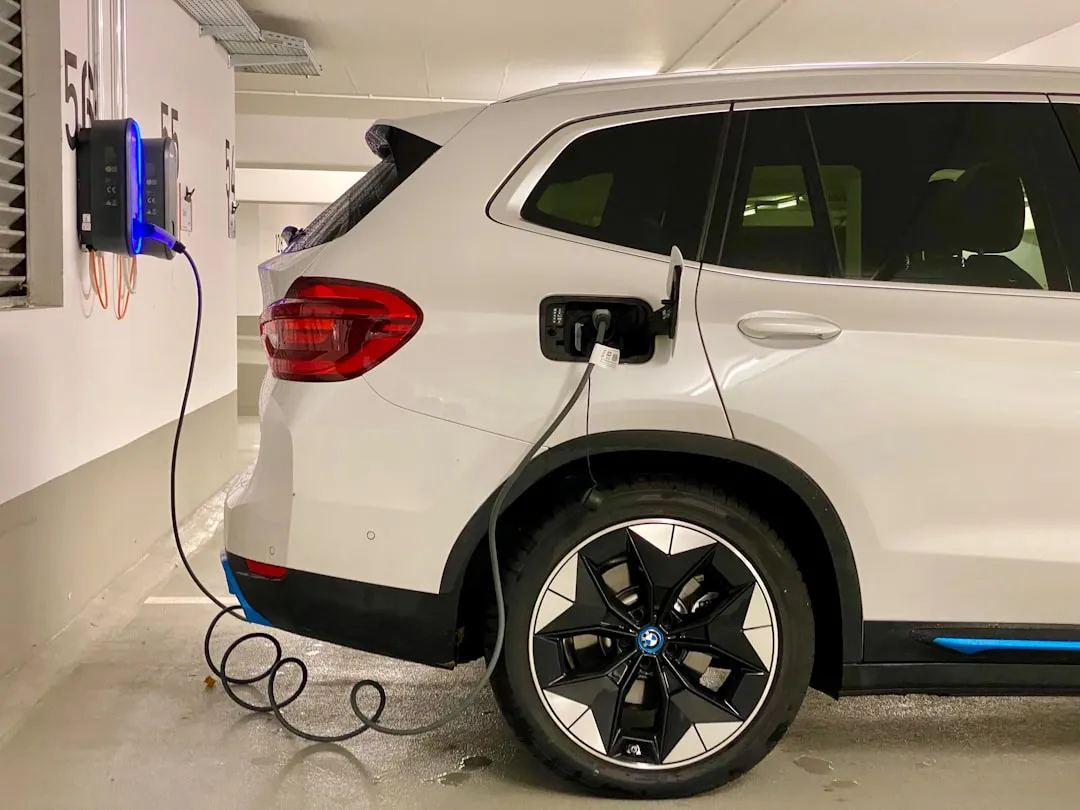
Charging: the iX1 accepts up to 130 kW DC fast charging, delivering 10–80% in approximately 29 minutes at compatible stations (calculated from 64.7 kWh × 70% ÷ 130 kW, accounting for charging curve taper). On AC, it supports 11 kW (approximately 6.5 hours 0–100%) or 22 kW (approximately 3 hours 45 minutes 0–100%) — critical for home or workplace charging. BMW’s onboard charger is three-phase-ready, so if you install a 22 kW wallbox, you’ll halve overnight charging time compared to 11 kW.
BMW X1 sDrive20i: 6.5 l/100 km, ~800 km range
The petrol X1 sDrive20i uses a 2.0-litre four-cylinder engine with 141 kW, paired to a seven-speed dual-clutch transmission. BMW’s WLTP figure is 6.5 l/100 km, though real-world consumption in mixed driving typically lands at 7.5–8.5 l/100 km. With a ~60-litre tank, that’s 700–800 km range — nearly double the iX1’s electric range, and refuelling takes three minutes at any petrol station.
The trade-off: no instant torque, slower 0–100 km/h (around 8 seconds vs 5.6 for the iX1), and front-wheel drive only. For buyers who regularly drive Johannesburg–Durban (570 km) or Cape Town–George (420 km), the X1’s extended range and ubiquitous refuelling eliminate the route-planning required for the iX1.
Monthly running costs: electricity vs petrol at 1,500 km/month
This is where the iX1 claws back the upfront premium. We’ll use 1,500 km/month — a realistic figure for suburban commuting, school runs, and weekend trips.
BMW iX1 electricity cost
- Consumption: 18.1 kWh/100 km (BMW official WLTP)
- Monthly kWh: 1,500 km ÷ 100 × 18.1 = 271.5 kWh
- Eskom tariff (post-April 2026 hike): R3.30/kWh average for Homepower 1 or municipal equivalents (NERSA approved 8.76% increase effective 1 April 2026, lifting typical residential rates from ~R3.03 to ~R3.30)
- Monthly cost: R896
If you charge exclusively at home overnight (off-peak Homeflex tariff ~R2.00/kWh), monthly cost drops to R543. If you rely on public DC fast charging at R7.00/kWh (Rubicon/GridCars standard rate), it jumps to R1,901 — more expensive than petrol. The key: home charging is essential for EV economics in South Africa.
BMW X1 sDrive20i petrol cost
- Consumption: 6.5 l/100 km (BMW WLTP); real-world ~7.5 l/100 km
- Monthly litres: 1,500 km ÷ 100 × 7.5 = 112.5 litres
- Petrol price: R27.00/litre (May 2026 inland 95 octane average)
- Monthly cost: R3,038
Using the official 6.5 l/100 km figure yields R2,633/month — but few drivers achieve WLTP in stop-start traffic or at 120 km/h highway speeds.
| Cost Component | BMW iX1 (home charging) | BMW X1 sDrive20i | Monthly Saving |
|---|---|---|---|
| Energy (1,500 km/month) | R896 (R3.30/kWh) | R3,038 (R27/l, 7.5 l/100 km) | R2,142 |
| Annual saving | — | — | R25,704 |
That’s R25,704 per year in your pocket — or R128,520 over five years. Subtract the R200,000 purchase premium, and the iX1 is still R71,480 behind on a pure fuel-cost basis. But add lower maintenance (no oil changes, fewer brake jobs thanks to regenerative braking, simpler drivetrain) and potential insurance savings, and the gap narrows further.

Five-year total cost of ownership
Let’s model a realistic five-year ownership scenario: 18,000 km/year (1,500 km/month), home charging for the iX1, and standard BMW service plans for both.
BMW iX1 xDrive30
- Purchase price: R1,049,000
- Electricity (5 years, R896/month): R53,760
- Maintenance (BMW EV service plan, 5 years / 100,000 km): ~R15,000 (mainly cabin filters, brake fluid, tyre rotations — no oil, no transmission service)
- Insurance (estimated 4% of purchase price annually): R209,800
- Depreciation (40% over 5 years, conservative): R419,600
- Total 5-year cost: R1,747,160
BMW X1 sDrive20i
- Purchase price: R849,000
- Petrol (5 years, R3,038/month): R182,280
- Maintenance (BMW petrol service plan, 5 years / 100,000 km): ~R35,000 (oil changes every 15,000 km, transmission service, spark plugs, air filters)
- Insurance (estimated 4% annually): R169,800
- Depreciation (45% over 5 years): R382,050
- Total 5-year cost: R1,618,130
On this model, the X1 sDrive20i is R129,030 cheaper over five years — even after the iX1’s fuel and maintenance savings. The upfront R200,000 premium is too steep to recover in five years at 18,000 km/year. However, if you drive more (25,000 km/year), add solar panels to eliminate grid charging costs, or factor in potential carbon-tax incentives (none exist yet, but policy is shifting), the iX1 closes the gap or pulls ahead.
Home charging: 7.4 kW vs 11 kW vs 22 kW — which suits the iX1?
The BMW iX1 supports single-phase 7.4 kW or three-phase 11 kW / 22 kW AC charging. South African homes typically have single-phase 60 A or 80 A supplies, though newer estates and commercial properties often run three-phase.
7.4 kW single-phase
- Charge time 0–100%: ~8.5 hours (64.7 kWh ÷ 7.4 kW)
- Overnight top-up (6 hours): ~44 kWh = 243 km range
- Installation cost: R15,000–R25,000 (wallbox + electrician + COC)
- Best for: single-car households, daily driving <200 km, existing single-phase supply
11 kW three-phase
- Charge time 0–100%: ~6.5 hours (calculated from 64.7 kWh ÷ 11 kW, accounting for charging efficiency)
- Overnight top-up (6 hours): ~60 kWh = 331 km range
- Installation cost: R25,000–R40,000 (three-phase upgrade if needed, 11 kW wallbox, COC)
- Best for: multi-car households, regular long trips, future-proofing for a second EV
22 kW three-phase
- Charge time 0–100%: ~3 hours 45 minutes (calculated from 64.7 kWh ÷ 22 kW, accounting for charging efficiency)
- Rapid top-up (2 hours): ~44 kWh = 243 km range
- Installation cost: R35,000–R50,000 (22 kW wallbox, three-phase upgrade, possible Eskom supply increase)
- Best for: high-mileage users, fleet applications, or pairing with solar + battery storage for daytime charging
For most South African iX1 owners, 11 kW three-phase hits the sweet spot: you’ll fully charge overnight, handle the occasional long weekend, and avoid the diminishing returns of 22 kW (which costs more but only saves 2.75 hours). ChargePoint SA can assess your home’s supply and recommend the right charger during a free site visit.
South Africa realities: load-shedding, solar, and infrastructure
Load-shedding and backup power
Eskom’s load-shedding remains unpredictable in 2026, though frequency has dropped from the 2023 peak. If you’re on Stage 2–4, expect 2–4 hour outages twice daily. A 7.4 kW or 11 kW home charger draws significant current, so you’ll need either:
- Solar + battery storage (10 kWh+ lithium battery, ~R150,000 installed) to charge during the day or bridge outages
- Scheduled charging via the BMW app to top up during off-peak windows (23:00–06:00) when load-shedding is less likely
- Public DC fast charging as a backup — CHARGE’s solar-powered N3 stations and BYD’s 1 MW Flash network (launching Q2 2026) are grid-independent
One Reddit user on r/electricvehicles reported a phantom battery drain issue with their November 2024 iX1: “This morning the battery was 100% charged… Two hours later I drove back… the battery charge was 30%. So I lost 70% charge.” While this appears to be a software glitch rather than systemic, it underscores the importance of reliable home charging infrastructure and BMW’s service support.
Solar pairing
If you already have rooftop solar (6 kW+ system), the iX1’s daytime charging cost drops to near-zero. A 6 kW solar array generates ~25 kWh/day in Gauteng (more in the Western Cape), enough to cover 138 km of driving. Pair it with a 10 kWh battery, and you can store excess solar for overnight charging, eliminating grid dependence entirely. Payback period: 4–6 years, depending on Eskom tariff escalation.
Public charging network
South Africa’s public charging infrastructure is expanding rapidly. GridCars operates 445 sites with 650 chargers (60% of national capacity), while Rubicon runs 103 public stations and plans 77 more by end-FY2027. BYD’s 1 MW Flash stations will cover 100% of the country by late 2026, with Johannesburg–Durban and Cape Town–George as priority corridors.
For the iX1’s 400 km WLTP range, you’ll need one DC top-up on a JHB–DBN trip (570 km) or none on shorter routes like Pretoria–Polokwane (290 km). The X1 sDrive20i, by contrast, makes the same trips without planning.
BMW service network
BMW South Africa has 46 dealerships nationwide, all EV-certified for iX1 service. The EV service plan covers five years / 100,000 km and includes software updates, high-voltage system checks, and brake fluid changes. Critically, BMW’s 46% premium market share and 12% sales growth in 2025 signal strong local commitment — you won’t be stranded with an orphaned EV.
Honest verdict: who should buy which?
Buy the BMW iX1 xDrive30 if you:
- Drive <200 km/day and can install home charging (11 kW or 22 kW preferred)
- Have solar panels or plan to add them — the iX1 becomes a zero-fuel-cost vehicle
- Value instant torque, all-wheel drive, and 5.6-second 0–100 km/h performance
- Rarely drive Johannesburg–Durban or Cape Town–George without planning a 30-minute DC charge stop
- Can absorb the R200,000 upfront premium and view it as a 7–10 year investment
- Want to future-proof against petrol price volatility (R27/litre in May 2026, likely R30+ by 2028)
Buy the BMW X1 sDrive20i if you:
- Drive >300 km regularly or cover long distances on short notice
- Lack three-phase power or cannot install home charging (apartment, rental, estate restrictions)
- Need the lower R849,000 entry price — capital preservation matters
- Prefer the simplicity of petrol refuelling and don’t want to manage charging schedules around load-shedding
- Plan to keep the vehicle <5 years (the iX1's TCO advantage only materialises after year 6–7)
- Live in areas with sparse public charging (rural Free State, Northern Cape, Limpopo)
The middle path
If you’re on the fence, consider a plug-in hybrid (BMW doesn’t offer one in the X1 range, but rivals like the Volvo XC40 Recharge T5 do). Alternatively, wait 12–18 months: BMW’s new iX3 on the Neue Klasse platform arrives H2 2026 at ~R1.3m, and used 2024–2025 iX1s will hit the market with 20–30% depreciation, bringing the entry point closer to R750,000.
Ready to charge smarter?
The BMW iX1 vs BMW X1 sDrive20i decision isn’t about “electric good, petrol bad” — it’s about matching the powertrain to your driving pattern, home infrastructure, and financial horizon. If you drive predictable daily routes, have home charging, and plan to keep the car 7+ years, the iX1’s R25,704/year fuel savings and lower maintenance will eventually outweigh the upfront premium. If you need maximum flexibility, long range, and lower capital outlay, the X1 sDrive20i remains the pragmatic choice.
Either way, you’ll need the right charging setup. ChargePoint SA installs 7.4 kW, 11 kW, and 22 kW home chargers across South Africa, with free site assessments to evaluate your electrical supply, solar compatibility, and load-shedding resilience. Book your free consultation and get a detailed quote within 48 hours — whether you’re buying an iX1 today or planning for the future.
Image credits
“2023-04 BMW iX1 U11 front view” by Wikimedia Commons, CC BY-SA 4.0 · “2023-04 BMW iX1 U11 rear view” by Wikimedia Commons, CC BY-SA 4.0 · “2023 BMW X1 sDrive 20i M Sport” by Wikimedia Commons, CC BY-SA 4.0 · “2023-12 BMW iX1 charging front” by Wikimedia Commons, CC BY-SA 4.0