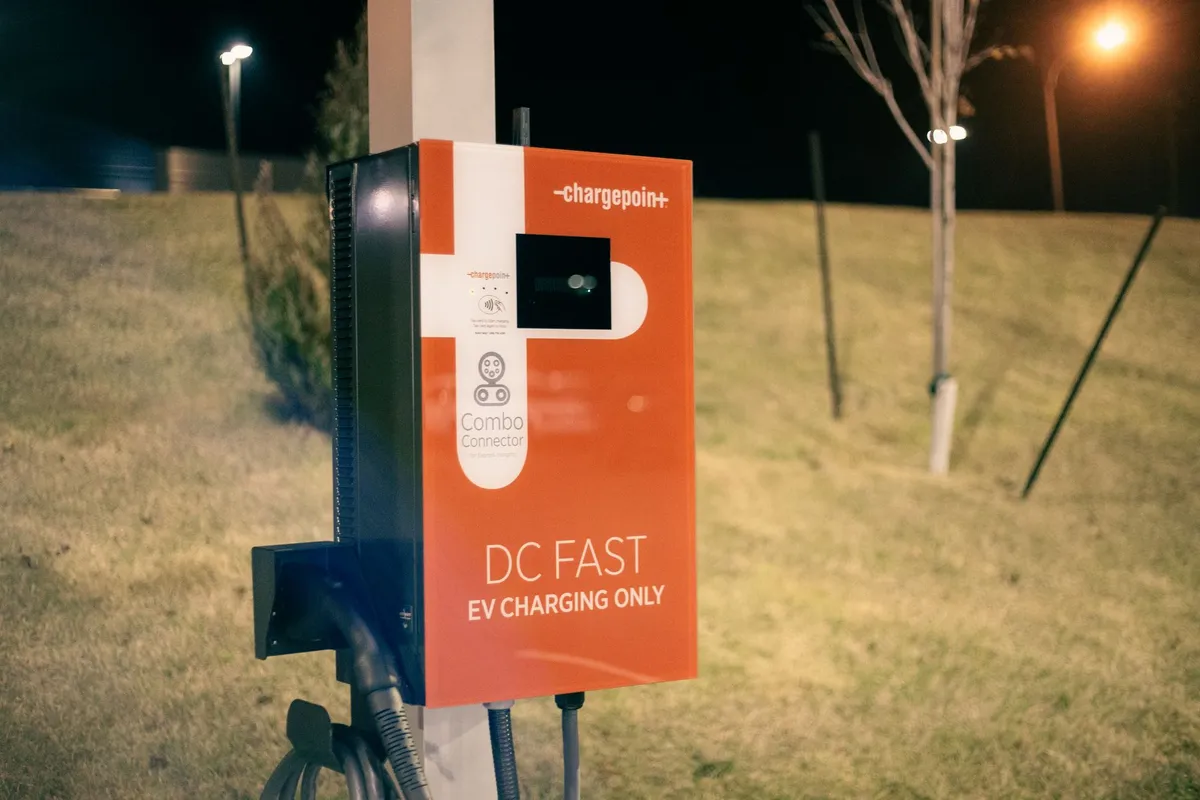


South Africa’s busiest freight corridor just became EV-friendly. On 19–20 May 2026, Zero Carbon Charge launched two off-grid solar-powered charging stations on the N3 highway between Johannesburg and Durban—CHARGE N3 Roadside at Reitz Interchange (Exit 107) and CHARGE N3 Tugela at Colenso-Winterton Interchange (Exit 207). The R100-million Development Bank of Southern Africa (DBSA) investment marks the first time long-distance EV travel on this route is viable without depending on municipal electricity grids or load-shedding schedules.
For the 16,716 new-energy vehicles (NEVs) sold in South Africa during 2025—a 7.1% increase over 2024—this is the breakthrough that transforms “range anxiety” from a deal-breaker into a route-planning exercise. Each station can charge up to eight EVs simultaneously, delivering 50% more capacity than the Wolmaransstad pilot site that preceded them.
Quick summary
- Zero Carbon Charge opened two off-grid solar EV charging stations on the N3 (Reitz and Colenso-Winterton) in May 2026, backed by R100m DBSA funding.
- Each station charges up to 8 EVs simultaneously (3 DC fast chargers with 6 dispensers, 2 AC chargers) without grid dependence—no load-shedding risk.
- The N3 corridor now supports long-distance EV travel between Johannesburg and Durban; CHARGE plans 60 stations nationwide by end-2027, targeting the N1 next.
- March 2026 saw record EV sales (389 units) and 45% YoY growth in AutoTrader searches as charging infrastructure expands and policy support grows.
What happened: off-grid solar charging arrives on SA’s busiest highway
The two new stations sit roughly 180 km apart—Reitz in the Free State and Colenso-Winterton in KwaZulu-Natal—strategically positioned to cover the 600 km Johannesburg–Durban route with one mid-journey top-up for most EVs. Each site features three DC fast chargers (six dispensers total) and two AC chargers (one dispenser each), all powered by solar arrays and battery storage rather than Eskom’s grid. That means no load-shedding interruptions, no municipal tariff variability, and predictable uptime for drivers planning long trips.
Zero Carbon Charge’s CEO told Engineering News the stations represent “a blueprint for decentralised, renewable energy infrastructure that can scale across SA’s highway network.” The company plans to install 60 charging stations nationwide by the end of 2027, with the N1 corridor—linking Johannesburg to Cape Town—identified as the next target.

Why it matters: closing the infrastructure gap that held EV adoption back
Until May 2026, SA’s public charging network was urban-centric. GridCars operates over 450 public AC and DC charging stations (roughly 60% of national capacity), while Rubicon runs 103 public stations and 20 dealership sites. But long-distance corridors—especially those linking economic hubs—remained sparse. The N3 carries 60% of SA’s freight tonnage and connects Gauteng’s industrial heartland to Durban’s port. Without reliable mid-route charging, that corridor was effectively closed to EVs beyond single-leg commutes.
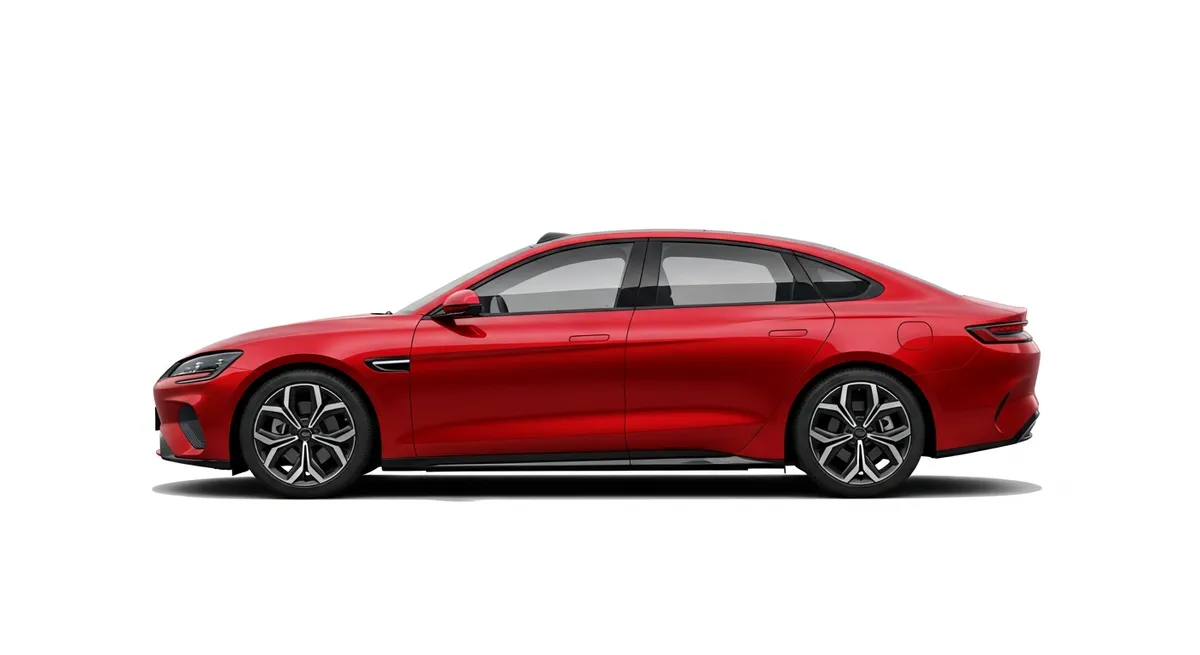
The off-grid model solves two problems at once. First, it bypasses Eskom’s 8.76% tariff increase (effective 1 April 2026) and municipal grid constraints. Second, it future-proofs against load-shedding: even if Stage 6 returns, these stations keep running. For EV buyers weighing a BYD Atto 3 Extended Range (420 km WLTP, R783,900) or a Volvo EX30 Extended Range (476 km WLTP, R835,500), the N3 is no longer a barrier—it’s a viable route.
The numbers: EV market momentum accelerates
March 2026 delivered a record 389 EV sales in South Africa, while AutoTrader reported a 45% year-on-year increase in EV searches and over 200% engagement growth. NEV sales (battery-electric and plug-in hybrid) rose 7.1% in 2025 to 16,716 units, capturing 2.8% of the total market—up from 1.3% in 2024. That growth followed a 100.6% jump in 2024, signalling compound acceleration as infrastructure catches up to demand.
| Model | Battery (kWh) | WLTP range (km) | Peak DC charge (kW) | Price (ZAR) |
|---|---|---|---|---|
| BYD Atto 3 Extended Range | 60.48 | 420 | 88 | R783,900 |
| Volvo EX30 Single Motor Extended Range | 69 | 476 | 175 | R835,500 |
| GWM Ora 03 400 Ultra Luxury | 63 | 420 | 80 | R835,950 |
| BYD Seal Premium Extended Range | 82.56 | 570 | 150 | R999,900 |
| BMW iX3 50 xDrive | 94.9 | 805 | 200 | Price TBA |
Source: OEM specification pages (BYD, Volvo, GWM, BMW), accessed April–May 2026.
Stakeholder reactions: cautious optimism, calls for demand-side policy
Government and finance
The DBSA’s R100-million backing signals state confidence in off-grid charging as a scalable model. Meanwhile, the Department of Trade, Industry and Competition’s 150% NEV manufacturing tax incentive went live on 1 March 2026, offering a 150% deduction on capital investments in NEV production facilities. Three Chinese automakers have signed non-disclosure agreements with Naamsa, exploring local assembly. Draft battery manufacturing incentives were published in May 2026, hinting at a broader industrial policy shift.
Automakers: “supply-side incentives aren’t enough”
Toyota South Africa CEO Andrew Kirby warned in February 2026 that “urgent NEV policy action is needed” to close the price premium gap. Only 33% of vehicles sold in SA are now locally made, down from 56% in 2006. Kirby called for customer incentives—purchase rebates or import duty reductions—to drive demand and justify local production scale. Stellantis echoed the concern, noting that Morocco’s aggressive NEV incentives have already attracted R15-billion in new investment.
Charging operators: racing to scale
BYD announced plans in October 2025 to install 200–300 Flash charging stations (up to 1,000 kW) across SA by end-2026, with construction starting April/May 2026. If delivered, that would dwarf existing capacity. GridCars, which operates 445 sites and 650 chargers via the Charge Pocket app, welcomed the competition: “More players means faster build-out and better coverage.”
Rubicon, which added 11 new Eastern Cape stations (nine with DC fast charging) between January and February 2026, reported 142% growth in energy dispensed during 2025, reaching 625 MWh. Standard public DC tariffs as of August 2025: R7.00/kWh (Rubicon eMSP), R7.35/kWh (GridCars eMSP), R5.88/kWh (AC charging).
What this means for SA EV buyers
Long-distance travel is now viable
If you own a BYD Seal Premium Extended Range (570 km WLTP, 82.56 kWh, R999,900), you can drive Johannesburg to Durban with one 30-minute DC top-up at Reitz or Colenso-Winterton. A BMW iX3 50 xDrive (805 km WLTP, 94.9 kWh) could theoretically make the trip on a single charge, though a precautionary stop adds peace of mind. Shorter-range models like the GWM Ora 03 (420 km WLTP, 63 kWh, R835,950) will need one strategic stop, but the infrastructure now exists to make it happen.
Home charging still offers the best value
Public DC fast charging at R7.00–R7.35/kWh is convenient but expensive compared to home charging. Eskom’s 8.76% tariff hike pushed residential rates higher, but even at R2.50–R3.00/kWh (typical municipal tariff), home charging costs half what public DC does. If you’re installing a home charger, consider a 7.4 kW or 11 kW AC unit for overnight top-ups, reserving public DC for road trips.
Watch for policy changes
The 150% manufacturing incentive is a start, but without demand-side support—purchase rebates, lower import duties, or VAT exemptions—EV prices will remain 30–50% above equivalent petrol models. Toyota and Stellantis are right: supply-side incentives alone won’t close the gap. If draft battery manufacturing incentives materialise into law, expect a second wave of investment announcements in late 2026 or early 2027.
What’s next: 60 stations by end-2027, N1 corridor in focus
Zero Carbon Charge has committed to 60 off-grid solar charging stations nationwide by the end of 2027. The N1 Johannesburg–Cape Town corridor is next, followed by routes linking Gauteng to Mpumalanga (Kruger tourism traffic) and the Garden Route. If BYD delivers even half of its promised 200–300 megawatt chargers, SA will leapfrog from infrastructure laggard to regional leader within 18 months.
Key milestones to watch:
- Q3 2026: First N1 off-grid station (likely near Bloemfontein or Beaufort West).
- Q4 2026: BYD Flash charger rollout begins (if on schedule).
- Q1 2027: Finalisation of battery manufacturing incentives; potential OEM assembly announcements.
- End-2027: CHARGE’s 60-station target; GridCars and Rubicon expand into secondary cities.
For now, the N3 is proof of concept: off-grid solar charging works, scales, and unlocks routes that were previously EV-hostile. The question is whether policy and private investment can keep pace with the 45% YoY growth in buyer interest.
Ready to charge smarter?
If the N3 launch—or any of the coming highway expansions—has you considering an EV, start with your home charging setup. A professionally installed 7.4 kW or 11 kW AC charger gives you the lowest per-kilometre cost and the convenience of waking up to a full battery every morning. ChargePoint SA designs, installs, and maintains home and commercial charging infrastructure across South Africa, with transparent quoting and post-install support.
Get a free site assessment and quote—we’ll walk you through panel capacity, cable runs, and tariff optimisation so your EV saves you money from day one.
Image credits
“The Joule of South Africa” by afromusing (CC BY 2.0, via flickr) · “Green Machine” by jurvetson (CC BY 2.0, via flickr) · “BMW i3 Left Side Doors Open Car Leasing Made Simple” by Carleasingmadesimpletm (CC BY 2.0, via flickr)