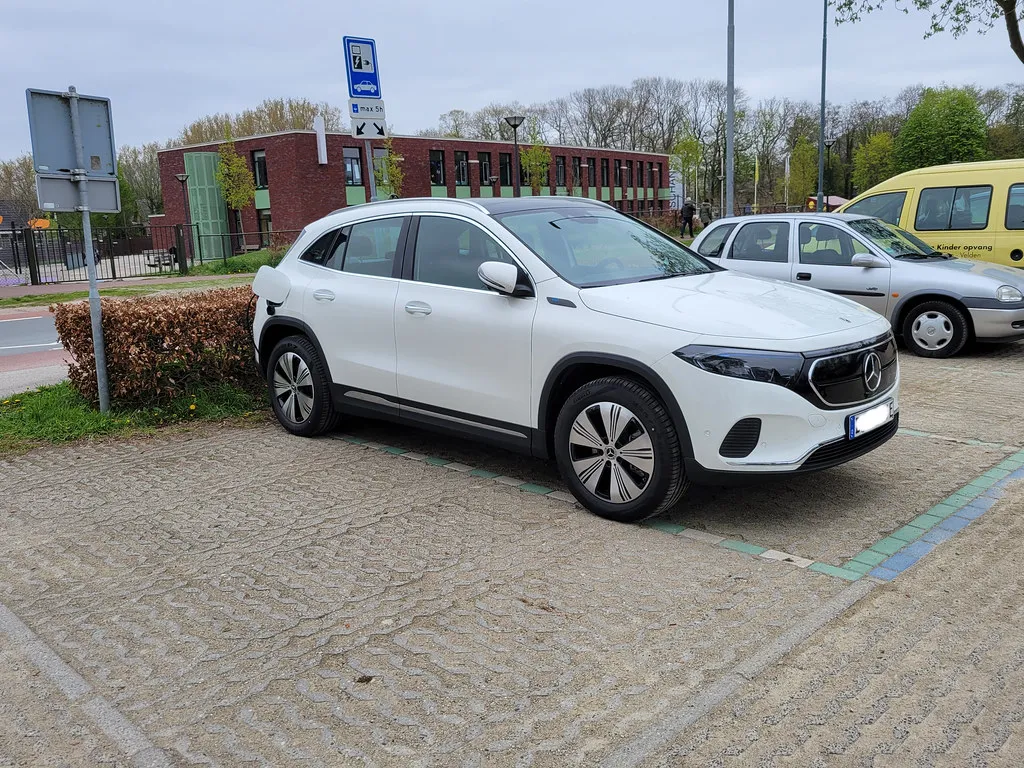


When u/Samofozor compared Mercedes-Benz EV charge curves on r/electricvehicles, they found that “the Mercedes overclasses all of them by a lot” against rivals including Audi. That charging advantage is one thing. But does it translate to real savings when you’re paying Eskom rates, dodging load-shedding, and comparing a R1-million-plus EQA 250 against a similarly priced Audi Q3 40 TFSI that you can fill in three minutes at any Engen?
This is the question facing South African buyers in the compact luxury SUV segment in 2026. Both vehicles deliver 140 kW of power, both wear premium badges, and both cost serious money. One plugs in. One doesn’t. Let’s run the numbers—purchase price, monthly running costs, five-year ownership, charging realities, and the honest truth about who should buy which.
TL;DR
- The Mercedes-Benz EQA 250 costs approximately R1,050,000–R1,150,000 in South Africa (2026 pricing varies by dealer and spec); the Audi Q3 40 TFSI starts at R814,200 for the SUV and R849,200 for the Sportback, making the petrol option R200,000–R300,000 cheaper upfront.
- Monthly running costs at 1,500 km favour the EQA: electricity costs roughly R450–R600 (home charging at R2.50–R3.00/kWh municipal tariff) versus R1,800–R2,100 for petrol (at R24/litre, 7.5 l/100 km combined cycle), saving R1,200–R1,500 per month.
- Five-year total cost of ownership narrows the gap: the EQA saves R72,000–R90,000 in fuel but costs more upfront and faces 8.76% electricity tariff increases annually; the Q3 retains stronger resale value and lower insurance premiums in the current SA market.
- Home charging infrastructure is essential: the EQA 250 supports up to 11 kW AC charging (three-phase), meaning a 7.4 kW single-phase wallbox adds 5–6 hours to a 20–80% charge versus a proper 11 kW unit; public DC fast charging costs R7.00–R7.35/kWh and eliminates most of the running-cost advantage.
Purchase price: the R200,000+ electric premium
Let’s start with the sticker shock. Audi launched the third-generation Q3 in South Africa in June 2026 with pricing from R814,200 for the 1.4 TFSI SUV and R849,200 for the Sportback. The 40 TFSI model (2.0-litre turbocharged, 140 kW, front-wheel drive) sits in the mid-range, typically priced around R900,000–R950,000 depending on trim.
The Mercedes-Benz EQA 250, by contrast, commands a significant premium. While Mercedes-Benz South Africa does not publish a single national list price (dealer pricing varies), the EQA 250 Progressive and AMG Line variants retail between R1,050,000 and R1,150,000 as of mid-2026. That’s a R200,000–R300,000 gap before you’ve turned a wheel.

| Model | Price (ZAR, 2026) | Power (kW) | Drivetrain | Range / Tank |
|---|---|---|---|---|
| Mercedes-Benz EQA 250 | R1,050,000–R1,150,000 | 140 kW (electric) | FWD | 429 km (WLTP) |
| Audi Q3 40 TFSI | R900,000–R950,000 | 140 kW (2.0T petrol) | FWD | ~700 km (60L tank) |
Why the gap? Import duties play a role: EVs currently face 25% import duties versus 18% for ICE vehicles, and the EQA’s 66.5 kWh battery pack adds significant material cost. The 150% tax incentive for local EV production that became law in March 2026 may eventually lower prices—but only if Mercedes-Benz assembles the EQA locally, which is not yet confirmed.
Range, efficiency, and real-world consumption
Mercedes-Benz EQA 250: 429 km WLTP, ~16.5 kWh/100 km
The EQA 250 packs a 66.5 kWh usable battery (70.5 kWh gross, per owner reports) and delivers a WLTP-rated range of 429 km. In real-world South African driving—highway at 120 km/h, mixed urban/suburban—expect 350–380 km between charges. That’s enough for a Johannesburg-to-Pretoria commute all week, or a Cape Town-to-Hermanus weekend, but not a Durban-to-Johannesburg run without a charging stop.
Consumption sits around 16.5 kWh/100 km in mixed use, rising to 19–21 kWh/100 km on the highway. One EQA 250+ owner on Reddit documented charging losses: “According to the electricity meter, I used 30 kWh… that’s approx. 20% charging loss” when AC charging at home. That’s higher than typical (10–15% is normal), but it means you’ll pay for ~19–20 kWh from the wall to put 16.5 kWh into the wheels per 100 km driven.
Audi Q3 40 TFSI: 7.5 l/100 km combined, ~700 km range
The Q3’s 2.0-litre turbocharged four-cylinder is rated at 7.5 l/100 km combined (manufacturer claim). Real-world figures from SA owners sit closer to 8.5–9.5 l/100 km in mixed driving, and 10–11 l/100 km if you’re heavy on the throttle in traffic. With a 60-litre tank, expect 600–700 km between fills—nearly double the EQA’s range, and refueling takes three minutes at any petrol station.

Monthly running costs: R450 vs R1,800 (but read the fine print)
This is where the EQA starts clawing back that R200,000 purchase premium. Let’s model 1,500 km per month—a typical urban commuter doing 50 km per weekday plus weekend errands.
EQA 250 electricity cost
At 16.5 kWh/100 km consumption and 20% charging loss (conservative, per the Reddit owner above), you’ll draw 19.8 kWh from the grid per 100 km. Over 1,500 km, that’s 297 kWh per month.
Home charging tariff (Cape Town / Eskom direct, 2026): R2.50–R3.00/kWh off-peak (depending on municipality and whether you’re on Time-of-Use). At R2.75/kWh average:
- Monthly cost: 297 kWh × R2.75 = R817
If you charge exclusively at public DC fast chargers (GridCars, Rubicon), the tariff jumps to R7.00–R7.35/kWh, pushing monthly cost to R2,079–R2,183—more expensive than petrol. Home charging is non-negotiable for cost savings.
Note: NERSA approved an 8.76% tariff increase effective April 2026, and further increases are forecast annually. That R817 monthly cost will be R890 by April 2027, R970 by 2028, and so on.
Audi Q3 40 TFSI petrol cost
At 8.5 l/100 km real-world consumption (midpoint estimate) and R24.00/litre petrol (inland 95 octane, mid-2026 average):
- 1,500 km × 8.5 l/100 km = 127.5 litres
- Monthly cost: 127.5 L × R24 = R3,060
If petrol averages R22/litre (coastal) or you achieve the claimed 7.5 l/100 km, monthly cost drops to R2,475. If you’re stuck in Johannesburg traffic doing 10 l/100 km and petrol hits R26/litre, you’re paying R3,900.
| Cost item | EQA 250 (home charging) | Q3 40 TFSI (petrol) | Monthly saving (EV) |
|---|---|---|---|
| Fuel / electricity (1,500 km) | R817 | R3,060 | R2,243 |
| Service (annualised) | R200–R300 | R400–R600 | R200 |
| Insurance (comprehensive) | R2,200–R2,500 | R1,800–R2,000 | -R400 |
| Total monthly | R3,217–R3,617 | R5,260–R5,660 | R2,043 |
The EQA saves roughly R2,000 per month in running costs—R24,000 per year—but insurance is higher (EVs are newer, parts are expensive, and insurers price accordingly). Service costs are lower for the EV (no oil changes, fewer consumables), but Mercedes-Benz service plans aren’t cheap, and battery warranty claims can be complex.
Five-year total cost of ownership
Now we compound everything: purchase price, fuel, service, insurance, depreciation, and the wild card of resale value.
EQA 250 five-year TCO
- Purchase: R1,100,000 (midpoint)
- Fuel (electricity): R49,020 Year 1, escalating 8.76% annually = R270,000 total (5 years, 18,000 km/year)
- Service: R15,000 (5-year plan estimate)
- Insurance: R132,000 (R2,200/month average, escalating 6%/year)
- Resale value (estimated): R550,000 (50% residual—optimistic; SA EV market is unproven)
- Total cost of ownership: R966,020
Audi Q3 40 TFSI five-year TCO
- Purchase: R925,000 (midpoint)
- Fuel (petrol): R183,600 Year 1, escalating 5%/year = R1,014,000 total
- Service: R30,000 (Audi plan, 5 years)
- Insurance: R108,000 (R1,800/month average, escalating 6%/year)
- Resale value (estimated): R462,500 (50% residual—conservative; Q3 holds value well)
- Total cost of ownership: R1,014,500
The EQA saves roughly R48,000 over five years—but that assumes 50% residual value, which is generous for a first-generation EV in a market where NEVs still represent less than 2% of sales. If the EQA depreciates to 40% residual (R440,000), TCO jumps to R1,076,020—worse than the Q3. Resale risk is real.
Charging at home: 7.4 kW vs 11 kW vs 22 kW—what the EQA needs
The EQA 250 supports 11 kW AC charging on three-phase power. That’s the sweet spot: a 20–80% charge (40 kWh) takes roughly 3.5–4 hours overnight. If you only have single-phase power and install a 7.4 kW wallbox, the same charge takes 5.5–6 hours—still manageable, but you’ll need to plug in earlier.
Can you use a 22 kW charger? Yes, but the EQA will only draw 11 kW maximum. You’re future-proofing for a faster car, not speeding up this one.
On DC fast charging, the EQA peaks at around 100 kW (figures vary by state of charge and temperature). A 10–80% charge takes 30–40 minutes at a GridCars or Rubicon station. GridCars announced ultra-fast liquid-cooled chargers in December 2025, but the EQA won’t benefit—its charge curve tops out well below 150 kW.
Installation cost and three-phase reality
A 7.4 kW single-phase wallbox installed costs R12,000–R18,000 (ChargePoint SA, mid-2026 pricing). An 11 kW three-phase unit costs R18,000–R25,000. If your home doesn’t have three-phase, adding it costs R15,000–R30,000 depending on your municipal connection and distance from the street transformer. Budget R40,000–R50,000 all-in for a proper three-phase 11 kW setup if you’re starting from scratch.
Load-shedding, solar pairing, and infrastructure realities
Load-shedding: the elephant in the garage
Load-shedding has eased significantly in 2026—Eskom reported zero stage-6 days in Q1 2026, and stage-2 is now rare. But it’s not gone. If you’re on a 2-hour evening slot and your car needs 4 hours to charge, you’ll either need a battery backup system (add R80,000–R150,000 for a 10 kWh home battery) or you’ll charge at work / public stations.
The Audi Q3 doesn’t care. Three minutes at the petrol station, load-shedding or not.
Solar pairing: the dream scenario
If you have a 5 kW rooftop solar array (R80,000–R120,000 installed), you can generate roughly 20–25 kWh per day in Gauteng or Western Cape. That covers the EQA’s daily driving (50 km = 8–9 kWh) with surplus for the house. Pair solar + home battery + EV charger, and your marginal cost per km drops to near-zero—but your upfront investment is R200,000+ for the full system.
CHARGE launched off-grid solar-powered charging stations on the N3 corridor in May 2026, proving the concept works at scale. For home use, it’s viable—if you have the capital and the roof space.
Public charging network: 445 sites, but urban-heavy
South Africa has approximately 445 public charging sites as of early 2026, up from ~200 in 2022. GridCars operates over 450 stations (60% of national capacity), and Rubicon added 11 new Eastern Cape stations in early 2026. Coverage is decent in Gauteng, Western Cape, and KZN—but rural routes remain patchy. The EQA’s 350–380 km real-world range means you can do Johannesburg–Durban with one charging stop (Harrismith or Ladysmith), but you’re planning around infrastructure in a way the Q3 owner never does.
Service network and reliability
Mercedes-Benz has 59 dealerships in South Africa; Audi has 23. Both offer nationwide coverage, but Mercedes’ network is denser. For EV-specific service, Mercedes-Benz trains technicians on EQ models at all major dealers, and the EQA shares most non-powertrain components with the GLA, so parts availability is strong.
Reliability? One EQA owner reported a stuck charge port door that required dealer intervention—a minor issue, but it highlights EV-specific failure modes. The Q3’s 2.0 TFSI engine is a known quantity with 15+ years of SA service history. Advantage: Audi, for now.
Who should buy which?
Buy the Mercedes-Benz EQA 250 if you:
- Drive less than 300 km per day, mostly urban/suburban
- Have off-street parking and can install a home charger (ideally three-phase 11 kW)
- Want to pair with solar and minimise long-term running costs
- Value instant torque, silent cabin, and the latest tech (MBUX, OTA updates)
- Can absorb the R200,000 purchase premium and resale-value risk
- Rarely road-trip beyond major routes (N1/N2/N3 corridors)
Buy the Audi Q3 40 TFSI if you:
- Regularly drive 400+ km per day or take long road trips
- Rent, live in a complex without charging, or can’t install a wallbox
- Want maximum flexibility (refuel anywhere, anytime, in 3 minutes)
- Prioritise resale value and established service networks
- Prefer a lighter upfront cost and are willing to pay more monthly for fuel
- Don’t want to think about load-shedding, tariff increases, or charging-curve optimisation
Ready to charge smarter?
If the EQA 250 fits your driving profile and you’re ready to install a home charger, the next step is a site assessment. ChargePoint SA will evaluate your electrical setup, recommend the right charger (7.4 kW or 11 kW), and provide a fixed-price quote—no surprises, no sales pressure. Book your free site assessment here and get a clear answer on what it’ll take to make electric work in your driveway.
The EQA vs Q3 decision isn’t just EV vs petrol—it’s infrastructure vs convenience, long-term savings vs upfront cost, and betting on South Africa’s electric future vs sticking with the proven path. Both are excellent vehicles. The right one depends on where you park at night and how far you drive tomorrow.
Image credits
“Mercedes-Benz H243 EQA 250 Polar White” by Damian_B_Oh, CC BY-SA 4.0 ·