
South Africa’s electrified vehicle market hit a milestone in 2025—but not the one anyone expected. For the first time, plug-in hybrid (PHEV) sales outstripped pure electric vehicles (BEVs), surging 280% from 738 to 2,808 units while battery-electric sales fell 13.4% to just 1,088 cars.
The driver? Affordable Chinese models from GWM, Chery, and Jaecoo offering 80+ km electric range with petrol backup—a middle ground that eases range anxiety and load-shedding fears in a country where public charging infrastructure still has 300 km gaps on major routes.
The bottom line
- PHEV sales jumped 280% in 2025 (738 → 2,808 units) while pure EV sales dropped 13.4% to 1,088 units—the first year plug-ins outsold battery-electrics
- Chinese brands (GWM, Chery, Jaecoo, BYD) drove the PHEV boom with models offering 1,000+ km combined range at R640,000–R999,900, undercutting European rivals
- High import duties (25% on EVs vs 18% on ICE), lack of affordable BEVs under R500k, and patchy charging networks pushed buyers toward petrol-backup solutions
- Q1 2026 data shows momentum accelerating: PHEV sales up 430% year-on-year to 1,277 units while BEVs rose 97% to 544 units
What happened: the 2025 PHEV surge
The numbers tell a clear story. While BEV sales dropped from 1,256 units in 2024 to 1,088 in 2025, plug-in hybrids nearly quadrupled. The combined New Energy Vehicle (NEV) market—BEVs plus PHEVs—grew to 3,896 units, but the internal balance shifted dramatically.
Traditional hybrids (HEVs) fell 6% as buyers leapfrogged straight to plug-in models. By Q1 2026, PHEV sales hit 1,277 units—a 430% year-on-year jump—while BEVs climbed 97% to 544 units. The gap widened.
The Chinese advantage
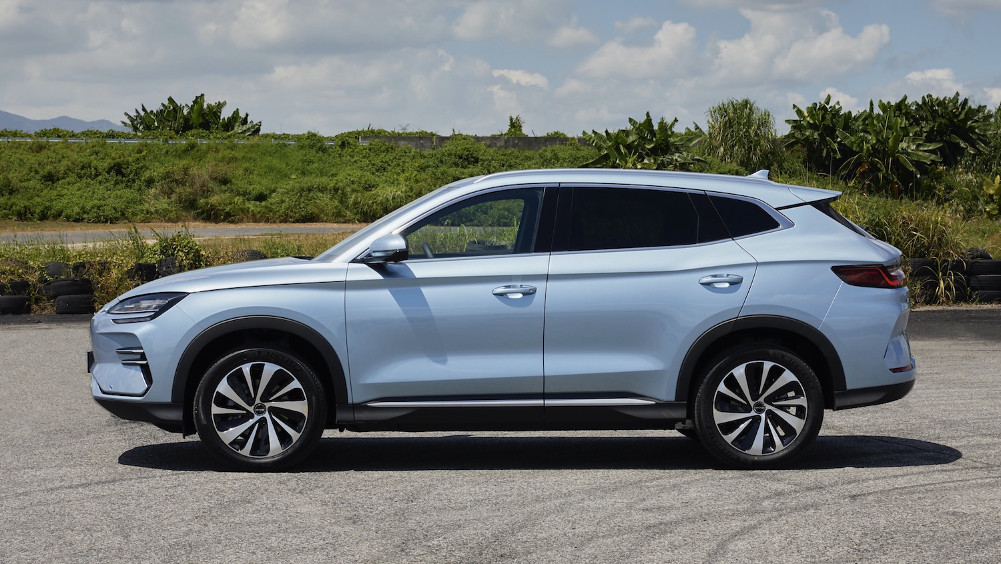
Affordable models drove the shift. BYD’s Sealion 6 DM-i launched in April 2025 at R640,000 with an 18.3 kWh battery, 80 km electric range, and 1,092 km combined range. GWM’s P500 HEV bakkie hit the market at R999,900 with 255 kW and 3,500 kg towing capacity—filling a gap pure EVs couldn’t touch.

BYD’s African market share jumped from 4% in 2023 to 35% in 2025, displacing European brands that couldn’t match Chinese pricing. As one BYD Atto 3 owner put it on r/electricvehicles: “I actually own an EV (BYD Atto 3) and have been driving it for a while now and honestly I couldn’t be happier. My running costs are a fraction of what I was paying with petrol.”
Why PHEVs won: range, load-shedding, and cost
Three factors explain the shift. First, range anxiety remains real. South Africa’s public charging network has roughly 445 sites with 650 chargers—an improvement from 200 in 2022, but still sparse. The N1 between Beaufort West and Three Sisters has a 300 km gap. The N2 between East London and Durban is patchy. Load-shedding, though less severe in 2025, left buyers wary of betting everything on grid electricity.
PHEVs solve this. Models like the BYD Shark 6 DMO bakkie offer 85 km electric range (enough for most daily commutes) plus 670 km combined range. As u/Uerwol noted: “BYD PHEVs are now pushing past 2,000km of combined range. Even a standard mid-range pure EV is sitting at 400 to 480km of real world range… Range anxiety as a daily concern is just not a real thing for most drivers anymore and the data backs that up.”
The cost barrier
Second, pure EVs remain expensive. Import duties stand at 25% for EVs versus 18% for ICE vehicles—a penalty that pushes entry-level BEVs above R500,000. The cheapest pure EV in early 2026, BYD’s Dolphin Surf at R339,900, launched after the 2025 sales window closed.
PHEVs undercut this. Chinese plug-ins entered the market at R640,000–R999,900—still premium, but closer to conventional SUV pricing. High interest rates (national used car APRs averaging 8.6%–12% in 2026) made financing cheaper PHEVs more attractive than premium BEVs, even when operational savings favoured electricity.
| Model | Type | Electric range (km) | Combined range (km) | Price (ZAR) |
|---|---|---|---|---|
| BYD Sealion 6 DM-i | PHEV | 80 | 1,092 | 640,000 |
| BYD Shark 6 DMO | PHEV | 85 | 670 | — |
| GWM P500 HEV | HEV | 0 | — | 999,900 |
| BMW X3 30e xDrive | PHEV | 81–90 | — | — |
| BMW X5 xDrive50e | PHEV | 110 | — | — |
| Toyota bZ4X | BEV | 450+ | 450+ | 1,182,800 |
| BYD Dolphin Surf | BEV | — | — | 339,900 |
Stakeholder reactions: government, automakers, installers
Government: the NEV manufacturing push
The Department of Trade, Industry and Competition activated its 150% NEV manufacturing tax incentive on 1 March 2026, allowing manufacturers to claim 150% of investment in EV or hydrogen facilities. Chery’s acquisition of the Nissan Rosslyn plant signals Chinese commitment to local assembly—potentially addressing the import duty penalty that hobbled BEV sales.
The government also rolled out R40,000–R60,000 subsidies for first-time EV buyers under the 2025 EV Policy, though these haven’t yet moved the needle on affordability.
Automakers: filling the PHEV gap
European brands are catching up. BMW’s X3 30e xDrive offers 81–90 km WLTP range with 1.1 l/100km fuel consumption. Volvo’s XC60 Plug-in Hybrid delivers 81 km electric range. But Chinese rivals undercut them on price while matching or exceeding range.
BYD announced plans to bring flash charging with up to 1,000 kW power to South Africa, with 200–300 stations planned by end-2026—a charging infrastructure play that could tip the balance back toward pure EVs if executed.
Installers: home charging becomes critical
PHEV owners still need home chargers. With 80+ km electric range, most daily driving happens on battery. Home charging costs R3.00–R4.00/kWh versus R7.00–R7.35/kWh at public DC stations—a 50% saving that makes overnight top-ups essential for PHEV economics to work.
ChargePoint SA has seen enquiries shift from “Can I do road trips?” to “How do I maximise electric-only driving?”—a subtle but telling change.
What this means for SA EV buyers
If you’re shopping in 2026, the PHEV vs BEV decision hinges on three questions:
1. How far do you drive daily? If your commute is under 70 km and you have home charging, a PHEV like the BYD Sealion 6 DM-i (80 km range) runs on electricity 90% of the time. You’ll rarely burn petrol. But if you’re doing 150 km+ daily, you’ll use the engine more—eroding the cost advantage.
2. Do you road-trip often? The N1 to Cape Town, the N3 to Durban—these routes still have charging gaps. CHARGE launched off-grid solar stations on the N3 in May 2026, and Rubicon added 11 Eastern Cape stations in early 2026, but coverage remains patchy. A PHEV eliminates range anxiety entirely.
3. What’s your budget? The cheapest BEV (BYD Dolphin Surf at R339,900) now undercuts entry PHEVs, but premium BEVs like the Toyota bZ4X at R1,182,800 remain out of reach for most buyers. PHEVs cluster in the R640k–R999k band—accessible to upper-middle-income households financing at 8–12% APR.
What’s next: three things to watch in 2026–27
Local assembly ramps up
Chery’s Rosslyn plant and the 150% tax incentive could bring PHEV and BEV prices down 15–20% by late 2027 if manufacturers commit. Watch for announcements from GWM, BYD, and Chery on local battery pack assembly—that’s where the real cost savings hide.
Charging infrastructure fills gaps
BYD’s 1,000 kW flash charging rollout, CHARGE’s off-grid solar hubs, and GridCars’ ultra-fast liquid-cooled chargers will determine whether pure EVs regain momentum. If the N1 and N2 gaps close by mid-2027, range anxiety fades as a PHEV selling point.
Petrol price volatility
Fuel prices drove Australia’s EV spike in 2025—BYD tripled shipments there in response. If SA petrol hits R28–R30/litre in 2027, PHEV and BEV sales will both surge. The question is which benefits more.
Ready to charge smarter?
Whether you’re eyeing a BYD Sealion 6 DM-i, a BMW X5 xDrive50e, or waiting for the next wave of affordable BEVs, home charging infrastructure is non-negotiable. PHEVs only deliver their cost advantage if you charge nightly at R3–R4/kWh instead of relying on petrol.
ChargePoint SA installs Level 2 AC chargers (7.4 kW and 11 kW) across Gauteng, Western Cape, and KZN—perfect for overnight PHEV top-ups or BEV home charging. Get a free site assessment and find out what a home charger costs for your driveway, garage, or carport. We’ll walk you through municipal approvals, electrical compliance, and which charger suits your car.
The 2025 PHEV surge proved South Africans want electrification—but on terms that fit our infrastructure reality. Make sure your home is ready.
Image credits
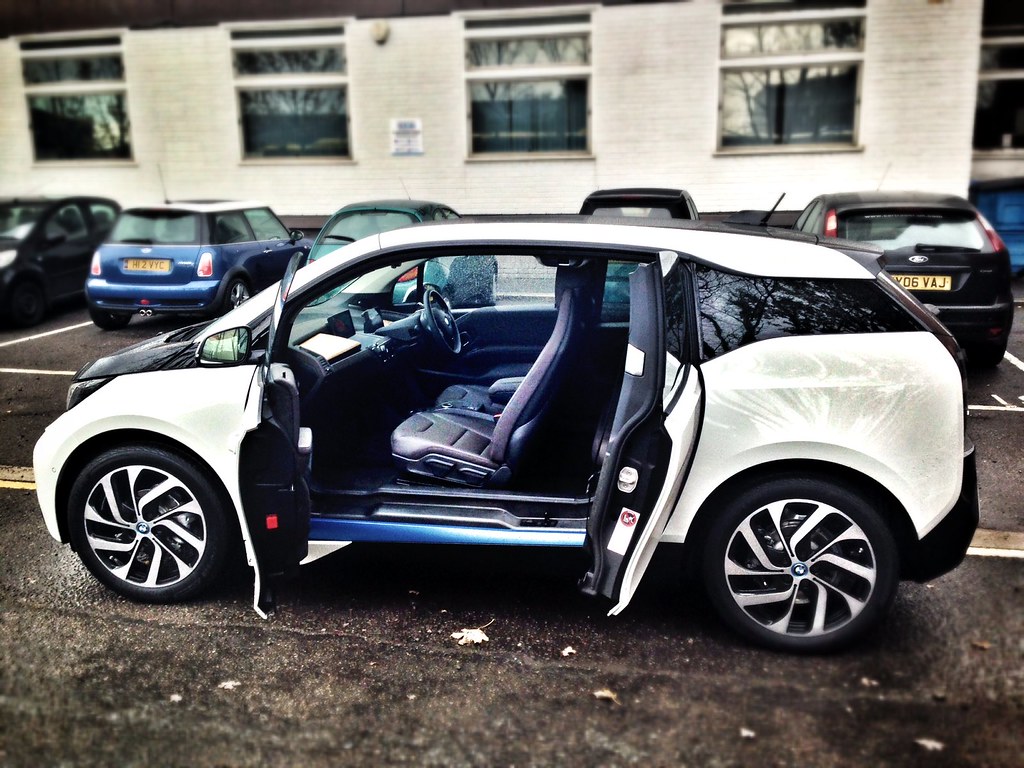
“The Joule of South Africa” by afromusing (CC BY 2.0, via flickr) · “Green Machine” by jurvetson (CC BY 2.0, via flickr) · “BMW i3 Left Side Doors Open Car Leasing Made Simple” by Carleasingmadesimpletm (CC BY 2.0, via flickr)
Continue Reading