Key points
- Every commercial EV charger installation in South Africa must comply with SANS 10142-1 (2024 edition), with Annex N covering EV-specific requirements, and every installation must produce a Certificate of Compliance (CoC) signed by a DoL-registered Installation Electrician or Master Installation Electrician.
- All EV charger hardware sold in South Africa requires an NRCS Letter of Authority (LoA), with approximately an 18-week lead time, before it may be connected to the mains. Verify the LoA on the NRCS searchable database before you accept delivery.
- AC connectors must comply with SANS 62196-2; DC connectors with SANS 62196-3. South Africa currently has no mandated calibration framework for EV charger billing metering, but NERSA’s draft Electricity Trading Rules require advanced metering infrastructure, meaning billing-grade meters are commercially and contractually essential now.
- Commercial tenders from 2025 onward increasingly require OCPP 2.0.1, officially approved as IEC 63584 in late 2024, as the open-protocol baseline. Chargers limited to OCPP 1.6 risk exclusion from future tenders and cannot integrate with independently chosen management systems.
Why compliance matters more than ever in 2026
South Africa’s commercial EV charging market is accelerating. IEA Global EV Outlook 2026 data puts total SA EV sales (BEV and PHEV combined) at 3,800 units in 2025, with Q1 2026 Naamsa-reported BEV-only sales more than doubling year on year and April 2026 setting a monthly record of 403 BEVs. Autotrader reported a 220% increase in EV searches between March 2025 and March 2026. The commercial charging infrastructure underpinning this growth must be built on solid legal and technical foundations, because a non-compliant installation is not just a paperwork problem. It voids your insurance, exposes you to direct OHS Act liability, and can prevent legal operation of the site entirely.
A peer-reviewed 2026 study of SA industry stakeholders identifies unclear regulatory frameworks and the gap between EV policy commitments and actual charging infrastructure deployment as the top barriers to adoption. Commercial buyers structuring workplace, fleet, or destination charging installations need a precise compliance checklist, not vague supplier assurances. Here is that checklist.
Standard 1: SANS 10142-1 (2024 edition), the national wiring code

SANS 10142-1 is South Africa’s governing standard for low-voltage electrical installations. The 2024 edition introduced Annex N, which addresses EV charging infrastructure specifically. Its force of law derives from the Electrical Installation Regulations under the Occupational Health and Safety Act No. 85 of 1993 and from compulsory specifications issued by the NRCS. Every commercial EV charger installation must comply with it, no exceptions.
What SANS 10142-1 requires for your EV circuit
- Earth-leakage protection: Annex N mandates a Type A or Type B RCD rated for DC residual currents on the EV charging circuit. Standard household RCDs are not compliant.
- Cable sizing: A 32 A single-phase charger circuit run up to 25 m requires 6 mm² copper cable as a minimum. Undersized cable causes voltage drop, slow charging, and cable overheating.
- Earth resistance: The EV charger installation must meet a 1-ohm resistance threshold or lower.
- Bonding continuity: Resistance must not exceed 0.2 Ω under Clause 8.6.2, tested with a device supplying at least 0.2 A.
- Touch voltage and disconnection: The earth fault detection device must operate to limit touch voltages to 25 V under short-circuit fault conditions for no longer than 5 seconds.
- Surge Protection Device (SPD): Annex N strongly recommends an SPD on the dedicated EV circuit, for commercial installations, treat this as mandatory.
- IP rating: Outdoor EV charger enclosures require a minimum of IP54; IP65 is recommended for carports or open parking in coastal or exposed environments.
- Mandatory tests before CoC issuance: Insulation resistance, earth-loop impedance, RCD trip time, bonding continuity, polarity checks at all points of consumption, and neutral loop impedance.
The Certificate of Compliance (CoC)
The CoC is a legal document, a one-page certificate plus annexures including a test report, wiring diagrams, and photos. Only a DoL-registered Installation Electrician (IE) or Master Installation Electrician (MIE) may issue it. A registered contractor issuing a CoC on behalf of an unregistered individual commits a criminal offence and risks revocation of their registration.
Watch for these fraudulent practices: blank signed CoC copies sold commercially; former employees using a company’s DoL registration details to issue CoCs illegally; and registered contractors signing off on work physically done by unregistered individuals. Always ask your installer to produce their DoL registration certificate on the spot, they are legally required to do so on request.
Any addition or alteration to an existing electrical installation, including adding an EV charger circuit, requires a supplementary CoC. A supplement cannot be issued if the property does not already have a valid CoC. For commercial properties without an existing CoC, resolve this before the charger installation starts.
The financial consequences of skipping the CoC are severe: home and commercial insurance policies routinely reject claims for electrical fires or damage where no valid CoC exists. If a non-compliant installation is discovered after a property transfer, the seller is liable for rectifying all defects and obtaining a new CoC at their own expense.
Understand billing-grade metering & revenue recovery options
Standard 2: SANS 62196-2 and SANS 62196-3, connector compliance
South Africa mandates SANS 62196-2 for AC connectors (the Type 2 Mennekes standard) and SANS 62196-3 for DC connectors (CCS2, Combined Charging System). Every charger delivered to your site must comply with both standards for its connector type. Verify this on the hardware datasheet before accepting delivery.
The international parent standard, IEC 62196-3, was updated in April 2026 with revised connector ratings, new thermal cycling and endurance test procedures, and a normative annex integrating DC charging guidance. South Africa’s SANS typically adopts IEC updates within one to two revision cycles, confirm which revision your equipment is tested against when specifying hardware for long-term commercial deployments.
BYD’s planned rollout of 200-300 Flash charging stations across South Africa by end-2026, and the mid-stream hardware upgrade from version 1.0 to 2.0 confirmed by BYD SA MD Steve Chang in a June 2026 Mail & Guardian interview, illustrates precisely why commercial buyers must insist on open-standard CCS2/OCPP-compliant equipment rather than OEM-tied infrastructure. A connector or protocol tied to one manufacturer’s ecosystem is a compliance and future-proofing liability.
Standard 3: NRCS Letter of Authority and SABS EMC, hardware that may legally be sold
No EV charger may be connected to the mains in South Africa without an NRCS Letter of Authority (LoA). The NRCS LoA is valid for three years, requires testing at accredited laboratories, and carries an approximate lead time of 18 weeks. Every grid-connected commercial charger additionally requires a mandatory SABS EMC Certificate of Compliance.
For networked chargers with Wi-Fi or LTE OCPP connectivity, which describes virtually every commercially viable smart charger, ICASA type approval is also mandatory.
Verify your supplier’s NRCS LoA on the NRCS searchable LoA database at nrcs.org.za before you sign a purchase order. If the charger model is not in the database, the hardware cannot legally be installed. This single check eliminates a large category of non-compliant, uncertified chargers that circulate in the market.
Standard 4: Billing-grade metering, protecting your revenue and your drivers
South Africa’s EV charger session-level billing is currently an unregulated gap: as of 2025, operators set tariffs by commercial agreement without a mandated calibration framework. But this is changing fast.
NERSA’s draft Electricity Trading Rules, first published 24 November 2025 and revised in a Version 01 dated 12 April 2026, require advanced metering infrastructure (AMI-grade metering) for electricity trading. All settlement and billing must be transparent, auditable, and applied fairly across all network users. South Africa’s Legal Metrology Act No. 9 of 2014 (regulations published 24 August 2018) governs measuring instruments used for trade, and initial meter verification in a SANAS-accredited laboratory is mandatory under it.
For any paid or fleet cost-allocation charging, billing-grade metering is commercially essential now, regardless of when formal EV-specific regulations arrive. Non-certified charger meters typically achieve 95-99.5% accuracy, which is not suitable for consumption-based billing. The internationally recognised accuracy classes under EN50470-1/3 are: Class A = ±2%, Class B = ±1%, Class C = ±0.5%.
At South Africa’s public DC charging tariff of R7.00-R7.35/kWh (August 2025), even a Class A meter error on a 50 kWh session represents a material billing discrepancy. A billing-grade meter, with certified accuracy class, type approval, legal metrology compliance, tamper-evident sealing, and clear documentation, eliminates this risk entirely.
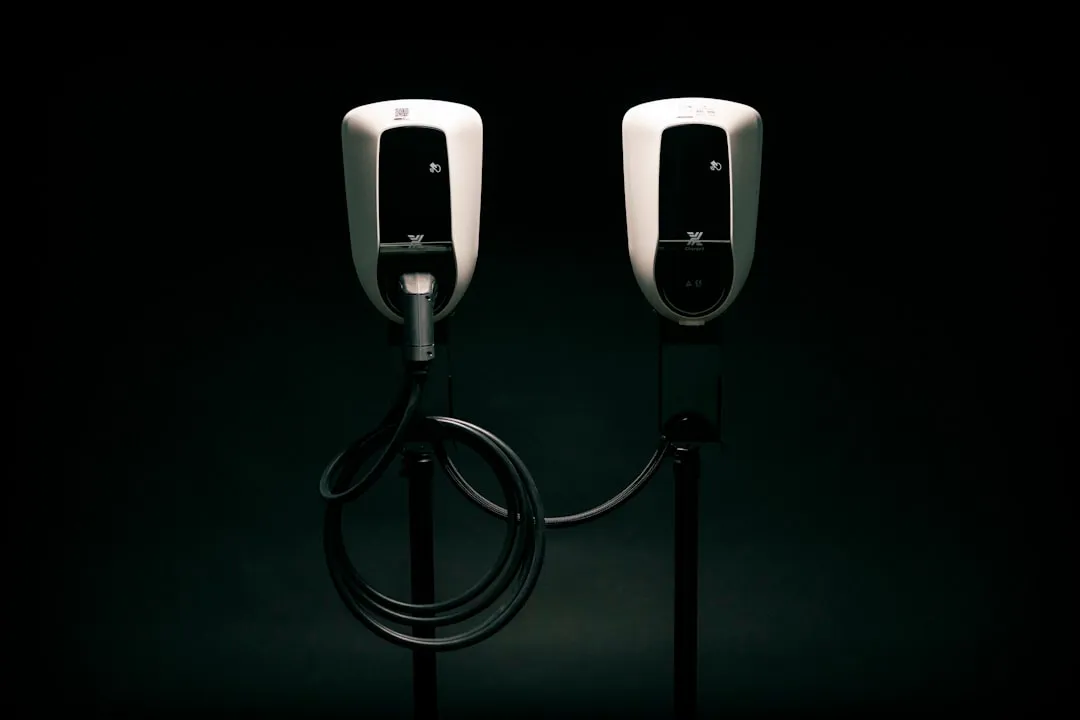
For DC fast charging revenue-grade billing, EN50470-4 Class C and IEC 62053-41:2021 Class 0.5 require 0.1% accuracy from 60V, 1000V and 0.2% accuracy from 0.52A, 650A. The ChargePoint SA CP-AC22-N (22 kW billing-grade AC wallbox) delivers Eichrecht-conformant smart metering at 1% accuracy (MID Class B equivalent) with every transaction recorded, making it suitable for public and semi-public paid charging without the uncertainty of uncertified meters.
OCPP transmits meter data, but it is a communication protocol, not a billing accuracy guarantee. For fiscal compliance, OCPP must transmit signed meter values in OCMF (Open Charge Metering Format) SignedData format at Transaction.Begin and Transaction.End. OCMF captures session ID, charger ID, authentication ID, meter ID, start/stop time, and kWh readings, signs the data with a cryptographic key, and transmits it via OCPP for a tamper-proof audit trail. Specify this explicitly in your charger procurement contract.
Standard 5: OCPP 2.0.1, the open-protocol baseline for commercial tenders
From 2025 onward, South African commercial EV charging tenders increasingly require OCPP 2.0.1 compliance. OCPP 2.0.1 was officially approved as the IEC international standard IEC 63584 in late 2024, and OCPP 1.6 and 2.0.1 are not backward compatible, they use completely different data structures and device models. A charger limited to OCPP 1.6 cannot natively upgrade without significant hardware changes.
As of September 2025, only 68 charger models worldwide held formal OCA OCPP 2.0 certification. This creates a significant gap between vendor
Plan compliant EV charging for your commercial site
Free planning tool — no obligation to proceed.
Plan your site free →WhatsApp us
CoC-certified installers, nationwide