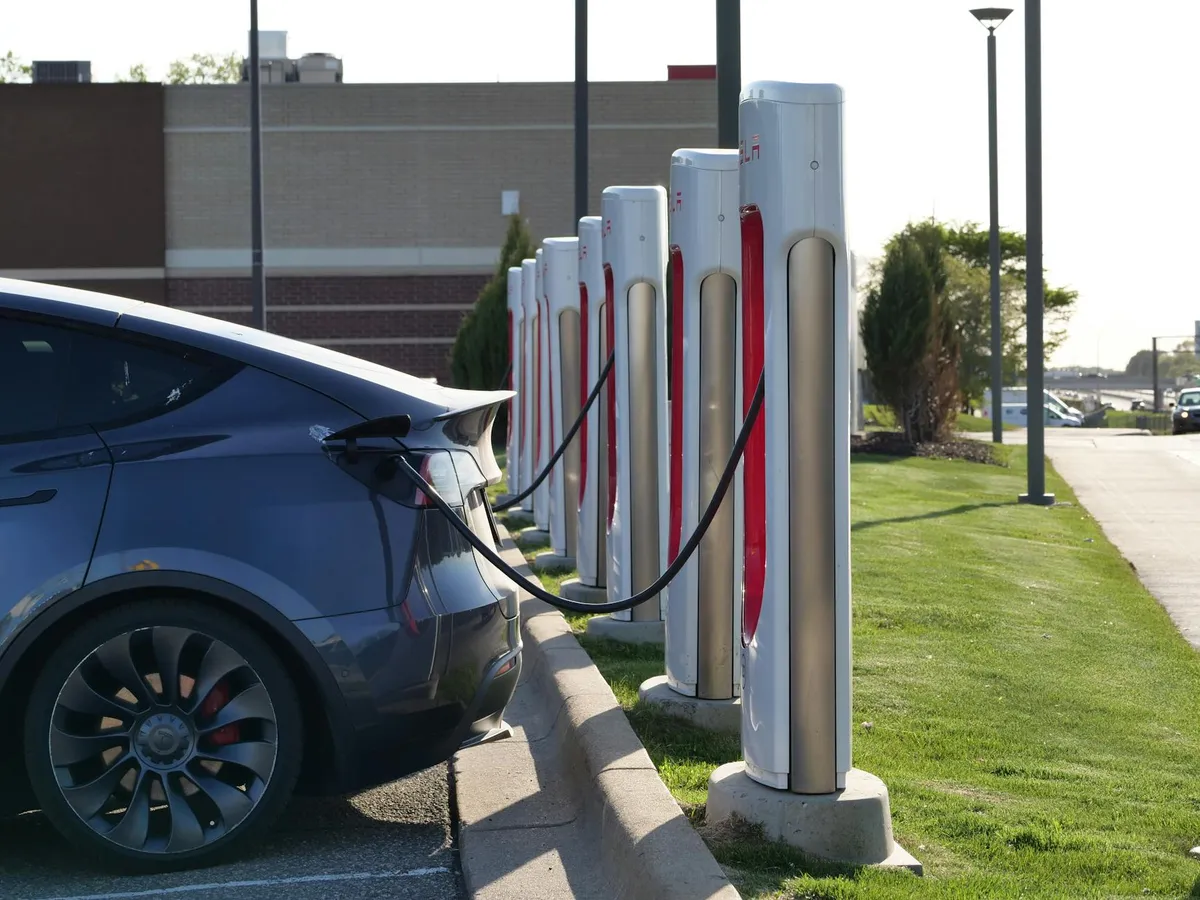

Sandton City’s GridCars wallboxes see 30-minute queues during peak hours — yet home charging still costs R2.95/kWh on municipal tariff versus R7.35/kWh at public DC stations. That 149% premium means a typical BYD Atto 3 owner doing 1,500 km monthly saves R800–R1,200 by charging at home, enough to pay off a R25,000 installation in 10–18 months. Public DC fast charging in Gauteng costs R5.88–R7.35 per kWh, while Sandton’s municipal electricity tariff sits at R2.95/kWh — and drops to R1.45–R2.25/kWh on Eskom’s Homeflex off-peak schedule if you’re on that structure.
As u/Dan6erbond2 put it on r/electricvehicles: “I want to get this off my chest since I often see this and other EV communities recommend against buying one if you don’t have home/work charging like it’s some kind of global rule… We specifically bought an EV with relatively short range (410km WLTP) because most of our driving is in the city, maybe 10-20km per day… we only do 10-20km per day this already means the battery lasts us about 10 days and because we go shopping, swimming, dance classes, etc. as part of our routine, many of them have public charging, some even free.” That’s the reality for many Sandton drivers — but even with GridCars and Shell Recharge stations at Sandton City and Mall of Africa, home charging still makes overwhelming economic sense.

Why install an EV charger in Sandton?
Sandton isn’t just Gauteng’s financial hub — it’s also ground zero for South Africa’s EV adoption wave. AutoTrader reported a 45% year-on-year surge in EV searches and 200% engagement growth in early 2026, with March 2026 hitting a record 389 EV sales nationally. Walk through any Sandton estate — Dainfern, Steyn City, Waterfall — and you’ll spot BYD Atto 3s, Volvo XC40 Recharges, and BMW iX3s in driveways.
Three factors make Sandton ideal for home EV charging:
High three-phase power penetration
Most Sandton security estates and newer freestanding homes have three-phase electrical supply as standard, enabling 11kW or 22kW charging speeds. That’s 60–120 km of range added per hour, versus 30 km/hour on a typical 7.4kW single-phase charger. If you’re doing the Sandton–Pretoria commute daily (80 km round trip), an 11kW charger tops you up overnight in under 3 hours.
Solar + battery adoption
Sandton homeowners led the residential solar boom during the 2020–2023 load-shedding crisis. Many estates now have 10–15 kWh battery systems paired with 8–12 kW solar arrays. Pairing an EV charger with existing solar infrastructure means you can charge during the day at near-zero marginal cost — the sun’s energy would otherwise export to the grid or go unused once your battery is full.
Public charging as backup, not primary
Sandton has the densest public charging network in South Africa: GridCars operates over 450 stations nationally, with clusters at Sandton City, Mall of Africa, Nicolway, and Morningside. But at R7.35/kWh for DC fast charging, you’re paying 2.5× the municipal tariff. Public charging makes sense for road trips (especially with CHARGE’s new solar N3 stations and BYD’s planned 1MW superchargers), but for daily Sandton–Rosebank–Midrand loops, home charging is the rational choice.

Sandton’s municipal tariff and what it means for your charging cost
Sandton falls under the City of Johannesburg’s electricity supply area. As of July 2026, the residential tariff is R2.95/kWh — slightly higher than Eskom’s direct-customer rate but lower than Cape Town (R3.12/kWh) or eThekwini (R3.08/kWh). That R2.95/kWh applies to all consumption, with no time-of-use differentiation unless you’re on Eskom supply directly (some older Sandton suburbs still are).
Real-world charging cost example
Take a BYD Atto 3 Standard Range (50.1 kWh usable battery, 345 km WLTP range). Charging from 20% to 80% (the recommended daily window to preserve battery health) means adding 30 kWh. At R2.95/kWh, that’s R88.50 for 207 km of range — or R0.43/km. Compare that to a Toyota RAV4 2.0 GX doing 7.5 L/100 km at R24/L petrol: R1.80/km. You’re spending 76% less per kilometre.
If you drive 1,500 km per month (typical for a Sandton–Midrand commuter), that’s R645/month in electricity versus R2,700/month in petrol — a R2,055 monthly saving. Over 12 months, that’s R24,660 saved, enough to cover most home charger installations outright.
Eskom Homeflex: the off-peak advantage
If your Sandton home is on Eskom direct supply (check your bill), you can switch to the Homeflex time-of-use tariff, which went live in April 2025. Off-peak rates (22:00–06:00 and 10:00–18:00 on weekdays) drop to R1.45–R2.25/kWh, while peak (07:00–10:00 and 18:00–22:00) climbs to R3.40+/kWh. Charge overnight and your cost per km falls to R0.21–R0.33 — 88% cheaper than petrol.
A smart charger can schedule charging to start at 22:00 automatically, maximising your savings without any manual intervention.
| Scenario | Tariff (R/kWh) | Cost for 30 kWh (20–80%) | Cost per km (Atto 3) | Monthly cost (1,500 km) |
|---|---|---|---|---|
| Sandton municipal (flat rate) | R2.95 | R88.50 | R0.43 | R645 |
| Eskom Homeflex off-peak | R1.95 | R58.50 | R0.28 | R420 |
| GridCars public AC | R5.88 | R176.40 | R0.85 | R1,275 |
| GridCars public DC | R7.35 | R220.50 | R1.07 | R1,605 |
| Petrol (RAV4 2.0, 7.5L/100km @ R24/L) | — | — | R1.80 | R2,700 |
The Sandton installation process: site assessment to commissioning
Every legal EV charger installation in South Africa follows the same six-step process, governed by SANS 10142-1 (the wiring code) and overseen by registered electricians. Here’s what to expect in Sandton:
Step 1: Site assessment (free with most installers)
A qualified electrician visits your property to check:
- DB board capacity: Does your distribution board have a spare way (circuit breaker slot) and enough amperage headroom? A 7.4kW charger draws 32A; an 11kW charger draws 16A per phase on three-phase supply.
- Cable run: Distance from DB board to your parking bay. Longer runs (>25 metres) require thicker cable (6mm² or 10mm²) and conduit, adding R150–R300 per metre.
- Earthing: SANS 10142-1 requires a dedicated earth for EV chargers. Older Sandton homes (pre-2000) may need earth-stake upgrades (R2,000–R4,000).
- Single-phase vs three-phase: Most Sandton estates have three-phase; older suburbs (Morningside, Sandown, Gallo Manor) are often single-phase. Three-phase enables 11kW or 22kW charging; single-phase maxes out at 7.4kW.

Step 2: DB board upgrade (if needed)
If your DB board is full or lacks capacity, the electrician installs a sub-board dedicated to the EV charger. This adds R3,500–R8,000 to the quote depending on whether you need a 60A or 100A sub-board and how much rewiring is required. Estates with centralised metering (Dainfern, Steyn City) may need body-corporate approval before adding a sub-board — factor in 2–4 weeks for that process.
Step 3: Charger installation
The electrician mounts the charger (wall-mounted units are standard in Sandton; pedestal mounts are rare unless you’re installing in an open carport). They run armoured cable from the DB board to the charger location, install a Type B RCD (residual current device) and an MCB (miniature circuit breaker) in the DB board, and connect the charger. Installation takes 4–6 hours for a straightforward job, longer if trenching through paving is required.
Step 4: Certificate of Compliance (CoC)
This is non-negotiable. Under the Occupational Health and Safety Act, any new electrical installation must be certified by a registered electrician. The CoC confirms the work meets SANS 10142-1 and is safe. Cost: R1,500–R3,000, included in most installer quotes. Keep the CoC — you’ll need it if you sell the property or file an insurance claim.
Step 5: Commissioning and app setup
The installer tests the charger with your EV, configures Wi-Fi (if it’s a smart charger), and walks you through the app. Smart chargers let you schedule off-peak charging, monitor energy use, and set charge limits (e.g., “stop at 80%”). Budget 30 minutes for this handover.
Step 6: Post-installation support
Reputable Sandton installers offer 12–24 month warranties on labour and parts. Ask what the charger manufacturer itself backs the hardware with, in writing, before you sign. If you’re pairing the charger with solar, ask the installer to integrate it with your inverter’s load-management system — this prevents the charger from overloading your battery during load-shedding.
Typical installation costs in Sandton (2026 pricing)
Prices vary based on charger type, cable run, and DB board condition, but here’s the realistic range for Sandton installations:
| Component | Cost range (R) | Notes |
|---|---|---|
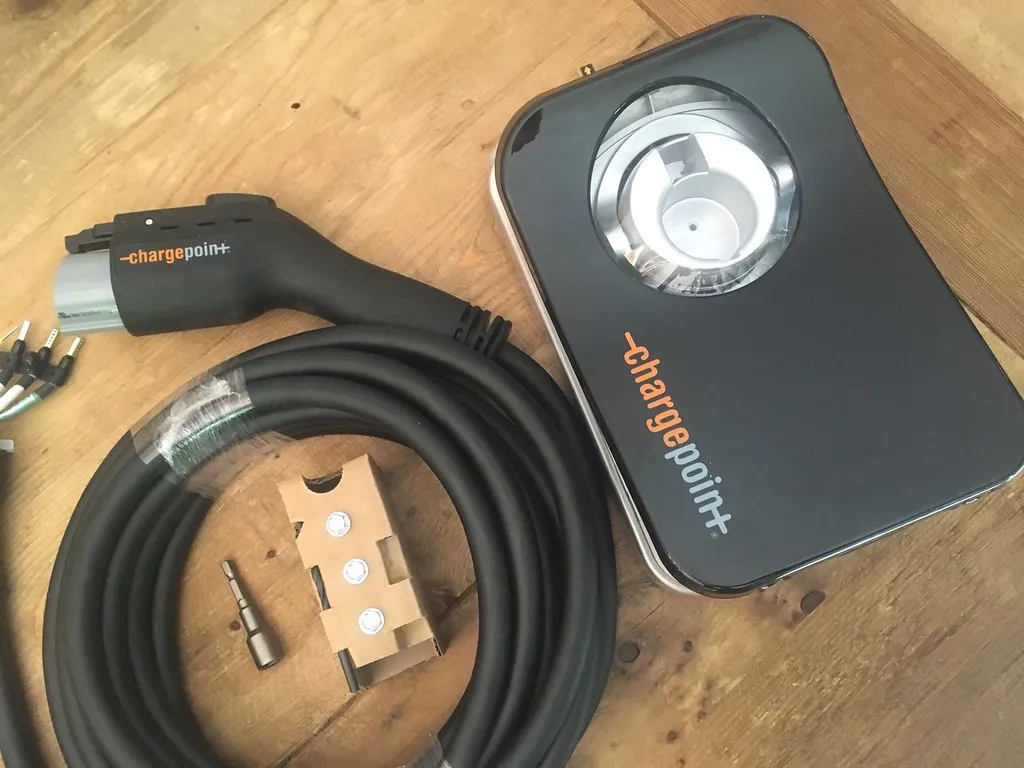
| 7kW single-phase charger (hardware) | R7 400 | ChargePointSA CP-AC7-CP — tethered Type 2, IP65 |
| 22kW three-phase charger (hardware) | R13 900 | ChargePointSA CP-AC22-CP — rarely needed for home use unless you have three-phase supply and a car that can use it |
| Labour (standard installation) | R4,000–R8,000 | Includes cable run <25m, DB board connection, RCD/MCB |
| Cable and conduit (per metre >25m) | R150–R300 | 6mm² or 10mm² armoured cable |
| DB board upgrade / sub-board | R3,500–R8,000 | Only if existing board is full or undersized |
| Earth-stake upgrade | R2,000–R4,000 | Older homes (pre-2000) may need this |
| Certificate of Compliance (CoC) | R1,500–R3,000 | Legally required, usually included in quote |
| Total (7.4kW, simple install) | R18,000–R28,000 | Single-phase, <25m cable run, no DB upgrade |
| Total (11kW, complex install) | R28,000–R45,000 | Three-phase, >40m cable run, DB upgrade, earth work |
Most Sandton installations fall in the R22,000–R35,000 range for an 11kW three-phase setup with moderate cable runs. If you’re in a sectional-title complex (Sandton Gate, The Marc), check whether the body corporate has a preferred installer — some estates negotiate bulk rates that can save you 10–15%.
Single-phase vs three-phase: what’s common in Sandton?
Sandton is a tale of two electrical infrastructures:
Three-phase areas (most common)
Security estates (Dainfern, Steyn City, Waterfall Estate, Fourways Gardens), newer freestanding suburbs (Lonehill, Douglasdale), and commercial-zoned properties all have three-phase supply as standard. Three-phase power delivers 11kW or 22kW charging, which translates to:
- 11kW: 60 km range per hour (e.g., BYD Atto 3 charges 20–80% in 3 hours)
- 22kW: 120 km range per hour (only useful if your EV supports 22kW AC charging — most don’t; Renault Zoe and Tesla Model 3 Long Range do)
If you have three-phase, an 11kW charger is the sweet spot. It future-proofs your installation (next EV might charge faster) and handles two EVs sequentially overnight without stress.
Single-phase areas
Older Sandton suburbs — Morningside, Sandown, Gallo Manor, parts of Bryanston — often have single-phase residential supply. Single-phase maxes out at 7.4kW (32A), delivering 30 km range per hour. That’s still plenty for most drivers: if you do 80 km daily, you’ll recover that range in under 3 hours overnight.
Upgrading from single-phase to three-phase is technically possible (City of Johannesburg allows it) but costs R40,000–R80,000 and requires municipal approval, trenching, and transformer work. Unless you’re doing a full home renovation, stick with a 7.4kW charger on single-phase — it’s more than adequate.

Load-shedding and solar pairing for Sandton residents
Load-shedding frequency dropped dramatically in 2025–2026 (Eskom implemented zero load-shedding for 180+ consecutive days as of mid-2026), but Sandton homeowners learned the hard lesson: backup power is non-negotiable. If you’re installing an EV charger, here’s how to integrate it with solar and battery systems.
Solar + battery: the ideal pairing
Most Sandton solar installations are 8–12 kW arrays paired with 10–15 kWh lithium batteries (Sunsynk, Victron, Deye inverters). During the day, excess solar energy can charge your EV at near-zero marginal cost. A 10 kW solar array generates ~50 kWh on a sunny Gauteng day (less in winter). If your home consumes 20 kWh and your battery takes 10 kWh, that leaves 20 kWh for EV charging — enough to add 100 km of range.
Key integration points:
- Load management: Configure your inverter to prioritise battery charging, then home loads, then EV charging. This prevents the EV from draining your battery during load-shedding.
- Smart scheduling: Use your charger’s app to charge from 10:00–14:00 (peak solar generation) on weekdays, then switch to overnight off-peak grid charging.
- Inverter compatibility: Not all inverters can control EV chargers directly. Sunsynk and Victron support Modbus integration with compatible smart chargers; cheaper inverters may require manual scheduling.
Battery-only (no solar)
If you have a battery system but no solar (common in sectional-title units), you can still charge your EV from the battery during load-shedding — but it’s inefficient. A 10 kWh battery adds only 50 km of range to a BYD Atto 3, and you’ll drain the battery quickly. Better to charge from the grid overnight and reserve the battery for essential loads (Wi-Fi, fridge, lights).
Generator backup
Some Sandton estates (Dainfern, Steyn City) have centralised diesel generators for common areas. A few homeowners installed 10–15 kVA generators during the 2020–2023 load-shedding crisis. Charging an EV from a generator is possible but expensive: diesel costs ~R1.50/kWh generated, versus R2.95/kWh from the grid. Only use generator charging as a last resort (e.g., multi-day grid outage).
Public charging options in Sandton: when to use them
Sandton has excellent public charging infrastructure, but it’s best treated as a supplement to home charging, not a replacement. Here’s where to find chargers and when to use them:
GridCars (the big network)
GridCars operates over 450 stations nationally, with dense coverage in Sandton:
- Sandton City (3× AC, 2× DC)
- Mall of Africa (4× AC, 2× DC)
- Nicolway Shopping Centre (2× AC)
- Morningside Shopping Centre (2× AC)
Tariffs: R5.88/kWh (AC), R7.35/kWh (DC). Use the Charge Pocket app to locate chargers and pay. Best for: topping up while shopping or emergency charging if you forgot to plug in at home.
Shell Recharge
Shell has DC fast chargers at the Rivonia Road and Grayston Drive stations. Tariffs are similar to GridCars (~R7.00/kWh). Best for: quick 20-minute top-ups (20–80%) on the way to OR Tambo or Pretoria.
Rubicon
Rubicon operates 103 public stations nationally, with a few Sandton locations (Bryanston, Fourways). Tariffs: R7.00/kWh. Best for: occasional use; network is smaller than GridCars.
Destination charging (hotels, malls)
Some Sandton hotels (Michelangelo, Sandton Sun) and office parks (Sandown, Grayston Ridge) offer free or low-cost AC charging (R3.00–R4.00/kWh). Best for: daytime charging while at work or staying overnight.
Bottom line: public charging costs 2–2.5× home charging. Use it for convenience or emergencies, but do 90% of your charging at home to maximise savings.

Common mistakes Sandton homeowners make
1. Buying the charger before the site assessment
Don’t order a charger from Takealot or Amazon until an electrician has assessed your property. You might discover you need three-phase and bought a single-phase unit, or that your 40-metre cable run makes a cheaper charger with a short tether impractical. Let the installer recommend the hardware after the assessment.
2. Skipping the CoC to save R2,000
Some homeowners hire unregistered “electricians” to avoid CoC fees. This is illegal, voids your home insurance, and creates a fire risk. SANS 10142-1 exists for a reason: EV chargers draw sustained high current (32A+) for hours. A poorly installed charger can overheat cables, trip breakers, or worse. Always insist on a CoC.
3. Installing a 22kW charger “for future-proofing”
Unless you own a Porsche Taycan or Audi e-tron GT, a 22kW charger is overkill. Most EVs max out at 7.4kW (Nissan Leaf, Hyundai Kona) or 11kW (BYD Atto 3, VW ID.4) AC charging. A 22kW charger costs R10,000+ more than an 11kW unit and delivers zero benefit if your car can’t use the extra power. Stick with 11kW on three-phase or 7.4kW on single-phase.
4. Not integrating with solar from day one
If you have solar, tell your installer during the site assessment. They can configure load management and Modbus integration so your EV charges from excess solar automatically. Retrofitting this later costs R2,000–R4,000 in additional labour.
5. Ignoring body-corporate rules
Sectional-title complexes (The Marc, Sandton Gate, Atholl) often require written approval before installing an EV charger. Some have aesthetic rules (charger must be white, no visible conduit) or metering requirements (separate meter for EV charging). Check the rules before signing an installer contract — you don’t want to pay for a site assessment only to discover the body corporate vetoes the project.
6. Choosing the cheapest installer
EV charger installation is a 10–15 year investment. A R5,000 saving on labour isn’t worth it if the installer uses substandard cable, skips the earth upgrade, or ghosts you when the charger faults. Ask for references, check the electrician’s registration with the Electrical Contracting Board of South Africa (ECBSA), and read reviews. ChargePoint SA maintains a vetted installer network — a good starting point.
FAQ
Can I install an EV charger in a sectional-title complex?
Yes, but you’ll need body-corporate approval. Most Sandton complexes allow it as long as the charger is installed in your designated parking bay, metered separately (if required), and doesn’t affect common-area aesthetics. Budget 2–4 weeks for approval. Some estates (Steyn City, Waterfall) have blanket pre-approval policies to streamline the process.
How long does installation take?
A straightforward installation (existing DB board capacity, <25m cable run, no trenching) takes 4–6 hours. Complex jobs (DB upgrade, long cable runs, paving trenching) can take 1–2 days. Add 1–2 weeks for body-corporate approval if you’re in a complex.
Do I need a dedicated meter for EV charging?
Not legally, but some Sandton estates require it for billing purposes (e.g., if you’re renting and the landlord wants to separate EV electricity from household use). A dedicated meter costs R3,000–R5,000 installed. For most homeowners, it’s unnecessary — your existing meter tracks all consumption.
Can I charge my EV from a normal wall socket?
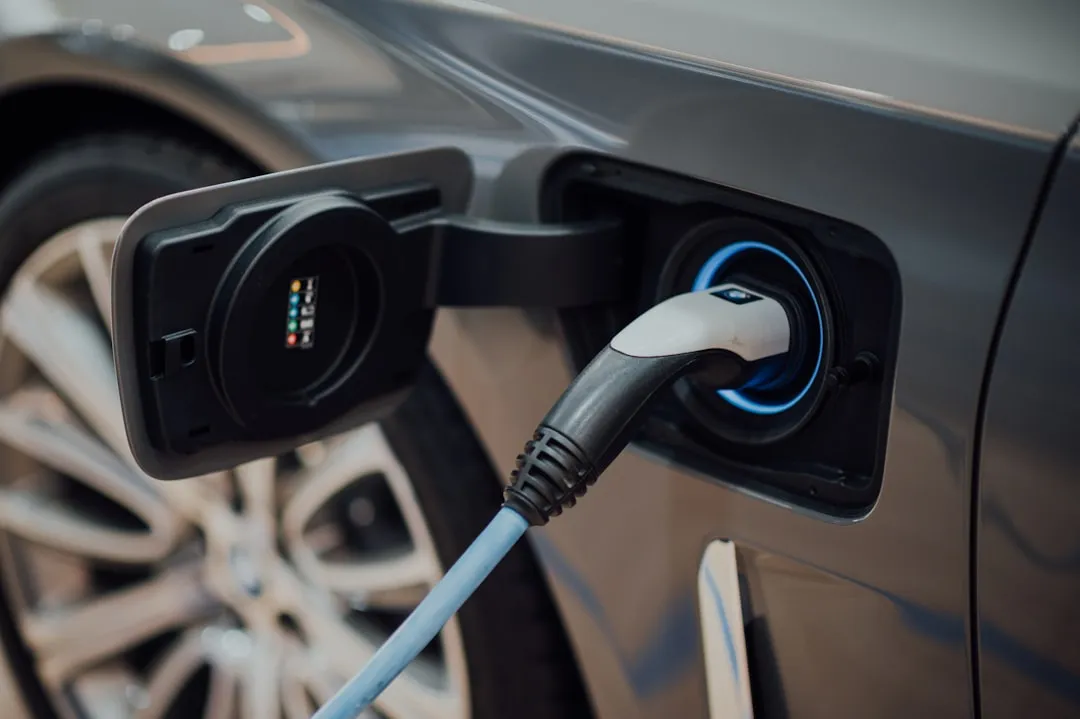
Technically yes — every EV comes with a “granny cable” (portable EVSE) that plugs into a standard 16A socket. But it’s slow (8–10 km range per hour) and risky: sustained 16A draw can overheat old wiring and trip breakers. Use a granny cable only for emergencies or overnight charging when you have 10+ hours. For daily use, install a proper wall charger.
What’s the payback period for a home charger?
For a typical Sandton driver doing 1,500 km/month, a R25,000 charger installation pays for itself in 10–18 months through fuel savings (R2,055/month saved versus petrol). If you’re on Eskom Homeflex off-peak, payback drops to 8–12 months. Factor in the convenience of never visiting a petrol station, and the ROI is compelling.
Will my EV charger work during load-shedding?
Not unless you have a battery or generator backup. During load-shedding, your home has no grid power, so the charger can’t draw electricity. If you have a solar + battery system, you can charge from the battery (though this drains it quickly). Most Sandton homeowners schedule charging for overnight off-peak hours (22:00–06:00), when load-shedding is least likely.
Ready to charge smarter in Sandton?
Home EV charging isn’t just about convenience — it’s about taking control of your transport costs and future-proofing your property. With Sandton’s three-phase infrastructure, dense public charging network as backup, and strong solar penetration, you’re in one of South Africa’s best locations to own an EV. The upfront installation cost (R18,000–R45,000) pays for itself in 10–18 months, and you’ll never queue at a petrol station again.
Whether you’re driving a BYD Atto 3, a Volvo XC40 Recharge, or planning to buy your first EV in 2026, now’s the time to install a charger. Electricity tariffs are only heading one direction (up), and the 150% manufacturing tax incentive will bring more affordable EVs to market over the next 12–24 months, accelerating demand for home charging infrastructure.
Get started with a free Sandton site assessment from a vetted installer. Request your no-obligation quote here — most installers respond within 24 hours and can complete the job within a week of approval.

Image credits
“ChargePoint EV Full” by earthandmain (CC BY-SA 2.0, via flickr) · “Setting JuiceBox Install” by earthandmain (CC BY-SA 2.0, via flickr) · “ChargePoint Home Charger Installed” by ken fields (CC BY-SA 2.0, via flickr) · “ChargePoint Home Charger Out Of Box” by artisanalpv (CC BY-SA 2.0, via flickr) · “Closer ChargePoint Install At Home” by ken fields (CC BY-SA 2.0, via flickr) · “Electric car charger” by Janitors (CC BY 2.0, via flickr)