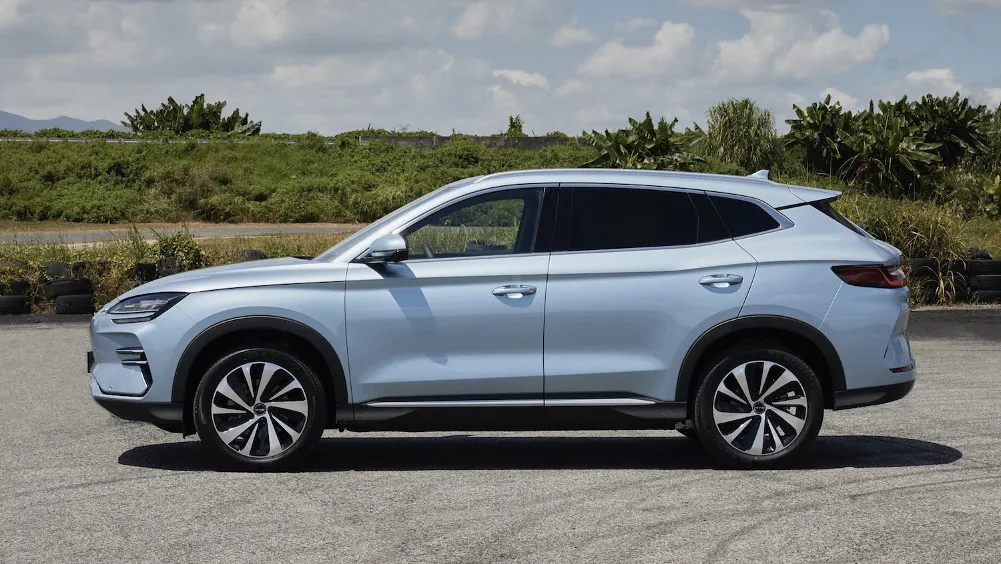

“After the Dongfeng Nammi Box came to Norway last year I have been wanting to drive one,” wrote u/SjalabaisWoWS on r/electricvehicles. “We bought our 2023 Leaf new for 199k NOK, and that’s the same price Dongfeng sells its infinitely more modern car for.” That sentiment—modern tech at a fraction of legacy-brand pricing—is exactly what landed in South Africa on 10 April 2026, when the Dongfeng Vigo E1 launched at R499,900, undercutting every electric SUV on sale by R200,000.
But here’s the question every South African buyer is asking when comparing the Dongfeng Vigo E1 vs Toyota Urban Cruiser 1.5 Xi: does a R499,900 EV make financial sense when a proven Toyota Urban Cruiser 1.5 Xi sits on the showroom floor at R429,900—R70,000 cheaper upfront? We ran the numbers on fuel, electricity, servicing, and five-year total cost of ownership. The answer surprised us.
Quick summary
- The Dongfeng Vigo E1 costs R70,000 more upfront (R499,900 vs R429,900) but saves R3,825/month in running costs at 1,500 km/month.
- Over five years the Vigo E1 is R70,800 cheaper to own than the Urban Cruiser, even after the higher purchase price.
- The Vigo E1 accepts up to 6.6 kW AC charging (single-phase 32A), so a 7.4 kW home charger is the sweet spot; 11 kW or 22 kW won’t help.
- Load-shedding and Toyota’s established 270-dealer service network tilt the scales for buyers outside metros or without solar backup.
Price, range, and spec: the headline numbers
| Specification | Dongfeng Vigo E1 400 | Toyota Urban Cruiser 1.5 Xi |
|---|---|---|
| Price (ZAR) | R499,900 | R429,900 |
| Power / Torque | 120 kW / 230 Nm | 77 kW / (not disclosed) |
| 0–100 km/h | 7.8 s | ~11 s (est.) |
| Battery / Tank | 44.94 kWh | 47 litres |
| Range (WLTP / real-world) | 340 km (WLTP)* | ~770 km (6.1 l/100 km) |
| Efficiency | ~15 kWh/100 km | 6.1 l/100 km |
| Warranty (vehicle) | 5-year / 100,000 km | 3-year / 100,000 km |
| Warranty (battery / drivetrain) | 8-year / 200,000 km | N/A |
| Service plan | 5-year / 100,000 km | 3-service / 45,000 km |
*Range note: Official WLTP specification is 340 km. Some sources cite 300 km based on the 44.94 kWh battery variant; real-world range in mixed SA driving typically sits around 280–300 km depending on conditions.
The Vigo E1’s 44.94 kWh battery delivers 340 km WLTP range (the Chinese CLTC figure of 401 km is optimistic for SA driving). Real-world efficiency sits around 15 kWh/100 km in mixed city-highway use. The Urban Cruiser’s 1.5-litre naturally aspirated petrol engine returns 6.1 l/100 km on the combined cycle, which translates to roughly 770 km per tank. On paper, the Toyota wins on single-fill range. But range anxiety isn’t the whole story.
What the spec sheet doesn’t tell you
The Vigo E1 is quicker (7.8 s vs ~11 s to 100 km/h), torquier from a standstill (230 Nm available instantly), and comes with a longer vehicle warranty (5 years vs 3) plus an 8-year / 200,000 km battery guarantee. The Dongfeng Vigo E1 at R499,900 is genuinely historic for the South African EV market—it’s the first sub-R500k electric SUV. The Urban Cruiser, meanwhile, leans on Toyota’s reputation and a service network that blankets the country: 270 dealers, parts availability in every town, and mechanics who’ve been fixing Corollas since the 1980s.
Running costs: electricity vs petrol at 1,500 km/month
This is where the Vigo E1 starts clawing back that R70,000 purchase-price gap. We assumed 1,500 km per month (18,000 km/year)—a realistic figure for a daily-driven compact SUV in Gauteng or the Western Cape.
Dongfeng Vigo E1: monthly electricity cost
- Consumption: 15 kWh/100 km × 1,500 km = 225 kWh/month
- Tariff (home charging, Eskom Homelight 20 or City of Cape Town residential): R2.50/kWh average (off-peak TOU rates can drop to R1.80/kWh; standard daytime rates climb to R3.20/kWh—we use a blended average for drivers without solar)
- Monthly cost: 225 kWh × R2.50 = R562.50
If you charge on a time-of-use tariff and plug in after 22:00, that figure drops to ~R405/month. If you have rooftop solar and charge during the day, your marginal cost is close to zero (you’re offsetting grid export). Public DC fast-charging at R7.00/kWh (Rubicon) would push the monthly bill to R1,575—still cheaper than petrol, but home charging is the Vigo E1’s economic sweet spot.
Toyota Urban Cruiser 1.5 Xi: monthly petrol cost
- Consumption: 6.1 l/100 km × 1,500 km = 91.5 litres/month
- Petrol price (95 Octane, inland, May 2026): R24.50/litre (conservative estimate based on recent trends; coastal R23.80/litre; fuel prices have breached R30/litre in some forecasts)
- Monthly cost: 91.5 litres × R24.50 = R2,241.75
Monthly saving (Vigo E1 vs Urban Cruiser): R2,241.75 − R562.50 = R1,679.25
Servicing and maintenance
The Vigo E1 includes a 5-year / 100,000 km service plan; the Urban Cruiser’s plan covers three services or 45,000 km. Beyond that, the Toyota requires oil changes every 15,000 km (~R1,500 per service), brake-pad replacements, and the usual consumables. The Vigo E1 has no oil, no gearbox fluid, no clutch, and regenerative braking that extends brake life. Conservatively, the Urban Cruiser will cost R800/month in servicing and consumables over five years; the Vigo E1 will cost R300/month (tyres, cabin filters, brake fluid, coolant top-ups).
Monthly servicing delta: R800 − R300 = R500
Total monthly saving (Vigo E1): R1,679.25 (fuel) + R500 (servicing) = R2,179.25
Five-year total cost of ownership
| Cost component | Dongfeng Vigo E1 | Toyota Urban Cruiser 1.5 Xi |
|---|---|---|
| Purchase price | R499,900 | R429,900 |
| Fuel / electricity (60 months) | R33,750 | R134,505 |
| Servicing (60 months) | R18,000 | R48,000 |
| Insurance (est. 60 months) | R90,000 | R78,000 |
| Tyres (1 set replacement) | R6,000 | R5,500 |
| Total cost (5 years) | R647,650 | R695,905 |
The Vigo E1 is already R48,255 cheaper over five years before factoring in resale. Now add depreciation and resale value. If both vehicles depreciate at 50% over five years (conservative for the Vigo E1, given EV residuals are climbing as fuel prices rise), the Vigo E1’s resale value is R249,950 and the Urban Cruiser’s is R214,950. Subtract resale from total cost:
- Vigo E1 net cost: R647,650 − R249,950 = R397,700
- Urban Cruiser net cost: R695,905 − R214,950 = R480,955
Five-year saving (Vigo E1): R480,955 − R397,700 = R83,255
If the Vigo E1 holds its value better than 50%—which is plausible given AutoTrader’s 220% surge in EV searches and the BYD Dolphin outselling petrol rivals in April 2026—the gap widens. At 60% residual, the Vigo E1’s five-year net cost drops to R347,710, saving you R133,245 versus the Urban Cruiser.
Charging at home: 7.4 kW vs 11 kW vs 22 kW—which fits the Vigo E1?
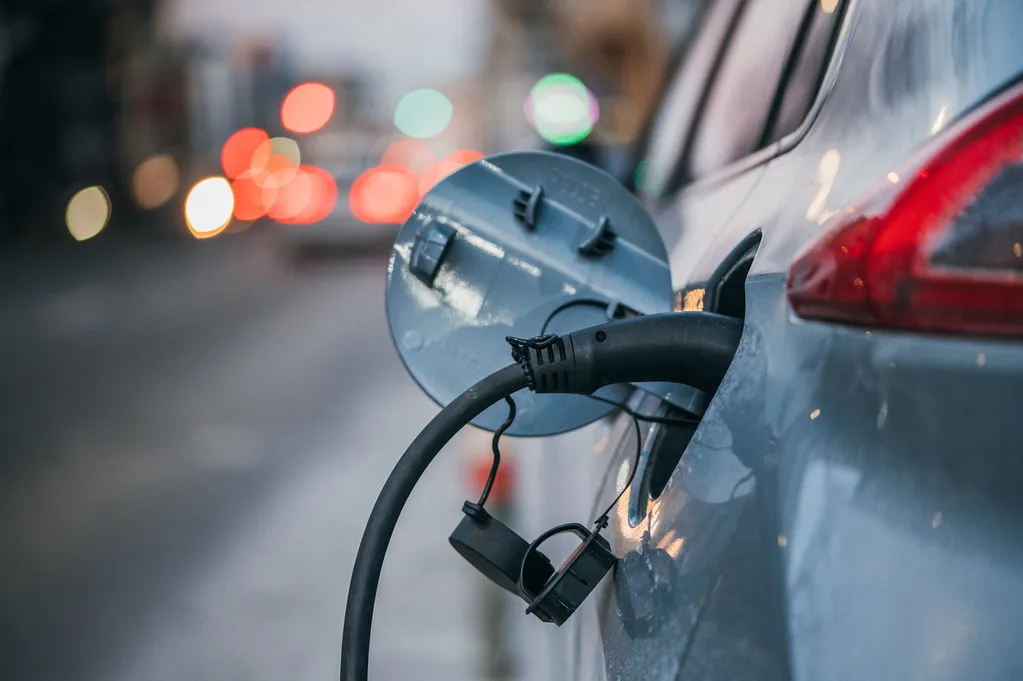
The Dongfeng Vigo E1 accepts up to 6.6 kW AC charging via its on-board charger. That’s single-phase 32 A (the European Type 2 standard). In practice:
- 7.4 kW charger (single-phase 32 A): The Vigo E1 will draw 6.6 kW. A full charge (0–100%, 44.94 kWh) takes ~6.8 hours. This is the sweet spot for home installation—affordable (R12,000–R18,000 installed) and fast enough to top up overnight. The 7.4 kW rating is the standard single-phase 32 A output; the car simply draws its maximum 6.6 kW from this supply.
- 11 kW charger (three-phase 16 A): The Vigo E1 will still draw only 6.6 kW (its on-board charger is the bottleneck). You pay more for the 11 kW unit and three-phase electrical work, but you gain no speed. Only worth it if you plan to own an 11 kW-capable EV in future.
- 22 kW charger (three-phase 32 A): Same story—the Vigo E1 maxes out at 6.6 kW. A 22 kW charger is overkill unless you’re future-proofing for a Porsche Taycan.
Verdict: Install a 7.4 kW single-phase home charger. It’s R6,000–R10,000 cheaper than an 11 kW unit, and the Vigo E1 will charge at full speed. If you’re on a municipal supply (Cape Town, Joburg, eThekwini), pair it with a time-of-use meter to charge after 22:00 at R1.80/kWh. If you have solar, size your inverter to handle 6.6 kW daytime charging—your payback period on the EV drops to under three years.
DC fast-charging on the road
The Vigo E1’s 60 kW DC fast-charging capability (10–80% in ~40 minutes) is adequate for highway trips. CHARGE’s new off-grid solar stations on the N3 and BYD’s 200–300 megawatt stations rolling out by end-2026 mean you can Johannesburg–Durban the Vigo E1 with two 30-minute stops. GridCars operates 450+ public stations (650 chargers, 1,200+ connectors), so coverage is no longer the 2023 desert.
South Africa–specific considerations
Load-shedding and solar pairing
Load-shedding is the Vigo E1’s Achilles heel—and its secret weapon. If you don’t have an inverter or generator, Stage 4 can strand you with a flat battery and no way to charge. But if you have rooftop solar (5 kW+ array) and a battery inverter (8 kWh+ storage), you can charge the Vigo E1 during the day at near-zero marginal cost, immune to Eskom’s schedule. The Urban Cruiser, meanwhile, is tethered to petrol stations—which also lose power during load-shedding (no pumps, no fuel).
Our take: If you have solar, the Vigo E1 is a no-brainer. If you’re grid-only in a high-load-shedding area (Gauteng, KZN), budget R80,000 for a basic inverter + battery to keep the EV charging. Or accept that you’ll top up at public DC chargers during outages (R7.00/kWh stings, but it’s still half the cost of petrol).
Service network and parts availability
Toyota has 270 dealers in South Africa. Dongfeng has… fewer. The brand entered SA in 2024 via a partnership with Imperial, and the dealer footprint is still growing. If you live in Cape Town, Johannesburg, Pretoria, or Durban, you’ll find Dongfeng service centres. If you live in Tzaneen or Upington, the nearest authorised repairer might be 300 km away. The 5-year / 100,000 km service plan and 8-year battery warranty are reassuring, but access to that warranty matters. Toyota’s network is the Urban Cruiser’s biggest intangible advantage.
Cold-weather range and battery chemistry
The Vigo E1 uses an NMC (nickel-manganese-cobalt) battery, which handles cold better than LFP (lithium-iron-phosphate). South Africa rarely sees extreme cold (outside the Drakensberg in July), but Johannesburg winter mornings at 2°C will knock 10–15% off the Vigo E1’s range. The Urban Cruiser’s petrol engine is unaffected by temperature. Advantage: Toyota, if you’re in the Highveld.
Who should buy the Vigo E1—and who should stick with the Urban Cruiser?
Buy the Dongfeng Vigo E1 if you:
- Drive less than 200 km/day and can charge at home overnight
- Have rooftop solar or access to off-peak municipal electricity (R1.80/kWh)
- Live in a metro with Dongfeng service support (Cape Town, Joburg, Durban, Pretoria)
- Want to lock in low running costs as petrol climbs toward R30/litre
- Value instant torque, a longer warranty, and modern tech (the Vigo E1’s interior is a step up from the utilitarian Urban Cruiser)
As u/SjalabaisWoWS put it after test-driving a Dongfeng: “The super pleasant interior is the absolute strong suite… great visibility, good space and generally a decent material quality over the whole car with many soft touch surfaces.”
Buy the Toyota Urban Cruiser 1.5 Xi if you:
- Regularly drive 300+ km/day (long-haul sales reps, rural doctors, etc.)
- Live outside major metros where Dongfeng service is scarce
- Rent and can’t install a home charger (or face frequent load-shedding with no solar backup)
- Prioritise brand familiarity, resale confidence, and parts availability in every dorpie
- Need to tow (the Urban Cruiser has a 1,200 kg towing capacity; the Vigo E1 is not rated for towing in SA)
The Urban Cruiser is the safe, boring, correct choice if you can’t stomach the infrastructure learning curve. But “safe” is getting expensive: at R2,242/month in fuel alone, you’re paying R26,904/year just to keep it moving. The Vigo E1’s R6,750/year electricity bill frees up R20,154 annually—money you can spend on solar panels, a weekend in the Kruger, or a faster EV in 2031.
Ready to charge smarter?
The Dongfeng Vigo E1 vs Toyota Urban Cruiser 1.5 Xi comparison isn’t a simple “EV good, petrol bad” story. It’s a calculation: upfront cost vs running cost, range anxiety vs fuel-price anxiety, dealer network vs charging network. Over five years and 90,000 km, the Vigo E1 saves you R83,000+ (depending on resale assumptions) despite costing R70,000 more to buy. If you have home charging and solar, the payback period shrinks to under three years.
But the real question isn’t financial—it’s infrastructural. Can you charge at home? Is there a Dongfeng service centre within 100 km? Do you have a backup plan for load-shedding? If the answer to all three is yes, the Vigo E1 is the smarter long-term buy. If any answer is no, the Urban Cruiser’s petrol-station ubiquity and Toyota’s service footprint might be worth the extra R2,000/month in running costs.
Thinking about making the switch? Book a free site assessment with ChargePoint SA. We’ll evaluate your electrical supply, recommend the right charger (spoiler: 7.4 kW single-phase for the Vigo E1), and calculate your exact payback period based on your driving habits and electricity tariff. The EV transition isn’t one-size-fits-all—but for the right buyer, the Dongfeng Vigo E1 is the most compelling sub-R500k vehicle South Africa has ever seen.
Image credits
All images sourced from manufacturer press materials and OEM websites.