
South Africa’s electric vehicle market just flashed its strongest signal yet that the tipping point is near. Autotrader reported a 220% increase in EV searches between March 2025 and March 2026, while battery-electric vehicle (BEV) sales climbed from 92 units in 2020 to 1,088 in 2025. March 2026 alone saw a record 389 BEV sales—the highest monthly figure in South African history.

The numbers tell a story of accelerating consumer interest, Chinese automaker commitment, and infrastructure investment finally catching up to demand. But EVs still represent only 0.2% of total new vehicle sales, and the path from curiosity to mainstream adoption is paved with load-shedding, tariff hikes, and a uniquely South African preference for plug-in hybrids over pure battery-electrics.
Quick summary
- EV search interest surged 220% year-on-year, with March 2026 recording 389 BEV sales—the highest monthly total ever in South Africa.
- BYD plans to install 200–300 megawatt-scale charging stations by year-end, while CHARGE launched SA’s first off-grid solar-powered charging network on the N3 corridor with R100 million DBSA backing.
- Plug-in hybrids dominate 70% of new-energy vehicle sales in SA—an inversion of the global trend—driven by grid anxiety and long-distance driving patterns.
- The 150% manufacturing tax incentive (live 1 March 2026) and Chinese OEM investment signal policy and private-sector alignment on EV infrastructure and local production.
What’s driving the 220% search surge?
Three forces converged in the first quarter of 2026 to push EVs into the South African mainstream conversation: price, infrastructure, and policy.

Affordable models finally arrived
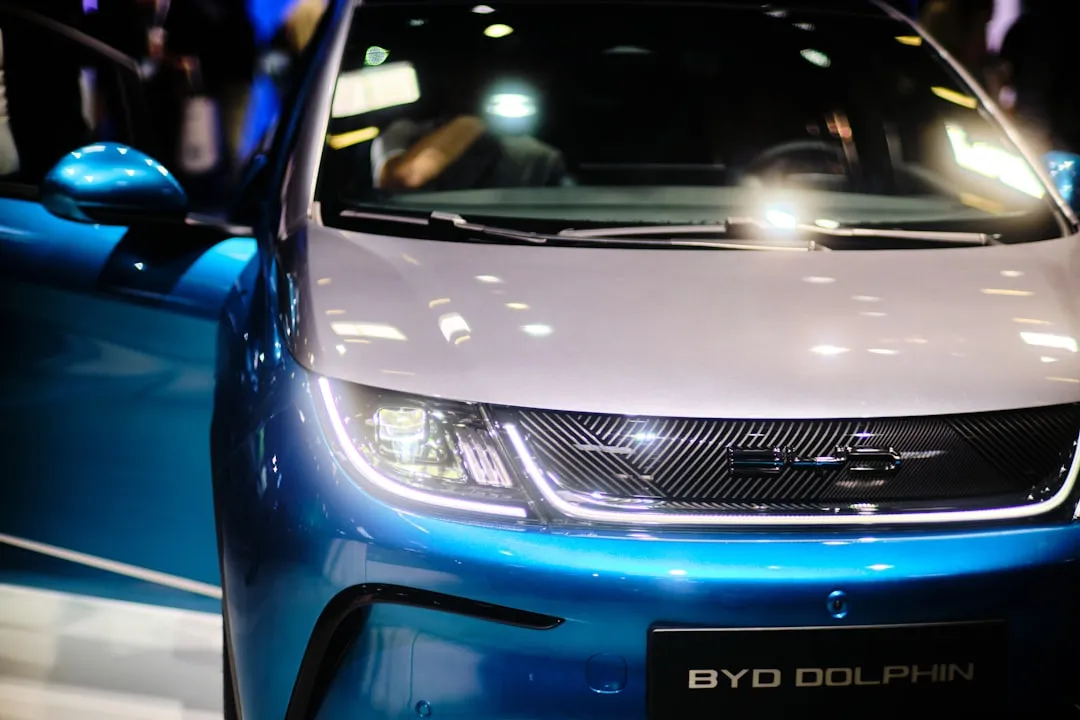
The sub-R500,000 segment exploded in early 2026. BYD’s Dolphin Surf launched at R341,900, dethroning the Dayun S5 as South Africa’s cheapest EV. Chinese brands—Dongfeng, iCar, Leapmotor, and GWM—flooded the entry-level market with models targeting affordability-sensitive buyers previously priced out by European imports. The GWM Ora 03 launched at R686,950, offering 310 km WLTP range and 126 kW of power, while the BYD Atto 3 at R783,900 became SA’s best-selling BEV by Q4 2025.
Infrastructure gaps began closing
May 2026 marked a watershed for long-distance EV travel. Zero Carbon Charge opened two solar-powered, off-grid charging stations on the Johannesburg–Durban N3 corridor, each capable of charging up to eight EVs simultaneously using three DC chargers (six dispensers) and two AC chargers. The R100 million Development Bank of Southern Africa (DBSA) backing signals public-sector confidence in EV infrastructure as a national priority.
Meanwhile, BYD announced plans to install 200–300 Flash charging stations (up to 1 MW) across South Africa starting in Q2 2026—the largest private charging rollout to date. GridCars operates over 450 public AC and DC charging stations nationwide, while Rubicon’s network grew to 103 public stations and 6,648 kW of installed capacity as of February 2026.
Policy and manufacturing incentives aligned
The 150% tax deduction for new-energy vehicle (NEV) manufacturing investments went live on 1 March 2026, and Chinese automakers responded immediately. Chery’s acquisition of Nissan’s Rosslyn plant signalled long-term commitment to local assembly, while BYD’s expanding dealership network—including a new Tygervalley facility in Cape Town—demonstrated confidence in the South African market’s growth trajectory.

The numbers behind the surge
The 220% search increase sits atop a foundation of accelerating sales and shifting market share. Here’s what the data reveals:
| Metric | 2020 | 2025 | March 2026 | Source |
|---|---|---|---|---|
| BEV sales (annual) | 92 units | 1,088 units | 389 units (monthly record) | Business Day |
| NEV sales (BEV + PHEV) | — | 3,800 units | — | TechCentral |
| BYD African market share | — | 35% (up from 4% in 2023) | — | TechCentral |
| Public charging stations | — | — | 549 nationwide (PlugShare) | ITWeb |
| Rubicon network capacity | — | — | 103 stations, 6,648 kW | CleanTechnica |
BYD’s dominance is reshaping the market. The brand sold 589 units in March 2026 alone, driven by the Atto 3’s 420 km WLTP range and 60.48 kWh battery at a price point (R783,900) that undercuts European rivals by R50,000 or more. BYD’s African market share surged from 4% in 2023 to 35% in 2025, displacing Volvo, BMW, and Audi as the continent’s EV leader.
Stakeholder reactions: government, automakers, consumers
Government and policy makers
The Development Bank of Southern Africa’s R100 million investment in CHARGE’s off-grid network signals a shift from rhetoric to capital deployment. The 150% manufacturing tax incentive—designed to reclaim South Africa’s position as Africa’s top auto producer from Morocco—has already attracted Chinese OEM investment, but the absence of consumer purchase rebates remains a friction point. NERSA’s electricity tariff hikes continue to erode the total-cost-of-ownership advantage that makes EVs compelling for fleet operators and high-mileage drivers.
Automakers: Chinese brands lead, legacy OEMs follow
BYD’s April 2026 launch of the Atto 8 plug-in hybrid—offering 728 km combined range and 359 kW of power—demonstrates the brand’s confidence in South Africa’s long-term potential. “Today is not only about introducing a new vehicle, it’s about reinforcing who we are in this market, what we stand for and how seriously we take our role in South Africa’s mobility future,” BYD SA said at the launch.
Legacy automakers are responding. Toyota South Africa confirmed six new-energy vehicles for 2026, including three fully electric models (bZ4X, Lexus RZ, and one more), marking the brand’s first major BEV push in a market where it holds 67% of the hybrid segment. BMW’s iX3 SAV arrives in Q3 2026 with 745–820 km WLTP range, while Volvo’s EX30 (from R835,500) offers 476 km range in extended-range guise and 26-minute DC fast charging from 10–80%.
Consumers: curiosity outpacing infrastructure confidence
The 220% search surge reflects curiosity, but conversion rates remain constrained by grid anxiety and charging access. Plug-in hybrids made up over 70% of SA’s 3,800 NEV sales in 2025—an inversion of the global trend where BEVs dominate—because South African buyers prioritise long-distance capability and load-shedding resilience over pure-electric driving. The PHEV preference is uniquely South African: drivers want EV efficiency for the daily commute but petrol backup for the December holiday drive to the coast.

Fleet operators are leading adoption. Bolt launched an EV ride-hailing category in Cape Town via fleet partner YugoRide, targeting 500 EVs by December 2026 and expanding to Johannesburg. The commercial case is compelling: total-cost-of-ownership studies show Volvo EX30 owners spending R970 on electricity versus R48,000 on petrol over 28,000 km—a saving that matters when you’re running a fleet.
What this means for SA EV buyers
If you’ve been waiting for the “right time” to buy an EV, the market just sent three clear signals that the window is opening:
1. Prices are falling, choice is expanding
The sub-R500,000 segment now offers genuine choice. The BYD Dolphin Surf at R341,900, GWM Ora 03 at R686,950, and GWM Ora 5 launching in June 2026 with 520 km range and a 58.3 kWh battery give affordability-focused buyers options that didn’t exist 18 months ago. If your budget stretches to R800,000, the BYD Atto 3’s 420 km range and 60.48 kWh battery offer the best value-per-kilometre in the market.
2. Long-distance charging anxiety is easing
CHARGE’s N3 corridor stations and BYD’s planned 200–300 megawatt-scale sites mean Johannesburg–Durban, Johannesburg–Cape Town, and inland routes will have DC fast-charging coverage by year-end. GridCars’ 450+ stations already blanket Gauteng, KwaZulu-Natal, and the Western Cape, while Rubicon added 11 new Eastern Cape stations (nine with DC fast charging) between January and February 2026. The infrastructure is no longer theoretical—it’s being built.
3. Home charging is still the foundation
Industry data shows 90% of EV charging happens at home. If you have off-street parking and a dedicated electrical circuit, a 7.4 kW or 11 kW wall-mounted charger will recover 40–60 km of range per hour—enough to top up overnight for the daily commute. The Volvo EX30’s 26-minute 10–80% DC fast charge is impressive, but your home charger is what makes EV ownership practical.
What’s next: three trends to watch in the next six months
The 220% search surge is a lagging indicator—it tells us where curiosity has been, not where the market is going. Here’s what to watch for in the second half of 2026:
BYD’s Flash charging rollout
If BYD delivers even half of the promised 200–300 megawatt-scale stations by December, South Africa will leapfrog from charging-infrastructure laggard to one of Africa’s best-covered markets. The first stations were scheduled to go live in April or May 2026—watch for news on actual deployment and whether the 1 MW charging power translates to real-world charge times under 15 minutes.
Toyota’s BEV launch
Toyota holds 67% of South Africa’s hybrid segment and commands fierce brand loyalty among fleet buyers and families. The bZ4X and Lexus RZ launches will test whether legacy-brand trust can overcome Chinese price advantages. If Toyota prices the bZ4X within R100,000 of the BYD Atto 3, the market will fragment along brand-versus-value lines.
NERSA tariff decisions and their impact on TCO
Electricity tariff hikes erode the running-cost advantage that makes EVs compelling for high-mileage drivers. If municipal electricity rates climb above R3.50/kWh in Johannesburg or Cape Town, the payback period for EV ownership stretches from 3–4 years to 5–6 years—long enough to stall fleet adoption and deter cost-conscious buyers. The next round of NERSA tariff approvals will either accelerate or brake the momentum we’re seeing in search and sales data.
Ready to charge smarter?
The 220% search surge tells us South Africans are finally asking the right questions about EVs. If you’re one of them—whether you’ve already bought an Atto 3, you’re waiting for the GWM Ora 5 launch, or you’re still comparing total-cost-of-ownership spreadsheets—the next step is securing reliable home charging infrastructure.
ChargePoint SA installs 7.4 kW and 11 kW wall-mounted chargers across Gauteng, the Western Cape, and KwaZulu-Natal, with free site assessments to determine your electrical capacity and optimal charger placement. We work with body corporates, estates, and homeowners to navigate municipal approvals and ensure your installation is load-shedding resilient. Get a free quote and site assessment—because the best time to install a charger is before you need it.
Image credits
“BYD Atto 3” by Alexander Migl, CC BY-SA 4.0 · “BYD Atto 3” by Vauxford, CC BY 4.0 · “BYD Tygervalley dealership, Cape Town” by Husskeyy, CC BY-SA 4.0 · “Skoda iV home wallbox” by Ivan Radic, CC BY 2.0