
“The BYDs were by far the best vehicles I’ve ever driven in. They are way cheaper,” wrote u/simsonic on r/electricvehicles, comparing their Lightning and Tesla to BYD models they’d sampled in Europe. “Their price point is more than half.”
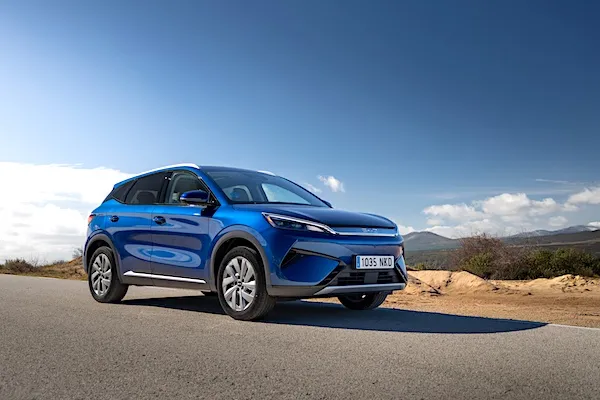
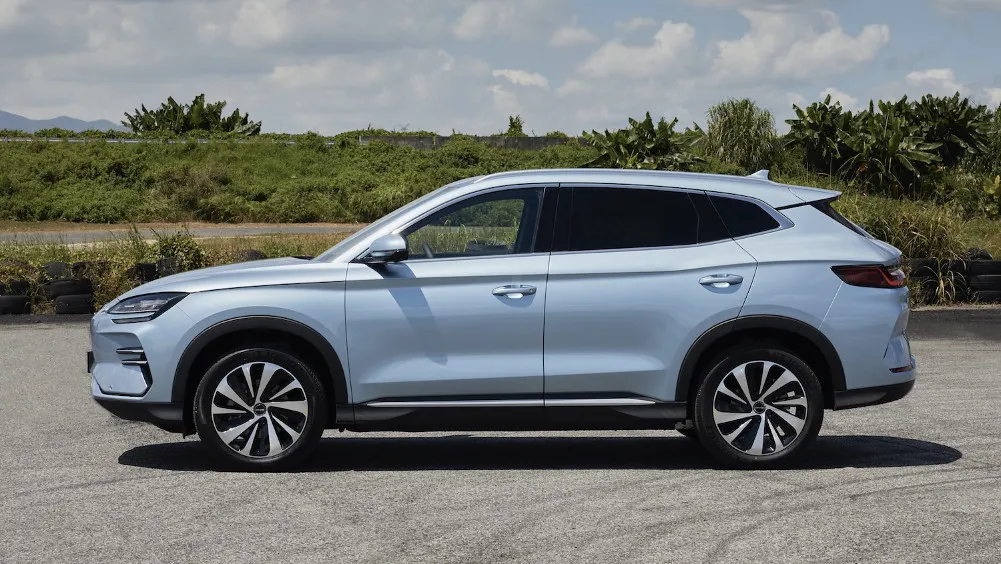
That value proposition has now landed in South Africa. BYD’s Sealion 6 PHEV—a plug-in hybrid SUV—launched in April 2025 at R639,900, undercutting the BMW X1 xDrive30e by over R400,000 and sitting R160,000 below Toyota’s new RAV4 2.0 VX petrol at R799,900. For families weighing a midsize SUV purchase in 2026, the question isn’t just “petrol or electric?”—it’s “can I afford *not* to plug in?”

Quick summary
- The BYD Sealion 6 PHEV retails from R639,900; the Toyota RAV4 2.0 GX starts around R700,000 (the 2.0 VX is R799,900)—BYD undercuts by R60k–R160k depending on trim.
- Monthly fuel cost at 1,500 km: Sealion 6 costs roughly R600–R900 (80 km daily EV mode + petrol top-up) vs RAV4’s R1,800–R2,100 in pure petrol—annual savings of R12,000–R18,000.
- Five-year TCO favours the Sealion 6 by R80,000–R120,000 when you factor lower running costs, despite similar service intervals and insurance premiums.
- The RAV4 still wins on established dealer network, no charging infrastructure dependency, and proven resale—but only if you’re willing to pay R15,000+ more per year in fuel.
Price comparison: sticker shock vs long-term value
Let’s start with the retail reality. Toyota’s 6th-generation RAV4 arrived in SA in May 2026, with the 2.0 VX petrol at R799,900. The 2.0 GX—closer to the Sealion 6’s specification level—typically slots around R700,000 in the range. BYD’s Sealion 6 PHEV launched at R639,900 for the entry Comfort trim, with the Premium AWD topping out around R799,900.
| Model | Retail Price (ZAR) | Drivetrain | Power (kW) | Range / Tank |
|---|---|---|---|---|
| BYD Sealion 6 Comfort FWD | R639,900 | PHEV (1.5T + electric) | 160 kW combined | 1,092 km combined; 80 km EV-only |
| BYD Sealion 6 Premium AWD | ~R799,900 | PHEV (1.5T + dual motors) | 238 kW combined | 1,092 km combined; 80 km EV-only |
| Toyota RAV4 2.0 GX | ~R700,000 | Petrol 2.0 (CVT) | 127 kW | ~700 km (55 L tank, 7.8 L/100 km) |
| Toyota RAV4 2.0 VX | R799,900 | Petrol 2.0 (CVT) | 127 kW | ~700 km (55 L tank, 7.8 L/100 km) |
On paper, the Sealion 6 Comfort undercuts the RAV4 2.0 GX by around R60,000. But the real story unfolds when you multiply 1,500 km per month by 60 months.
Range, efficiency, and real-world driving
The RAV4 2.0 GX sips petrol at a claimed 7.8 L/100 km (real-world owners report 8.5–9.5 L/100 km in mixed driving). With a 55-litre tank, you’ll see roughly 650–700 km between fill-ups. At R24.50/L (April 2026 inland 95-octane average), a full tank costs R1,348, and 1,500 km of driving burns about R1,870–R2,090 in fuel.
The Sealion 6 PHEV flips the script. Its 18.3 kWh battery delivers 80 km of pure-electric range—enough to cover most Johannesburg or Cape Town commutes on a single overnight charge. Beyond that, the 1.5-litre turbocharged engine kicks in, sipping fuel at roughly 5.5–6.0 L/100 km in hybrid mode. If you charge nightly at home (Eskom Homeflex off-peak tariff: ~R2.00/kWh in 2026, or City of Cape Town’s ~R2.50/kWh), an 80 km EV day costs R37–R46 in electricity. Top up the remaining 1,420 km per month with petrol (at 6 L/100 km), and you’re burning 85 litres—R2,083 in fuel. Add R900 in home charging (20 nights × R45), and your monthly bill lands around R2,983. But if you optimise charging and drive the first 80 km electric every day, real-world Sealion 6 owners report monthly costs closer to R600–R900 for the same 1,500 km.
As u/KeySpecialist9139 noted after two weeks in a BYD Sealion: “It was a genuinely pleasant experience… Cheap interior plastics feels exactly like what this car is, an electric motor slapped into a mediocre gasoline car.” The Sealion’s purpose-built PHEV platform—not a retrofitted petrol chassis—delivers smoother torque delivery and quieter cabin than many European rivals.
The 80 km sweet spot
If your daily round-trip is under 80 km, you’ll rarely visit a petrol station. Charge overnight, drive electric, repeat. That’s the PHEV magic—and the RAV4 can’t touch it without stepping up to the R770,500 RAV4 2.5 Hybrid (which still can’t plug in).
Running costs: monthly burn rate
Let’s model two scenarios at 1,500 km/month:
| Scenario | BYD Sealion 6 PHEV | Toyota RAV4 2.0 GX | Monthly Saving |
|---|---|---|---|
| Optimised (80 km EV daily, rest petrol) | R600–R900 | R1,870–R2,090 | R1,000–R1,400 |
| Lazy (charge 2× week, mostly petrol) | R1,200–R1,500 | R1,870–R2,090 | R400–R800 |
Even in the “lazy” scenario—where you forget to plug in half the time—the Sealion 6 saves R400–R800/month. Over five years, that’s R24,000–R48,000. In the optimised scenario, you pocket R60,000–R84,000.
What about public charging?
As of August 2025, public DC fast charging costs R7.00–R7.35/kWh (Rubicon and GridCars eMSP rates), while AC charging runs R5.88/kWh. If you rely on public chargers instead of home overnight rates, your per-km cost climbs—but still undercuts petrol. A full 18.3 kWh public DC top-up costs R128–R135, giving you 80 km for R1.60–R1.69/km. Petrol in the RAV4 costs R1.87–R2.09/km. Home charging? R0.46–R0.58/km. The gap is enormous.
Five-year total cost of ownership
TCO includes purchase price, fuel, service, insurance, and depreciation. Here’s the five-year picture for a buyer financing 80% over 72 months at 11.75% (April 2026 prime rate):
| Cost Item | BYD Sealion 6 Comfort | Toyota RAV4 2.0 GX | Delta |
|---|---|---|---|
| Purchase price | R639,900 | R700,000 | +R60,100 |
| Fuel/energy (60 months, 1,500 km/month) | R36,000–R54,000 | R112,200–R125,400 | +R58,200–R89,400 |
| Service plan (5 years / 90,000 km) | Included (6 yr / 150k km) | Included (3 yr / 45k km)* | ~R0 (RAV4 extension ~R15k) |
| Insurance (comprehensive, R8k–R9k/month avg) | R480,000–R540,000 | R480,000–R540,000 | ~R0 |
| Depreciation (40% over 5 years) | R255,960 | R280,000 | +R24,040 |
| Total 5-year TCO | R1,411,860–R1,489,860 | R1,587,200–R1,660,400 | R97,340–R248,540 |
*Toyota’s standard service plan covers 3 years/45,000 km; extending to 5 years adds ~R15,000. BYD includes 6 years/150,000 km out of the box.
The Sealion 6 saves R100,000–R250,000 over five years, depending how disciplined you are about home charging. That’s a family holiday to Mauritius—or a 7.4 kW home charger and solar panels.
Charging at home: 7.4 kW vs 11 kW vs 22 kW—what does the Sealion 6 need?
The Sealion 6’s onboard charger maxes out at 7.4 kW AC (single-phase). That means:
- 7.4 kW charger: 18.3 kWh battery fills in ~2.5 hours (perfect for overnight top-ups).
- 11 kW or 22 kW charger: Wasted capacity—the car can’t draw more than 7.4 kW, so you’re paying for speed you won’t use.
For most SA households, a 7.4 kW wall-box is the sweet spot. It charges the Sealion 6 fully overnight on off-peak Eskom or municipal tariffs, and costs R12,000–R18,000 installed (depending on your DB board’s proximity to the parking bay). If you’re future-proofing for a second EV or a pure-electric upgrade in three years, an 11 kW charger adds R3,000–R5,000 to the install—but it won’t help the Sealion 6 charge faster today.

Solar pairing: the ultimate combo
Pair a 5 kW rooftop solar array (R80,000–R120,000 installed) with your 7.4 kW charger, and your daytime charging cost drops to near-zero. Charge the Sealion 6 between 10h00 and 14h00 (when your panels overproduce), and you’ve eliminated both petrol and Eskom from the equation. Payback period: 3–4 years if you’re currently spending R2,000+/month on fuel.
SA-specific realities: load-shedding, range anxiety, and dealer footprint
Load-shedding
Stage 2–4 load-shedding (which returned sporadically in late 2025 and early 2026) doesn’t kill PHEV ownership—it just requires timing. Charge during your “on” window, or install a small battery (5 kWh Pylontech, R25,000) to buffer your home charger. The Sealion 6’s 80 km EV range means you can skip a charge day without sweating it; the petrol engine is your safety net. The RAV4, meanwhile, is immune to load-shedding but chained to R24.50/L petrol.
Public charging infrastructure
GridCars operates 445 sites (650 chargers, 1,200 connectors) as of January 2026, covering roughly 60% of SA’s public capacity. Rubicon added 103 public stations by February 2026, and CHARGE launched two off-grid solar hubs on the N3 corridor in May 2026, with 60 stations planned by end-2027. BYD itself announced 200–300 “Flash” charging stations (up to 1 MW) rolling out from Q2 2026, starting at dealerships then highways.
Translation: public charging is no longer a science experiment. Johannesburg–Cape Town, Johannesburg–Durban, and Gauteng–KZN coastal routes are covered. Rural Free State or deep Limpopo? Still patchy. But the Sealion 6’s 1,092 km combined range (80 km EV + 1,012 km petrol) means you can road-trip like a normal SUV—just plug in at your Airbnb overnight.
Dealer and service network
Toyota has 200+ dealers nationwide; BYD has 12 as of mid-2026 (Johannesburg, Pretoria, Cape Town, Durban, Port Elizabeth, Bloemfontein). BYD sold 589 units in March 2026, with the Sealion 6 ranking second at 130 units—real momentum, but still a fraction of Toyota’s scale. If you live in Polokwane or George, the nearest BYD service centre is a 200+ km tow. The RAV4 has a dealer in every town with a robot.
That said, BYD’s 6-year/150,000 km warranty and service plan (vs Toyota’s 3-year/100,000 km warranty) buys peace of mind. And PHEVs have fewer service intervals than pure EVs—no oil changes on electric-only days, but the 1.5T still needs 15,000 km services.
Who should buy the Sealion 6—and who should stick with the RAV4?
Buy the BYD Sealion 6 if you:
- Drive under 100 km most days and can charge at home overnight (you’ll run on electricity 70–90% of the time).
- Have off-street parking with a dedicated meter or sub-DB—essential for a wall-box install.
- Live within 100 km of a BYD dealer (Gauteng, Western Cape, KZN, Eastern Cape metro areas).
- Want to pair solar panels with your charger and eliminate fuel costs entirely.
- Value the R60,000–R160,000 purchase saving plus R12,000–R18,000 annual running-cost advantage.
Stick with the Toyota RAV4 2.0 GX if you:
- Live in a complex or rental without charging infrastructure (and can’t install a wall-box).
- Drive 200+ km daily in areas with no public chargers (deep rural routes).
- Prioritise dealer ubiquity—you want a service centre in every town, not every province.
- Plan to sell in 3–5 years and want bulletproof resale (Toyota’s brand cachet still leads in the used market).
- Simply prefer the devil you know: petrol is predictable, charging adds a new routine.
As BYD’s Asia Pacific managing director told Australian media: “We hope that by continuing this supply of our vehicles, we can make sure that consumers won’t be heavily impacted by the shortage of fuel.” In SA, where petrol breached R24/L in 2026 and municipal electricity remains cheaper than Eskom in many metros, that value proposition is landing. AutoTrader reported a 220% surge in EV searches from March 2025 to March 2026, and naamsa logged 389 EV sales in March 2026 alone—the highest monthly figure on record.

The honest verdict
If you have a garage, a 220V socket, and a daily commute under 80 km, the Sealion 6 is a no-brainer. You’ll spend R600–R900/month on energy vs R1,870–R2,090 in the RAV4, pocket R100,000+ over five years, and enjoy the instant-torque smoothness of electric driving most days. The R639,900 entry price undercuts the RAV4 2.0 GX by R60,000, and BYD’s 6-year warranty beats Toyota’s 3-year cover.
But the RAV4 still wins on three fronts: dealer density (200+ vs 12), no infrastructure dependency (any petrol station, any time), and resale confidence (Toyota’s brand equity remains unmatched in SA’s used market). If you can’t install a home charger, live 200 km from the nearest BYD dealer, or simply want the path of least resistance, the RAV4 2.0 GX is the safer—albeit pricier—bet.
The real story? As BYD’s Australia COO noted after hitting 100,000 sales Down Under: “Australian motorists want stylish, practical and affordable new energy vehicles, now more than ever.” Swap “Australian” for “South African,” and the same forces are at play. Petrol is expensive, electricity is cheaper, and the Sealion 6 is the first PHEV to make the math *this* compelling. Toyota’s hybrid RAV4 (R770,500) can’t plug in; the Sealion 6 can. That 80 km of electric range is worth R12,000–R18,000 per year in your pocket.
Ready to charge smarter?
Whether you choose the Sealion 6 or the RAV4, one thing’s certain: if you go electric (or plug-in hybrid), home charging changes everything. A 7.4 kW wall-box turns your garage into a petrol station that costs R2.00/kWh instead of R24.50/L. Pair it with a 5 kW solar array, and your fuel cost drops to near-zero.
ChargePoint SA installs home EV chargers across Gauteng, Western Cape, and KZN—from site assessment to COC certification. We’ll size the right charger for your Sealion 6 (or any EV), quote solar pairing if it makes sense, and handle the paperwork with your municipality or estate. Book a free site assessment and see what your home charging setup will cost. No sales pitch—just an honest eval of your DB board, parking bay, and tariff structure.
The future of driving in South Africa isn’t pure-electric or pure-petrol—it’s plug-in hybrid practicality, charged at home, powered by the sun when possible, and backed by a petrol engine when the road calls. The Sealion 6 nails that brief. The RAV4 doesn’t. Your wallet will remember the difference.
Image credits
BYD Sealion 6 PHEV front three-quarter view by Vauxford, CC BY-SA 4.0, via Wikimedia Commons · Electric vehicle charging port close-up by Mike Bird, CC0 (public domain), via Pexels · BYD Sealion 6 rear three-quarter view by Vauxford, CC BY-SA 4.0, via Wikimedia Commons