South Africa’s energy regulator NERSA approved an 8.76% electricity tariff increase for Eskom direct customers effective 1 April 2026, with municipal customers facing a 9.01% hike from 1 July. For BYD Seal owners in Durban who charge at home—the overwhelming majority—that translates directly to higher monthly running costs. The BYD Seal charging cost Durban residents face will jump from pre-increase levels, but the question remains: does the EV value proposition still hold?
The short answer: yes, emphatically. Even with the tariff bump, charging a BYD Seal at home in Durban remains 61% cheaper than using public fast chargers—and still a fraction of what you’d spend on petrol. Here’s the full breakdown, plus what the April hike means for your wallet.

TL;DR
- NERSA’s 8.76% tariff hike pushes eThekwini home charging to R3.05/kWh standard, R1.82/kWh off-peak, and R4.28/kWh peak from April 2026 (municipal increase deferred to July).
- Charging a BYD Seal Premium (82.5 kWh battery, 570 km range) from 20–80% at home will cost R95–R224 per session after the increase—still 61% cheaper than Durban’s public charging rates.
- Annual running costs for 20,000 km: R9,540–R12,460 at home vs R15,950 on public chargers vs R28,800+ for a comparable petrol sedan (BMW 320i or Mercedes C-Class).
- Off-grid solar charging stations on the N3 (launched May 2026) bypass Eskom entirely, offering cost stability for long-distance travel between Durban and Gauteng.
What happened: NERSA’s April 2026 tariff decision
On 12 March 2026, the National Energy Regulator of South Africa approved Eskom’s application for an 8.76% price increase for direct customers, effective 1 April 2026. Municipal customers—including most eThekwini residents—will see a 9.01% hike from 1 July 2026. The decision followed a court-ordered recalculation of Eskom’s regulatory asset base, which had been contested for years.
For context, eThekwini’s residential electricity tariffs after the July increase are R3.05/kWh standard rate, R1.82/kWh off-peak, and R4.28/kWh peak. Eskom direct customers in outlying areas see the jump three months earlier.
The timing is significant: South Africa’s EV market grew 97.1% year-on-year in Q1 2026, according to Naamsa data reported by CAR Magazine, as consumers fled volatile petrol prices for the predictability of electricity. The tariff hike tests that narrative—but the maths still favour electrons over hydrocarbons by a wide margin.
The BYD Seal: what you’re charging
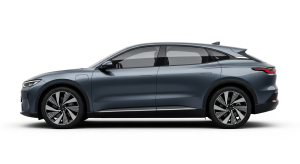
The BYD Seal landed in South Africa in October 2024 with two variants: the Premium Extended Range (R1,007,900) and the Performance AWD (R1,211,900). Both share an 82.5 kWh lithium iron phosphate (LFP) battery. The Premium delivers 570 km of WLTP range; the Performance AWD trades 50 km of range for a second motor and a 3.8-second 0–100 km/h sprint, according to BYD’s official SA specifications.

Key charging specs:
- AC charging: 11 kW maximum (Type 2 connector)
- DC fast charging: 150 kW peak (CCS2 connector)
- 30–80% DC session: 26 minutes at peak power
- 10–80% DC session: 37 minutes (per BYD UK’s 2026 model-year data)
Most owners charge at home overnight via a 7.4 kW or 11 kW wall-box. A full 20–80% top-up (49.5 kWh usable) takes 4.5–6.7 hours on AC, which fits neatly into off-peak windows.
What it costs to charge a BYD Seal in Durban
Home charging: the baseline
As of July 2026, eThekwini municipal tariffs after the 9.01% increase are R3.05/kWh standard rate, R1.82/kWh off-peak, and R4.28/kWh peak, according to ChargePoint SA’s Durban infrastructure analysis. We’ll use these rates for our BYD Seal charging cost Durban calculations.
| Scenario | kWh consumed (20–80%) | Cost @ R1.82/kWh (off-peak) | Cost @ R3.05/kWh (standard) | Cost @ R4.28/kWh (peak) |
|---|---|---|---|---|
| Single charge session | 49.5 kWh | R90 | R151 | R212 |
| Per km (570 km range) | 0.145 kWh/km | R0.26/km | R0.44/km | R0.62/km |
| Annual (20,000 km) | 2,900 kWh | R5,278 | R8,845 | R12,412 |
Reality check: even at the higher R4.28/kWh peak rate, you’re looking at roughly R12,412 per year for 20,000 km. A BMW 320i or Mercedes C-Class (comparable petrol sedans) burning petrol at R24/ℓ costs R28,800 annually for the same distance. The Seal saves you R16,388 at peak rates—or R23,522 at the off-peak rate.
Public charging: the Durban reality
Durban has approximately 15 public EV charging locations as of April 2026, with very limited DC fast charging infrastructure, per ChargePoint SA’s Durban infrastructure map. AC charging runs R5.88/kWh for both GridCars and Rubicon eMSP customers, while DC fast charging—where available—runs R7.00–R7.35/kWh nationally, according to Rubicon’s February 2026 tariff survey.
| Public charging rate | Cost per 20–80% session | Cost per km | Annual cost (20,000 km) |
|---|---|---|---|
| R5.88/kWh (AC, national) | R291 | R0.85/km | R17,052 |
| R7.00/kWh (DC, national) | R347 | R1.02/km | R20,300 |
Public charging makes sense for top-ups or long trips, but as a daily solution it’s 1.9× more expensive than standard-rate home charging and 3.3× more expensive than off-peak—yet still cheaper than petrol.

What stakeholders are saying
Government and regulators
NERSA’s decision was framed as a legal obligation following court rulings on Eskom’s asset valuation. The regulator has not issued EV-specific commentary, but the Department of Transport’s 2023 Green Transport Strategy anticipated rising electricity costs and called for time-of-use tariffs to incentivise off-peak EV charging—a policy eThekwini has yet to implement at scale.
Automakers
BYD South Africa has remained publicly silent on the tariff hike, but the brand is doubling down on charging infrastructure. In April 2026, BYD announced plans to deploy 200–300 Flash charging stations (up to 1,000 kW) across SA by year-end. If delivered, this would leapfrog GridCars’ 445-site network and dramatically lower public charging anxiety.
Charging networks
GridCars and Rubicon have not adjusted public tariffs in response to the Eskom hike—yet. Both networks set prices via agreements with e-mobility service providers (eMSPs), and those contracts often lock rates for 12–24 months. Expect public tariffs to creep up in late 2026 or early 2027.
Zero Carbon Charge, which launched South Africa’s first off-grid solar EV stations on the N3 in May 2026, is the outlier. Its stations bypass Eskom entirely, offering cost stability immune to NERSA’s decisions. The company plans 60 stations by end-2027, with heavy weighting on the Johannesburg–Durban corridor.
Consumers
Reddit’s r/electricvehicles community offers a ground-level view. u/Uerwol, a BYD Atto 3 owner, put it bluntly: “I actually own an EV (BYD Atto 3) and have been driving it for a while now and honestly I couldn’t be happier. My running costs are a fraction of what I was paying with petrol… I wake up every morning with a full charge.” The sentiment is echoed across forums: even with tariff hikes, the maths still favour home charging by a wide margin.
What this means for SA EV buyers
1. Home charging remains the anchor
The 9% tariff increase stings, but it doesn’t flip the economics. At R1.82/kWh off-peak, you’re still paying R0.26/km—less than half the cost of a hybrid and a quarter the cost of petrol. The ChargePoint SA Durban guide notes that 95% of SA EV owners charge at home as their primary solution. That won’t change.
2. Time-of-use tariffs are your friend
eThekwini offers time-of-use (TOU) metering for residential customers, with off-peak rates at R1.82/kWh (post-increase). If you can shift charging to 22:00–06:00, you’ll absorb the tariff hike with minimal pain. A 7.4 kW wall-box tops up the Seal’s 20–80% window in under 7 hours—plenty of time for an overnight session.
3. Public charging is for top-ups, not daily use
At R5.88–R7.00/kWh, Durban’s public network is a safety net, not a substitute for home infrastructure. If you’re renting or lack off-street parking, the EV value proposition weakens—but doesn’t vanish. u/Alert_Number1991 on r/electricvehicles calculated that even at $0.42/kWh (≈R7.60/kWh), public charging beats petrol once fuel tops $5/gallon (≈R24/ℓ in SA terms). We’re already there.
4. Solar + battery combos insulate you completely
If you own your home, a 5 kW solar array with 10 kWh of battery storage can cover most of your EV charging—and dodge Eskom’s tariff rollercoaster entirely. Upfront cost: R150,000–R200,000. Payback period: 5–7 years at current tariffs, faster if load-shedding returns or tariffs climb further.
What’s next: three trends to watch
1. BYD’s Flash network rollout
BYD’s promise of 200–300 ultra-fast chargers by December 2026 is the biggest infrastructure wildcard. If delivered, it solves the Durban DC fast-charging gap and makes inter-city travel trivial. If it stalls, SA remains reliant on GridCars and Rubicon’s slower expansion.
2. Off-grid charging expansion
Zero Carbon Charge’s N3 stations are a proof-of-concept for solar-powered, Eskom-independent charging. If the model scales—and the R100 million DBSA backing suggests it will—expect similar projects on the N1, N2, and N4. That’s a game-changer for cost predictability.
3. Municipal tariff divergence
eThekwini’s 9.01% hike is an average. Some metros (Cape Town, Tshwane) may implement steeper increases; others (Ekurhuleni) may absorb costs via cross-subsidies. If you’re shopping for a BYD Seal, ask your municipality for its post-July tariff schedule—it could swing your annual running costs by R1,000–R2,000.
Ready to lock in predictable charging costs?
NERSA’s tariff hike is a reminder that Eskom’s grid is a moving target. The best way to insulate yourself: install a home charger and, if possible, pair it with solar. ChargePoint SA designs and installs EV charging solutions across Durban and KZN, from simple 7.4 kW wall-boxes to solar-integrated systems that eliminate your exposure to future tariff shocks.
If a BYD Seal is on your radar, get a free site assessment before you take delivery. We’ll map your electrical capacity, recommend the right charger, and give you a fixed-price quote—no surprises, no Eskom anxiety. Just plug in, wake up charged, and enjoy the R15,000+ you’ll save every year.
Image credits
“BYD Seal IAA 2023” by Wikimedia Deutschland, CC BY-SA 4.0 ·
Continue Reading